OpenAI AI model assists in identifying dozens of security vulnerabilities in Apple devices
Executive Briefing
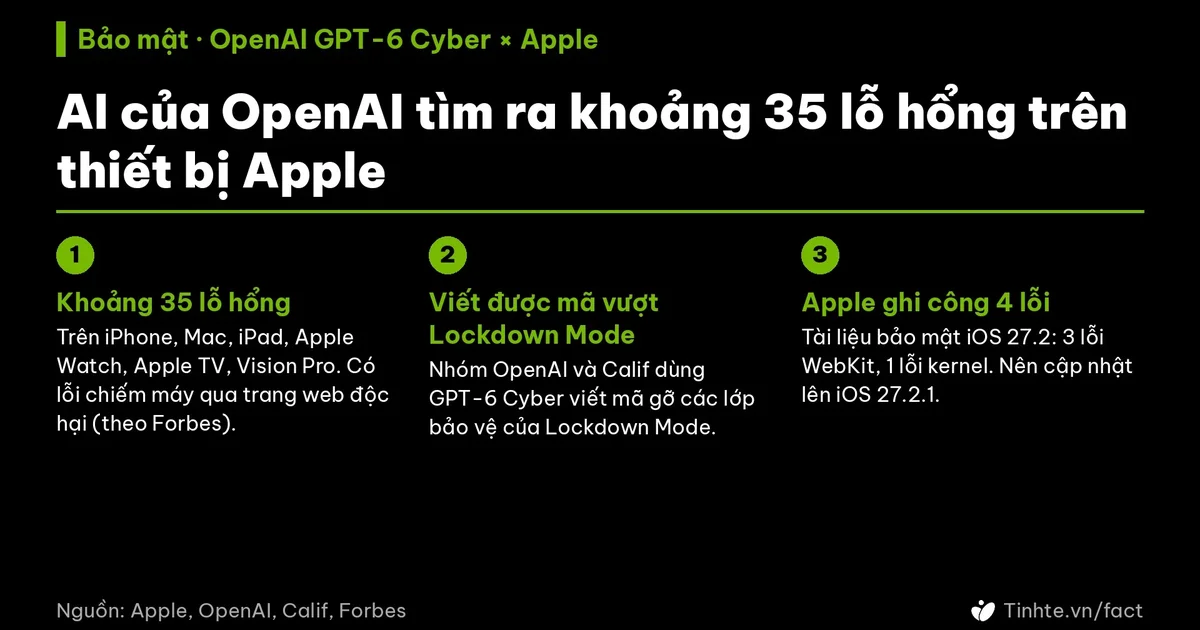
“OpenAI and security firm Calif utilized the GPT-6 Cyber AI model to identify approximately...”
Key Takeaways
- 1.The research team used the GPT-6 Cyber model to identify weaknesses across Apple hardware and software, including iPhone, Mac, iPad, and Vision Pro.
- 2.Apple's security documentation for the iOS 27.2 update credited OpenAI for discovering 4 vulnerabilities, including arbitrary code execution flaws via WebKit.
- 3.GPT-6 Cyber is OpenAI's security-focused model, classified as critical and restricted to organizations within the Daybreak Red program.
OpenAI and security firm Calif utilized the GPT-6 Cyber AI model to identify approximately 35 vulnerabilities across Apple devices. The research included generating exploit code capable of bypassing protections within Lockdown Mode.
Key Developments & Primary Facts
The research team used the GPT-6 Cyber model to identify weaknesses across Apple hardware and software, including iPhone, Mac, iPad, and Vision Pro.
Apple's security documentation for the iOS 27.2 update credited OpenAI for discovering 4 vulnerabilities, including arbitrary code execution flaws via WebKit.
GPT-6 Cyber is OpenAI's security-focused model, classified as critical and restricted to organizations within the Daybreak Red program.
Strategic Analysis & Implications
The use of AI to automate exploit code generation marks a significant advancement in vulnerability discovery speed, while presenting substantial challenges for developers to patch flaws in a timely manner.
Although the AI demonstrated the ability to bypass Lockdown Mode protections, security experts still recommend that users maintain this mode if they are at high risk of targeted attacks.
Outlook & Factors to Watch
The full list of 35 vulnerabilities has not been publicly confirmed by Apple, leaving the actual scope of these security risks unclear.
It remains unclear what percentage of the 35 identified vulnerabilities were discovered entirely by AI versus those assisted by human researchers at Calif.