Vietnamese developers win Sea and OpenAI hackathon with 3D biology AI tool
Executive Briefing
“The Vivant team won the Sea x OpenAI Regional Codex Hackathon in Vietnam by developing...”
Key Takeaways
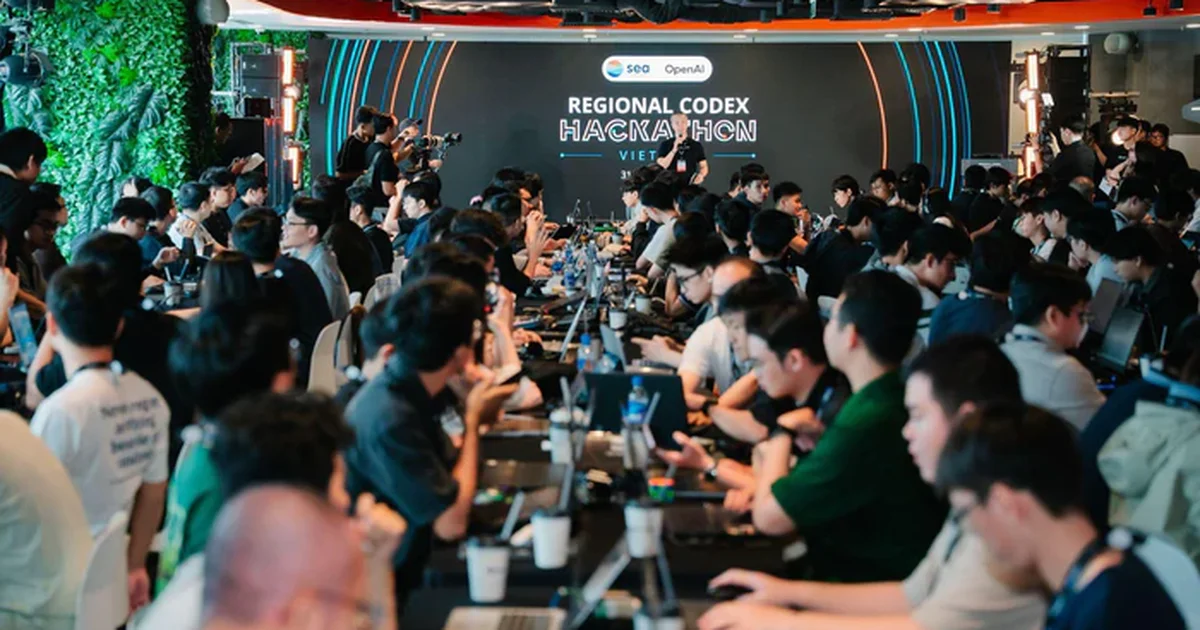
- 1.The competition attracted 345 teams with over 1,300 registrations, from which 40 teams were selected to compete in person using OpenAI's Codex tool.
- 2.The Vivant team took first place with their Bioweave project, which allows users to visualize complex biological structures through 3D models.
- 3.The winning team received $30,000 in OpenAI API credits, while members of the top five teams were awarded a one-year ChatGPT Pro subscription.
The Vivant team won the Sea x OpenAI Regional Codex Hackathon in Vietnam by developing Bioweave, a tool that converts biology questions into 3D models. This project was among several practical AI solutions completed by 40 teams during a seven-hour sprint.
Key Developments & Primary Facts
The competition attracted 345 teams with over 1,300 registrations, from which 40 teams were selected to compete in person using OpenAI's Codex tool.
The Vivant team took first place with their Bioweave project, which allows users to visualize complex biological structures through 3D models.
The winning team received $30,000 in OpenAI API credits, while members of the top five teams were awarded a one-year ChatGPT Pro subscription.
Strategic Analysis & Implications
The use of the Codex tool within a short timeframe highlights a trend where AI-assisted programming platforms are significantly shortening the path from conceptualization to functional prototypes.
The diversity of projects, ranging from education to personal safety, reflects the flexible application of large language models to specialized local problems.
Outlook & Factors to Watch
Specific technical details regarding how Bioweave processes biological data and the accuracy of the generated 3D models have not been disclosed.