Intel factory director: 'Young semiconductor engineers should persevere with the journey'
Executive Briefing
Synthesized and verified with gemini-2.0-flash-thinking-exp
“# Intel factory director: 'Young semiconductor engineers should persevere with the journey' Vietnam”
Key Takeaways
- 1.# Intel factory director: 'Young semiconductor engineers should persevere with the journey' Vietnamese engineers have the foundation and learn quickly, but need to persevere in accumulating deep expertise in semiconductors, according to Intel Factory Director Nguyen Quang Khanh.
- 2.Nguyen Quang Khanh joined Intel Products Vietnam (IPV), the largest chip assembly and testing facility in Intel's global network, in 2010.
- 3.He held many positions from engineer, technical manager, product development manager, project manager to technical operations manager for the period 2020-2021, before becoming the first Vietnamese director at Intel factory.
Vietnamese engineers have the foundation and learn quickly, but need to persevere in accumulating deep expertise in semiconductors, according to Intel Factory Director Nguyen Quang Khanh.
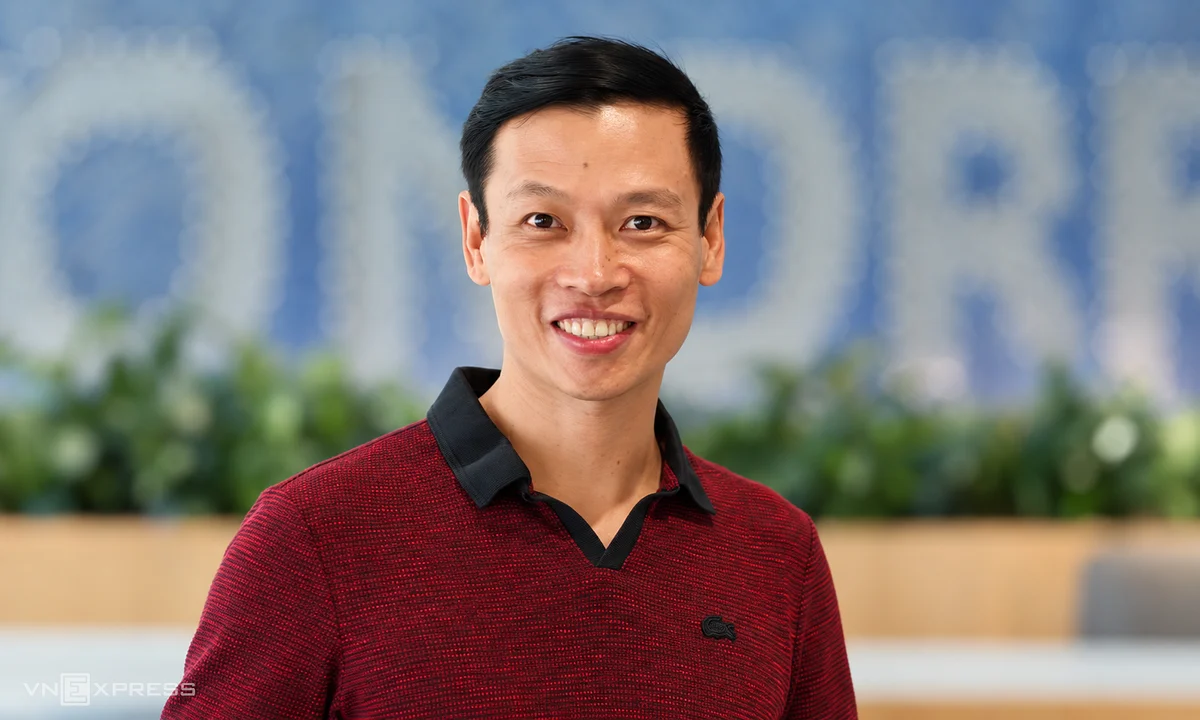
Mr. Nguyen Quang Khanh joined Intel Products Vietnam (IPV), the largest chip assembly and testing facility in Intel's global network, in 2010. He held many positions from engineer, technical manager, product development manager, project manager to technical operations manager for the period 2020-2021, before becoming the first Vietnamese director at Intel factory.
Mr. Khanh shares with VnExpress about his and the Vietnamese engineering team's growth process at IPV, the training culture at Intel, the requirements for semiconductor human resources and how Vietnam can move deeper in this industry's value chain.
- How did you get into the semiconductor industry and your chance to join Intel?
- As a former student at Hanoi Polytechnic University, I had the opportunity to work for front-end semiconductor manufacturing companies in Japan and Taiwan after graduating, including the Sony factory for more than two years (2007-2009). At that time, the semiconductor manufacturing industry, especially equipment, processes and ecosystems, was not popular in Vietnam. When Intel decided to invest in Ho Chi Minh City High-Tech Park in 2006, I wanted to become a part of this first high-tech project.
For Vietnamese people at that time, Intel was the world's leading chip and computer manufacturing corporation, associated with the familiar "Intel Inside" logo on PCs and laptops. However, they have more than that. I joined Intel at the end of 2009 when the factory started operating, as a process engineer.
Entering a newly opened factory where almost all the technical managers were foreigners, I was quite confused but quickly tried to adapt. I have accompanied Intel through many positions, from process and equipment engineer, technical manager in many departments, new technology product development manager, to factory technical operations manager. By the 2020-2021 period, I am honored to become the first Intel factory director who is Vietnamese.
- How did you feel at that time?
- Extremely proud!
The Intel Vietnam team in the early days was very young, the core force was mainly fresh graduates from major technical universities such as Polytechnic, Technical Education, all had great determination to learn, wanting to prove the capabilities of Vietnamese people in a high-tech environment.
The fact that a Vietnamese person became a factory director is a milestone, but what is more proud is that we have gradually built a team of qualified Vietnamese leaders and experts to take on key roles. This is the result of efforts to strive for excellence, empowered by the environment and a persistent roadmap for transferring capabilities.
With pride comes the responsibility to continue developing Intel's people, innovation culture and manufacturing capabilities. This helps the Vietnamese team not only operate and develop well, but also create creative value and have an increasingly greater voice in the global Intel system.
Up to now, the Intel Vietnam factory has a global scale in both output and leading technology content, on par with factories in Intel's semiconductor assembly, packaging and testing production chain in the world. The vision from the early days - "Create the future for Intel and Vietnam" - gradually becomes a reality.
From engineers still having difficulty with technical English to being able to absorb new technologies in an environment where 100% of technical managers are foreigners, the Vietnamese team has now become a core force in operations, engineering and leadership, while contributing to the broader semiconductor ecosystem that is present and growing in Vietnam. Intel also proactively cooperates with universities, supporting curriculum improvements to align with industry realities.
- Moving from a professional engineer to a senior manager, what is the biggest change for you?
- It's a move that requires completely new skills. At one stage, the Intel Vietnam factory had 3,000 direct employees, including experts, engineers, technicians and managers, and up to 5,000 people if including partners and contractors.
A specialist engineer usually focuses on the technical part of the project. But when becoming a director, vision and responsibility become important factors. Leaders must focus on building a team, shaping corporate culture, especially innovation culture, and maintaining leading operating capacity in Intel's global back-end factory chain system.
- How did foreign leaders at Intel support the "mature" Vietnamese team?
- Intel has a very unique culture, focusing on investment and human development, to the point that employees often compare Intel to a "university". Training programs, from technical expertise to soft skills, are built according to international standards.
Initially, 100% of leaders were foreign experts. However, they have a training orientation and gradually transfer opportunities to Vietnamese people. To date, more than 90% of the senior management team and key positions at the factory are Vietnamese.
The combination of young engineers' eagerness to learn and the empowering environment here helps the team develop quickly. The growth process can be viewed through four steps: learning, mastering, creating and leading.
The first phase, 2010-2016, was mainly about learning and transferring according to the principle of "Copy Exactly" - accurately reproducing global processes and standards. The team focuses on absorbing technology from international factories, successfully deploying it and operating stably in Vietnam. This is the necessary foundation to form technical discipline and the ability to master large-scale production.
Around 2017-2021 is the period of mastery and proving capacity. The team undertakes more diverse and complex product lines and technologies and affirms its ability to compete with Intel factories in Malaysia, China or North America.
The last 3-5 years have been a period of creative development and gradual leadership: not only implementing process development and transferred technology, Vietnamese engineers also solve problems of quality, performance, automation, data and new product development.
Intel Vietnam's goal is to become a global standard for product quality, operational excellence, performance and technological innovation; Furthermore, participating early and gradually mastering the R&D development process to create more technological values from Vietnam.
Regarding innovation, in the past 5 years, Vietnamese engineers at Intel have contributed more than 65 internal patents, equivalent to US patent standards. IPV is one of the factories with the largest number of patent contributions in the entire global Intel back-end system.
- In your opinion, what is the greatest potential and strength of young Vietnamese engineers?
- Vietnamese engineers have energy, eagerness to learn, desire to excel and a good STEM (science, technology, engineering, math) foundation. Previous barriers such as English or soft skills have been significantly improved. In particular, the young generation of engineers has the ability to absorb new technology and innovate very quickly. You proactively apply generative AI and data science to improve work efficiency and master complex projects.
However, you still need to continue to improve your teamwork skills, systems thinking and ability to communicate and express professional opinions. The semiconductor industry requires persistent long-term investment. To become an expert who can solve the most difficult technical problems, the actual journey can take up to decades.
But time itself does not create experts. What matters is whether engineers are assigned difficult enough projects, have good enough mentors, are rotated through key roles, and have the opportunity to make an impact. Therefore, in addition to individual efforts, businesses need to build a clear career path, connecting competency maps, professional advisors, real projects and evaluating competency evidence. Depth takes time, but it cannot just wait for time.
- What advice do you have for young engineers who want to pursue the semiconductor industry?
- An academic background gives you the opportunity to start, but how far you can go depends on your ability to continuously learn and persevere in going deep into a field. Be proactive in finding difficult problems, good teachers, and projects that force you to grow.
Don't just chase titles. Build the value creation capabilities your organization and industry really need. Opportunities will stop as soon as you stop aspiring to rise.
Currently, the semiconductor ecosystem in Vietnam opens up many opportunities with the appearance of Intel, Amkor, Qualcomm, Samsung, Marvell... Whether or not seizing the opportunity depends on the passion, determination and perseverance of each person.
- How has Vietnam's semiconductor industry changed since Intel invested until now?
- When Intel first invested, the project was commonly called a "high-tech project", and the concept of "semiconductor" was not yet popular. After 10 years of building the foundation, Vietnam's semiconductor industry has had a clear transformation, becoming the destination of many large corporations, both in design such as Marvell, Qualcomm, Renesas, and in high-end manufacturing and packaging such as Intel, Amkor, Samsung, LG.
For IPV, the factory surpassed the milestone of shipping more than four billion products and is currently responsible for packaging and testing Intel's high-end PC and server chip lines, such as Core Ultra Series 3, using Intel 18A technology process.
The factory also considers AI a core strategy, applying it to quality management, predictive maintenance, data analysis and production process automation, while ensuring safety and patent security. AI is not only creating more demand for chips, but is changing the way chips are designed, integrated and manufactured, thereby opening up opportunities for Vietnam to develop technical capabilities, advanced packaging and higher-value manufacturing R&D.
- In your opinion, what kind of "general engineer" does Vietnam's semiconductor industry need?
- This position requires extensive professional knowledge and long-term, practical experience in the global semiconductor industry.
Semiconductors are a very complex ecosystem. No one country can master all the stages. America is strong in design, Japan is strong in materials and equipment, and Taiwan and South Korea are strong in manufacturing. Therefore, the "general engineer" needs to have a comprehensive vision and must be given the authority and responsibility to connect ministries and businesses.
The most important thing is the ability to execute, because execution is part of the strategy. A strategy only creates value when it translates into measurable results over each specific time period: how many training programs are associated with equipment and practical problems, how many engineers meet deep professional standards, how many suppliers are upgraded, how many technology production and R&D projects create value and how much more work with high technical content does Vietnam undertake in the global chain.
Bao Lam
- Singapore expert: 'Shared infrastructure to reduce semiconductor costs'
- Semiconductor expert: 'Vietnam needs to do it honestly, not spread out investments'
- 'Vietnamese lecture hall is a pool of quality semiconductor talent'