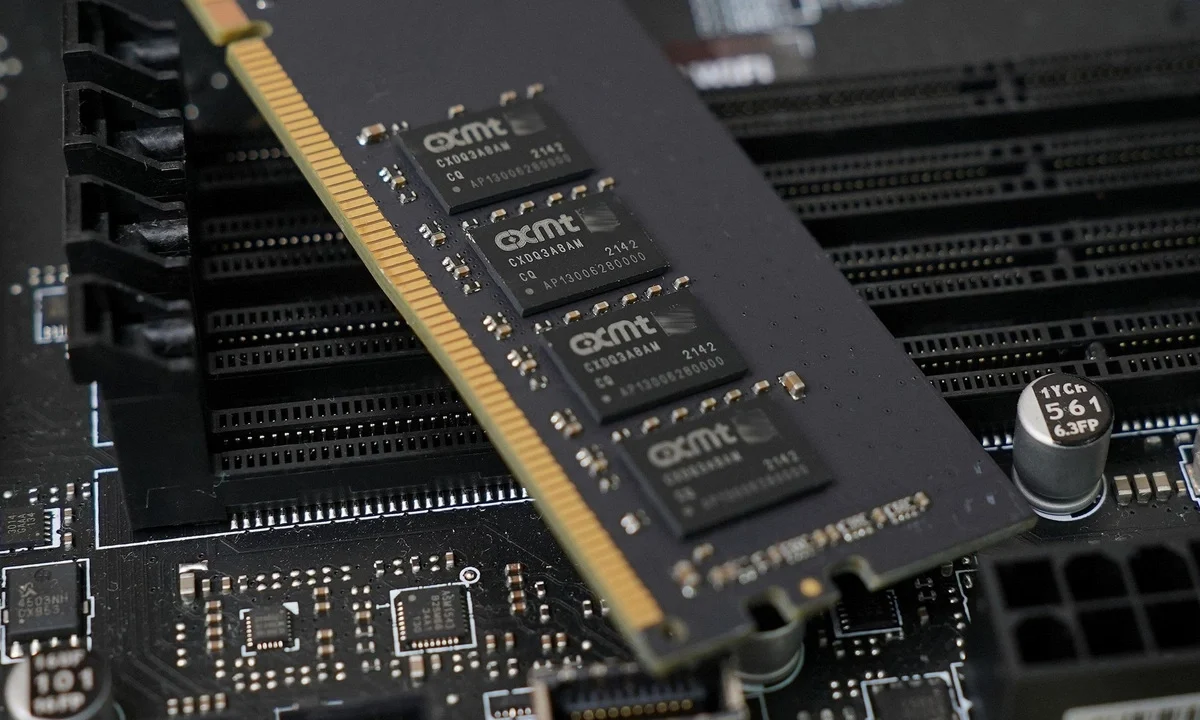
Chinese company CXMT is about to produce advanced AI memory chips
Executive Briefing
Synthesized and verified with gemini-2.0-flash-thinking-exp
“# Chinese company CXMT is about to produce advanced AI memory chips "Chinese semiconductor star" CX”
Key Takeaways
- 1.# Chinese company CXMT is about to produce advanced AI memory chips "Chinese semiconductor star" CXMT is said to be early in producing HBM3E, an advanced high-bandwidth memory chip used in AI processors, despite the low rate of finished products.
- 2.*Reuters* quoted a close source as saying that CXMT has sent the HBM3E model to a number of domestic AI chip designers and is expected to begin production in limited quantities in the next two months.
- 3.However, the rate of finished products, that is, the rate of shipped chips that meet specifications, is only about 20-30%, much lower than the 70% of memory chip company SK Hynix (Korea).
"Chinese semiconductor star" CXMT is said to be early in producing HBM3E, an advanced high-bandwidth memory chip used in AI processors, despite the low rate of finished products.
Reuters quoted a close source as saying that CXMT has sent the HBM3E model to a number of domestic AI chip designers and is expected to begin production in limited quantities in the next two months. However, the rate of finished products, that is, the rate of shipped chips that meet specifications, is only about 20-30%, much lower than the 70% of memory chip company SK Hynix (Korea).
During testing, the performance achieved by CXMT's HBM3E chip was closer to the old model HBM3 than SK Hynix's HBM3E. CXMT sent customers two versions of the HBM3E: a standard design and an updated version with changes to improve the finished product rate.
Low finished product rates increase production costs because a large amount of product must be discarded or reworked. However, CXMT is still proceeding with production, showing a serious shortage of memory chips in China, an essential component in the effort to develop domestic AI chips to replace products from Nvidia.
Chinese businesses are having difficulty procuring enough advanced memory chips. Prices of current and next generation AI chips from Huawei, Cambricon, MetaX, Iluvatar CoreX have increased by 20-50% due to memory chip scarcity. CXMT will start developing HBM3E from 2024 and the price of this memory chip model is expected to be higher than equivalent products from foreign competitors.
CXMT and SK Hynix have not responded to requests for comment.
High-bandwidth memory (HBM) chips are made by stacking memory chips vertically, allowing them to exchange data quickly with AI processors. This is an important component in specialized chips used to train and run large language models.
The US will tighten controls on exports of some types of advanced HBM to China in December 2024. This pushes Chinese businesses to search for memory chips through unofficial channels at prices that can be many times higher.
The three leading HBM manufacturers in the world today are SK Hynix, Samsung Electronics (Korea) and Micron Technology (USA). According to research firm Counterpoint Research, SK Hynix accounts for 50% of global HBM revenue in the second quarter of 2026, followed by Samsung with 33% and Micron with 18%. The majority of revenue comes from HBM3E.
In July, Samsung said it sent HBM4E models to major customers and increased sales activities, meaning CXMT is at least a generation behind in commercial HBM production.
CXMT was founded in 2016 in Hefei city, Anhui province, with the original name Innotron. The founding team is not mentioned, but Zhu Yiming was the one who led the company from the beginning. Information on China Daily shows that he is a former student of Tsinghua University and Stony Brook University (USA). Zhu is also the founder of GigaDevice Semiconductor, a company that designs memory chips and specializes in the production of NOR flash memory.
According to CNBC, CXMT is little known outside the domestic market. But in July, the company made a big splash globally when it launched its IPO. The company's shares soared nearly 466% in its first trading session on STAR Market, Shanghai's technology-focused stock exchange, becoming China's most valuable listed company at the time.
CXMT is currently the world's fourth largest DRAM memory chip manufacturer. According to data from TrendForce in early September, CXMT's global DRAM revenue market share reached 9.5% in the second quarter of 2026, up from 7.6% in the first quarter of 2026. Samsung leads with a market share of 39.4%, followed by SK Hynix with 24.9% and Micron with 23.3%.
Thu Thao summary