After France, hackers continue to attack supermarkets in 7 European countries: Refrigerators heat up to 50 degrees Celsius, billions of dong in damaged food
Executive Briefing
Synthesized and verified with gemini-2.0-flash-thinking-exp
“**After hundreds of supermarkets in France were attacked in early October, a similar attack has now”
Key Takeaways
- 1.**After hundreds of supermarkets in France were attacked in early October, a similar attack has now expanded to refrigerator systems in supermarkets in a series of European countries.** Dozens of supermarkets in 7 European countries have just become the target of a cyber attack targeting refrigerator and freezer systems.
- 2.Temperatures at some equipment soared to 50 degrees Celsius, causing food to spoil and forcing many stores to destroy goods.
- 3.Notably, the incident occurred just a few weeks after hundreds of supermarkets in France encountered similar problems.
After hundreds of supermarkets in France were attacked in early October, a similar attack has now expanded to refrigerator systems in supermarkets in a series of European countries.
Dozens of supermarkets in 7 European countries have just become the target of a cyber attack targeting refrigerator and freezer systems. Temperatures at some equipment soared to 50 degrees Celsius, causing food to spoil and forcing many stores to destroy goods. Notably, the incident occurred just a few weeks after hundreds of supermarkets in France encountered similar problems.
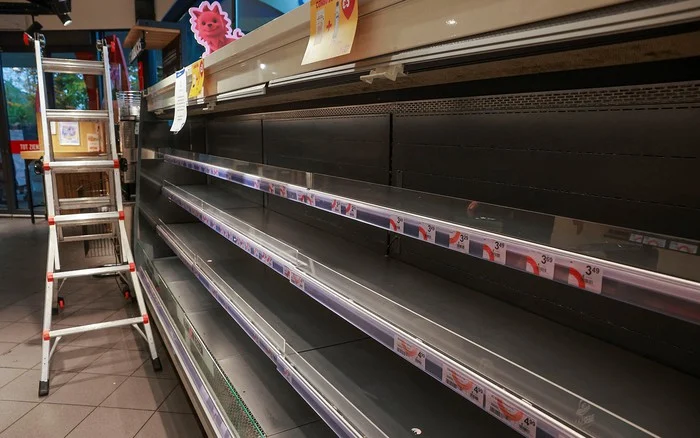
New attacks were recorded in Belgium, Luxembourg, Sweden, Ireland, the Netherlands, Estonia and Finland. In Belgium and Luxembourg alone, about 40 Delhaize supermarkets are affected. Many stores belonging to other retail chains also encountered problems, from ICA and Coop in Sweden, SuperValu in Ireland to K-stores in Finland.
The most noticeable consequence is that the refrigeration system loses the ability to maintain food storage temperature. In some stores, the temperature in the freezer is said to have increased to 50 degrees Celsius. An ICA branch in Sjöbo, southern Sweden, even announced on social networks that their refrigerator and freezer systems were hacked overnight, and the temperature was then adjusted to this level.
Many stores had to close temporarily to handle problems, check goods and restore systems. Some supermarkets in Sweden had to take food out of the freezer and destroy spoiled products.
The damage in Belgium was especially notable. The manager of a Delhaize branch in Hoeilaart estimated that the store lost about 100,000 euros of food, equivalent to nearly 3 billion VND. This figure does not include losses incurred due to the store having to stop operating.
What worries officials and businesses is that the attack method does not seem to be new. Stephan Moelans, CEO of Sabcobel, the company that manufactured some of the affected refrigeration equipment and operates the system for Delhaize, said the refrigerator's evaporative components were switched to defrost mode. When this mode is activated, the device stops cooling and the internal temperature increases.
This is believed to be similar to the attack that occurred in France in early October, when hundreds of supermarkets had hackers control their refrigeration equipment. Local media reported at the time that millions of euros of food had to be destroyed.
After the incident in France, Sabcobel sought to protect customers' devices against this vulnerability. However, Moelans said the problem cannot be solved simply by updating the software, but requires direct adjustments to the hardware. The company had to work overnight to disconnect affected devices from the network.
The risk lies in the fact that the refrigeration systems at many supermarkets are now connected to the Internet so that technical staff can remotely monitor, maintain and troubleshoot problems. This way of operating makes it more convenient for businesses, but at the same time opens up a new entry point if devices are not adequately protected.
Not only Delhaize, many other businesses also confirmed to be affected. Carrefour said 15 out of 700 stores in Belgium had problems, but response measures were deployed to maintain operations. Colruyt Group confirmed that 5 stores had refrigeration systems attacked, while 7 Coop stores in Sweden also reported incidents. In Ireland, 13 SuperValu supermarkets were affected, while refrigeration equipment manufacturer Danfoss said the systems of at least 17 businesses in the Netherlands were targeted.
It is unclear who is behind the latest attacks. Cyber security agencies in Belgium and Sweden are monitoring the incident, while the UK National Cyber Security Center said it is coordinating with international partners and businesses to understand the incident. No incidents have been recorded in the UK.
Continuous attacks targeting refrigeration systems in many countries show that devices that seem to have little to do with cybersecurity can also become targets. For supermarkets, if the temperature control system is interfered with, large-value goods can spoil within a few hours, leading to losses not only from lost food but also from interrupted business operations.