ASEAN 5G Strategy: Innovation to create real value
Executive Briefing
Synthesized and verified with gemini-2.0-flash-thinking-exp
“# ASEAN 5G Strategy: Innovation to create real value Quang NinhThe core challenge today is to shift”
Key Takeaways
- 1.# ASEAN 5G Strategy: Innovation to create real value Quang NinhThe core challenge today is to shift the focus from expanding 5G coverage to effectively exploiting practical applications, according to managers at the ASEAN Conference on 5G.
- 2.The 7th ASEAN Conference on 5G took place on October 29 within the framework of Vietnam International Digital Week 2026.
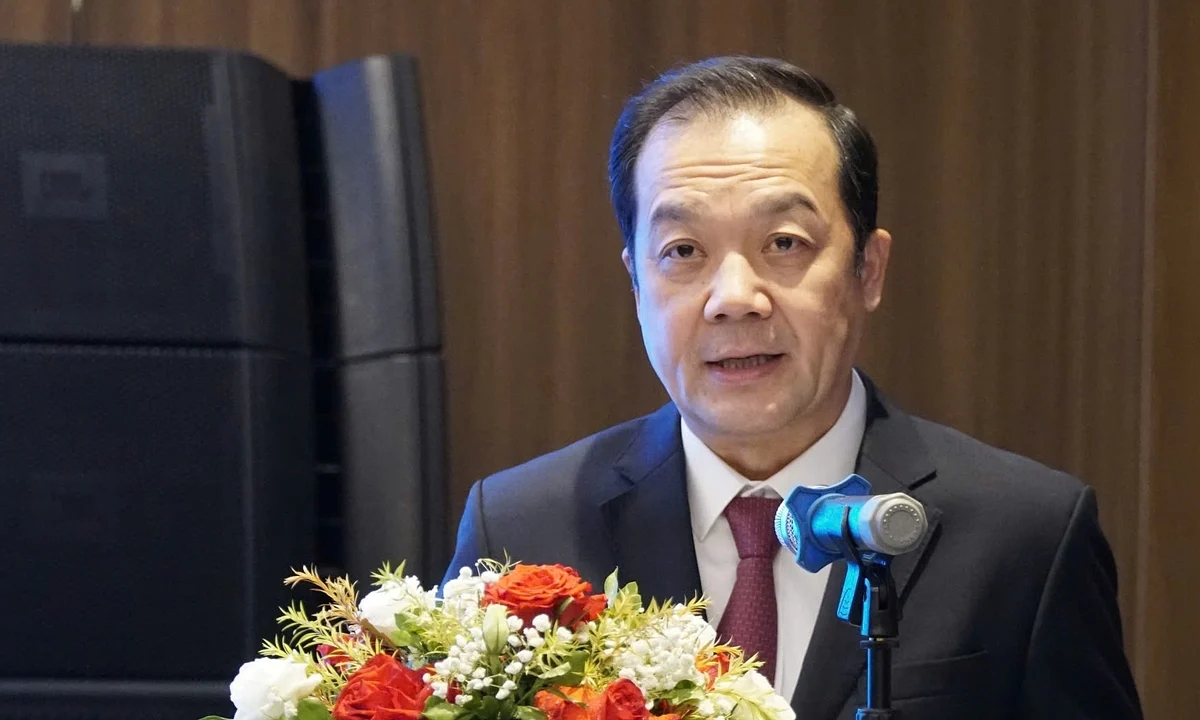
- 3.Opening the event, Deputy Minister of Science and Technology Pham Duc Long emphasized that 5G does not simply improve the speed of traditional telecommunications connections, but is also a key infrastructure foundation for digital transformation, opening up space to innovate production and business models in many fields such as industry, transportation, healthcare, education and agriculture.
Quang NinhThe core challenge today is to shift the focus from expanding 5G coverage to effectively exploiting practical applications, according to managers at the ASEAN Conference on 5G.
The 7th ASEAN Conference on 5G took place on October 29 within the framework of Vietnam International Digital Week 2026. Opening the event, Deputy Minister of Science and Technology Pham Duc Long emphasized that 5G does not simply improve the speed of traditional telecommunications connections, but is also a key infrastructure foundation for digital transformation, opening up space to innovate production and business models in many fields such as industry, transportation, healthcare, education and agriculture.
According to survey results announced at the conference, ASEAN countries all have 5G, of which 10 countries have commercial deployment and one country is testing. Vietnam has moved from the testing phase to large-scale deployment with population coverage reaching 90.2% and more than 30,000 Viettel 5G base stations by the end of 2025, with 22.41 million 5G subscribers as of March. Meanwhile, Cambodia officially entered the commercial 5G era from January 1, aiming for coverage from the current 34.5% to 70–80% of the population by 2032. In Thailand, major carriers also maintain 5G coverage at 98%.
However, the report also points out disparities between countries. The difference lies not only in the time of commercialization or coverage, but also in the ability to exploit 5G features and the level of penetration into economic sectors.
At the forum, delegates agreed that the focus for the period 2027–2030 must be to promote specialized applications to solve the problem of investment efficiency. Many typical models have demonstrated clear effectiveness, such as the 5G Smart Hospital project in Thailand integrating self-driving cars, AI emergency rooms, and virtual clinics; SCG's smart and green mine model helps reduce stone transportation fuel costs by up to 75% and carbon emissions by up to 35%; or apply internal 5G network (private 5G) and computer vision (AI vision) at cement factories and industrial parks.
To overcome barriers in financial efficiency and revenue models, Deputy Minister Pham Duc Long proposed three groups of key solutions for ASEAN countries and international partners: assessing the current situation of transparency, clearly recognizing the current status of implementation to identify difficulties and identify priority areas; strengthen public-private cooperation and international support; In-depth discussion on next generation networks such as 5G-Advanced (5G-A), AI-Native 6G and non-terrestrial telecommunications network (NTN).
He believes that, with cooperation between ASEAN countries and the companionship and contributions of the business community and international organizations, it is possible to gradually narrow the gap in deployment capacity, better exploit the potential of 5G and form a vision of 6G and next generation network technologies to create motivation for digital economic development in the region.
In a broader perspective, initiatives such as Japan's digital corridor (FOIP Digital Corridor) or the promotion of Open RAN, comprehensive optical network (APN) and integrated artificial intelligence on network (AI-RAN) are also discussed to strengthen economic security and resilience of the global supply chain.
Experts say that the success of new generation telecommunications infrastructure is not measured by the pure number of base stations, but is benchmarked through measurable socio-economic value. Consensus between state management agencies, international organizations and the technology business community is the key for ASEAN to narrow the development gap, creating a driving force for the region's digital economy in the next decade.
Vietnam International Digital Week 2-26 takes place from October 28 to 30 in Quang Ninh, organized by the Ministry of Science and Technology, including trend and policy dialogue sessions, combined with technology display and demonstration activities.
Le Tan