Chinese hacker 'star' joins Z.AI
Executive Briefing
Synthesized and verified with gemini-2.0-flash-thinking-exp
“# Chinese hacker 'star' joins Z.AI Yuki Chen, known as China's "hacker star", joined artificial int”
Key Takeaways
- 1.# Chinese hacker 'star' joins Z.AI Yuki Chen, known as China's "hacker star", joined artificial intelligence startup Z.AI with the goal of ensuring network security.
- 2."New journey, new mission," Chen wrote on X this week when announcing his move to Z.AI (also known as Zhipu).
- 3."I am delighted to have the opportunity to contribute to building a safe cyberspace with the power of advanced artificial intelligence." A Z.AI representative later said that Chen joined the company last weekend.
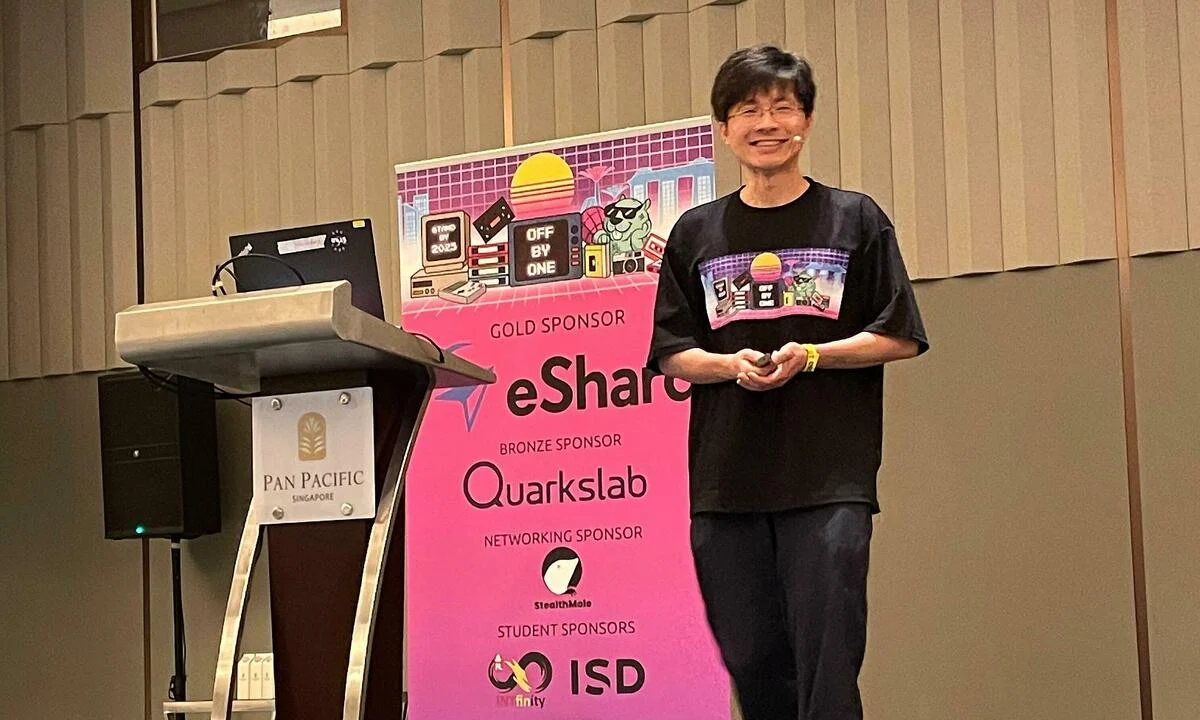
Yuki Chen, known as China's "hacker star", joined artificial intelligence startup Z.AI with the goal of ensuring network security.
"New journey, new mission," Chen wrote on X this week when announcing his move to Z.AI (also known as Zhipu). "I am delighted to have the opportunity to contribute to building a safe cyberspace with the power of advanced artificial intelligence."
A Z.AI representative later said that Chen joined the company last weekend. Before becoming an official employee, he used Z.AI's GLM model to detect 23 security vulnerabilities in Microsoft's Windows operating system. The American software company later confirmed the information.
According to SCMP, Yuki Chen's real name is Chen Xuebin, known in the cybersecurity community by the nickname "Guhe" and is China's leading security vulnerability researcher. He is called a "white hat hacker star" with 15 years of experience detecting vulnerabilities in both software and hardware.
Before coming to Z.AI, Chen worked at Qihoo 360's 360Vulcan security research team, holding leadership roles in the field of vulnerability research at several Chinese cybersecurity organizations before becoming an independent researcher.
Chen was named in Microsoft's top 10 "Most Valuable Security Researchers" in 2019, 2021, 2022, 2023 and 2024. In 2024, the Security Research Center of the Federal Institute of Technology Zurich (ETH Zurich) of Switzerland also honored him as one of China's outstanding "super hackers" working in the civilian sector. He also received the Pwnie Award twice - an award considered the "Oscar of hackers".
According to EDaily (Korea), Chen's joining Z.AI takes place in the context of cyber attacks with the "help" of AI appearing more and more. The company's GLM-5.3 is one of the best vulnerability detection tools, significantly outperforming its predecessor GLM-5.2.
Last month, startup Anthropic evaluated GLM-5.3 as having cyber attack capabilities similar to the Claude Mythos model, including the ability to automatically develop security vulnerabilities from start to finish. The US government later ranked GLM-5.3 as the "most capable cybersecurity" open source model, although still about four months behind the most advanced US AI.
It is currently unclear what position Chen holds at Z.AI. However, according to China Daily, he could lead the safety team - an issue increasingly focused on by many artificial intelligence companies. For example, OpenAI has a Preparedness department to help control and reduce artificial intelligence risks, or Google DeepMind has a Frontier Safety Framework rule set to monitor capacity, detect risks, and deploy response measures.
Some experts say that a super hacker joining an AI company shows the potential of combining the analytical capabilities of skilled security researchers with the cybersecurity power of large language models.
"The handshake is truly formidable," Park Se-jun, CEO of cybersecurity company Theory, wrote on Facebook.
Z.AI (Zhipu AI) was founded in 2019 in Beijing, developed from a research team at Tsinghua University. The company mainly focuses on developing large language models and AI products of the GLM (General Language Model) series, and is one of the Chinese AI startups receiving investment from domestic technology funds and enterprises.
Bao Lam summary
- Chinese AI can 'pretend to be good' to bypass evaluation
- 'Mysterious AI' Ox Alpha uses entirely Chinese chips
- Startup Z.AI confirmed to be behind the mysterious model