Decade-old NGINX flaw allows unauthenticated remote code execution
Executive Briefing
“A decade-old vulnerability in NGINX allows unauthenticated attackers to run code on servers...”
Key Takeaways
- 1.The vulnerability, CVE-2026-123007, has been present in NGINX's open-source code since version 1.9.5, released on September 22, 2015.
- 2.F5 states that attackers can run code where ASLR is turned off or can be bypassed.
- 3.F5 released versions 1.31.9 and 1.30.7 to fix all five flaws, which score 9.2 out of 10 on CVSS 4.0.
A decade-old vulnerability in NGINX allows unauthenticated attackers to run code on servers with HTTP/2 enabled. F5 has released emergency patches to address this flaw alongside four related issues.
Incident Details & Technical Context
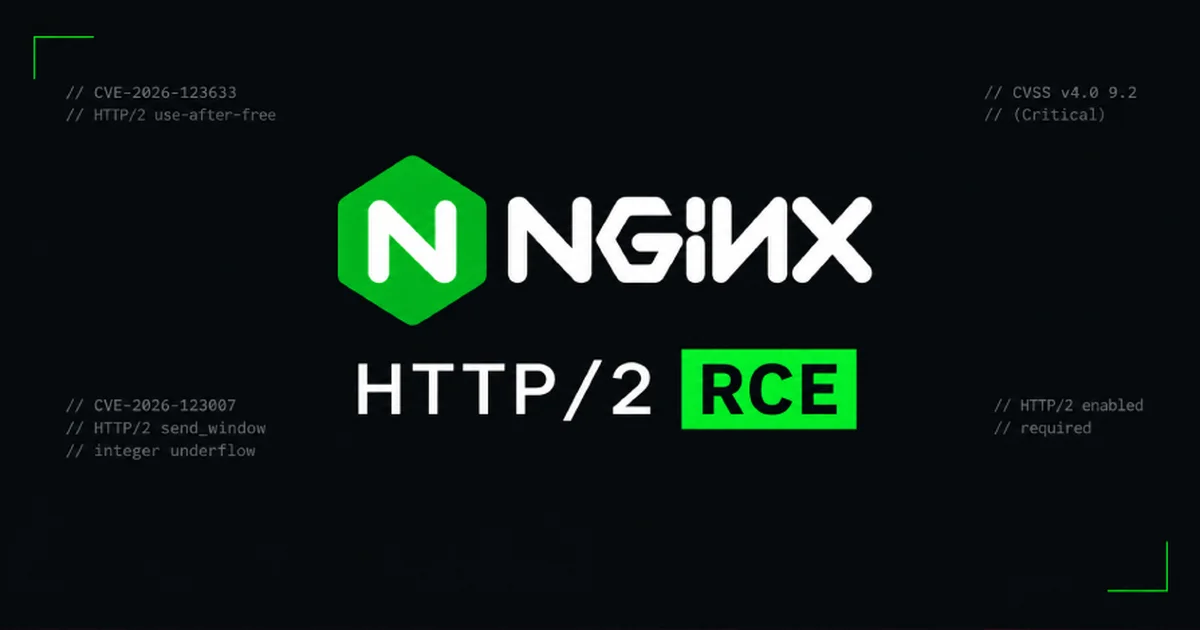
The vulnerability, CVE-2026-123007, has been present in NGINX's open-source code since version 1.9.5, released on September 22, 2015.
F5 states that attackers can run code where ASLR is turned off or can be bypassed.
F5 released versions 1.31.9 and 1.30.7 to fix all five flaws, which score 9.2 out of 10 on CVSS 4.0.
Risk Assessment & Security Implications
The decade-long presence of this flaw in widely deployed web server software highlights the critical need for regular security audits of complex network protocols like HTTP/2.
Mitigation & Factors to Watch
It remains unknown whether this vulnerability has been actively exploited in real-world attacks on the internet.