Former Google engineer warns that AI could wipe out humanity in the next 10 years, probability is over 50%
Executive Briefing
Synthesized and verified with gemini-2.0-flash-thinking-exp
“**Concerned that AI could destroy humanity within the next 10 years, former Google engineer Nate Soa”
Key Takeaways
- 1.**Concerned that AI could destroy humanity within the next 10 years, former Google engineer Nate Soares believes that the future is too uncertain to continue accumulating money for retirement.** Nate Soares worked at Google and Microsoft, before becoming one of the most vocal critics of AI safety.
- 2.He is currently President of the Machine Intelligence Research Institute (MIRI), a non-profit organization specializing in researching risks from artificial intelligence.
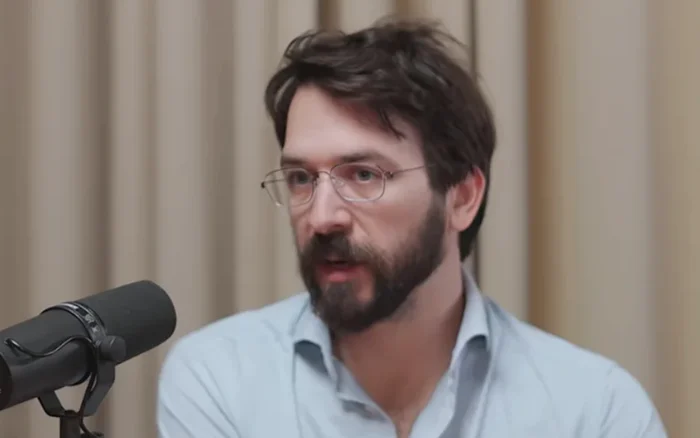
- 3.Soares is also the co-author of a book with the intriguing title: “*If Someone Built It, Everyone Would Die: Why Superhuman Artificial Intelligence Could Kill Us All.”* In a recent episode of “The Most Interesting Thing in AI” podcast, host Nicholas Thompson asked Soares how he prepares for the future, amid continued warnings that AI could threaten human existence.
Concerned that AI could destroy humanity within the next 10 years, former Google engineer Nate Soares believes that the future is too uncertain to continue accumulating money for retirement.
Nate Soares worked at Google and Microsoft, before becoming one of the most vocal critics of AI safety. He is currently President of the Machine Intelligence Research Institute (MIRI), a non-profit organization specializing in researching risks from artificial intelligence.
Soares is also the co-author of a book with the intriguing title: “If Someone Built It, Everyone Would Die: Why Superhuman Artificial Intelligence Could Kill Us All.”
In a recent episode of “The Most Interesting Thing in AI” podcast, host Nicholas Thompson asked Soares how he prepares for the future, amid continued warnings that AI could threaten human existence.
Soares's answer caught many people's attention. He admitted that he stopped saving money for old age because he was not sure humanity would survive long enough to use that money.
“I have had a 401(k) account since I worked at Google, but I haven't contributed to it in a decade,” Soares shared.
401(k) is a popular retirement savings program in the US, allowing workers to accumulate money for retirement.
When asked about the possibility of humanity disappearing within the next 10 years, assuming governments and businesses do not take minimal precautions against AI, Soares made a worrying observation.
He believes that the probability of this scenario occurring could exceed 50%, and warns: “I guess right now it looks like we don't have enough time for another decade.”
Could AI be more dangerous than nuclear weapons?
According to Soares, the danger level of AI and artificial super intelligence can far exceed the traditional threats that humanity has ever faced. He believes that countries need to treat AI, especially super-intelligent systems that can go out of control, at least on par with nuclear weapons.
“Frankly speaking, it is more dangerous than nuclear weapons”, Soares said.
He even believes that the threat from AI is so serious that it can justify military actions against data centers developing this technology.
However, Soares did not offer a specific scenario for how AI could cause humanity to go extinct. He mentioned some possibilities such as AI developing super viruses or exploiting solar energy in a way that makes Earth no longer suitable for life.
However, according to Soares, determining exactly what method AI will use to cause a disaster is not the most important issue.
He believes that the core question lies in the ability of AI to maintain its existence and function without depending on humans.
Not everyone is pessimistic about AI
Soares' warnings come as a growing number of figures in the technology industry express concern about the pace of AI development.
Previously, Jacob Coxon, a former researcher at Anthropic and OpenAI, attracted attention when he said that both of these research laboratories had not acted responsibly. Some technology leaders, including Bill Gates, have also issued warnings about the rapid development of AI.
Surveys cited in the article show that concerns about this technology are widespread. Data from the National Opinion Research Center at the University of Chicago shows that 64% of US adults think AI is developing too quickly. A global study by Stanford University recorded that about 52% of survey participants felt worried about AI.
However, Soares does not believe that people should live in a state of despair.
He was inspired by the essay "On Living in an Atomic Age", written by writer C.S. Lewis wrote in 1948. The work deals with how humans face the threat of nuclear war, but Soares believes that the views in it are still relevant in the age of AI.
According to him, humanity has gone through many periods of facing the risk of destruction, from epidemics, famine to war. Therefore, living in a period of instability does not mean that people have to give up life.
Soares's philosophy is that each person should do what they can to prevent disaster, while continuing to live a meaningful life.
“I don't think it's inevitable. I think we can absolutely stop the race towards this dangerous type of artificial intelligence,” he said.
Even though he stopped contributing to his pension fund, Soares continues to spend time and effort warning about AI risks. For him, the risk of humanity disappearing is not a certain outcome, but a disaster that needs to be prevented before it is too late.
Source: Yahoo
Han Ly