Hackers raised refrigerator temperatures to 50 degrees Celsius at a series of European supermarkets
Executive Briefing
Synthesized and verified with gemini-2.0-flash-thinking-exp
“# Hackers raised refrigerator temperatures to 50 degrees Celsius at a series of European supermarket”
Key Takeaways
- 1.# Hackers raised refrigerator temperatures to 50 degrees Celsius at a series of European supermarkets A cyber attack is spreading across supermarkets in Europe, with refrigerators and freezers overheating in the middle of the night, forcing stores to destroy food.
- 2.Similar to the campaign targeting supermarkets in France in mid-October, the November 2 attack affected supermarket chains Ahold Delhaize and Colruyt in Belgium and Luxembourg and two Swedish food retailers, ICA and Coop.
- 3.IKEA, a famous furniture and food brand, noted at least one store was affected and did not rule out the possibility of other locations also having operations disrupted.
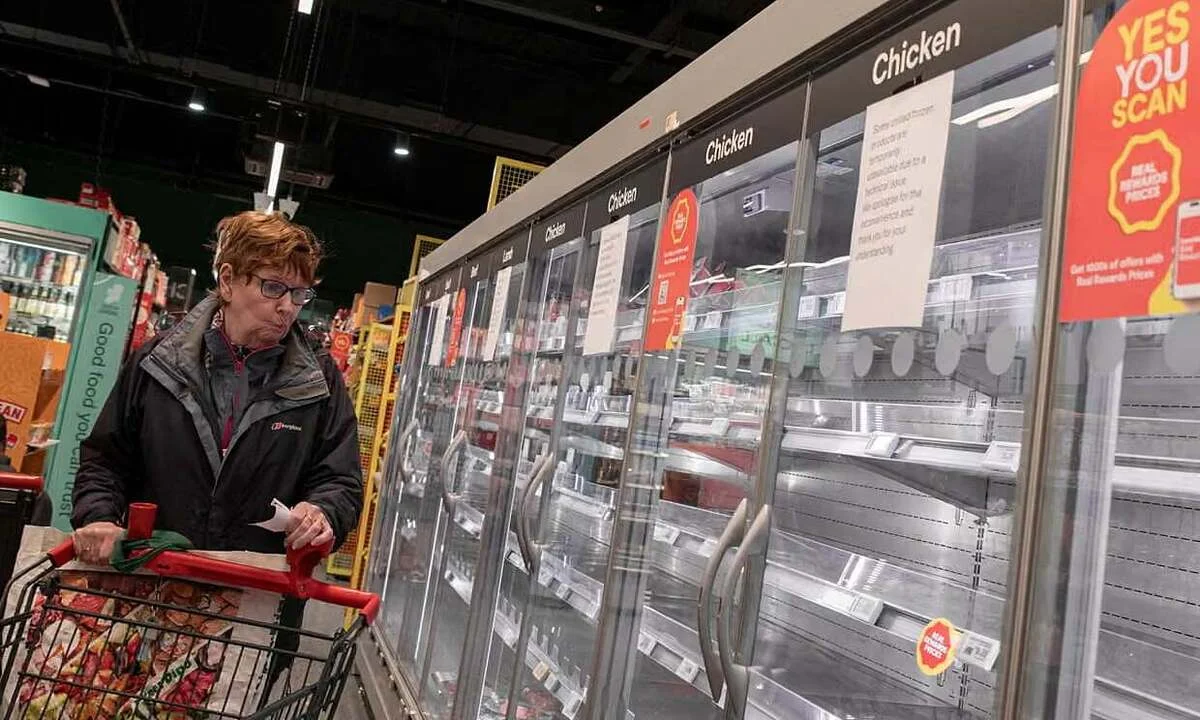
A cyber attack is spreading across supermarkets in Europe, with refrigerators and freezers overheating in the middle of the night, forcing stores to destroy food.
Similar to the campaign targeting supermarkets in France in mid-October, the November 2 attack affected supermarket chains Ahold Delhaize and Colruyt in Belgium and Luxembourg and two Swedish food retailers, ICA and Coop. IKEA, a famous furniture and food brand, noted at least one store was affected and did not rule out the possibility of other locations also having operations disrupted.
A spokesman for Colruyt, the group that operates Spar stores in Belgium under a franchise model, said the refrigerator systems at five locations were controlled remotely. In Ireland, wholesaler Musgrave said the incident affected 13 SuperValu stores, forcing them to recall some frozen and refrigerated products. Carrefour, the retail chain heavily affected by the attack in France, this time said 15 of its 700 stores in Belgium were affected.
"Everything is destroyed," Engla Ingwall, sales manager at an ICA franchise in Stockholm, told Reuters. "The incident happened at 2 a.m. but was discovered several hours later. All of our freezers turned up the heat to 50 degrees Celsius."
An ICA spokesman said the company was aware of an incident that occurred overnight, affecting the refrigeration system at "a limited number of stores".
Luc De Laet, founder and owner of the De Laet & Van Haver meat store chain in Belgium, said he was woken up at 3:30 by an employee announcing there was a problem. He immediately went to the store in the southern city of Antwerp and discovered that the temperature in the freezers had increased to 18 degrees Celsius. He estimated that the incident caused 15,000 euros worth of meat (430 million VND) to be spoiled.
"It's scary. They hacked the temperature recording system and were able to reprogram the system remotely," he said, saying having to throw away large amounts of food made him extremely angry.
De Laet believes that hackers are trying to destabilize the European economy. He has contacted the police but it is unclear whether the agency will open an investigation or not. "I just want to tell them two words: Stay alert, please, because something is happening," he said.
Previously, in a situation in France, police said hackers took control of cooling equipment at hundreds of supermarkets, causing fires and food damage. Ahold also reported a cybersecurity incident to the police at that time.
Retail stores - easy targets
From refrigerators and heating systems to security cameras and alarms, more and more devices that were once primarily mechanical are now being monitored and controlled remotely. This opens up new opportunities for cybercriminals.
Some of the refrigerators affected in the November 2 attack used temperature control technology from Danish company Danfoss - the unit that was targeted in the incident in France. Danfoss confirmed that it is coordinating with customers to implement corrective measures.
The European Commission said the latest issue showed that threats in the digital space were causing serious disruptions. "This is a deliberate action aimed at disrupting food supply chains and undermining consumer confidence - a warning that we must take seriously," said Christophe Hansen, European Commissioner in charge of agriculture.
Tom Hegel, a researcher at cybersecurity company SentinelOne, assessed that such attacks are often related to blackmail purposes, political motives or activities of state-level organizations. However, these two cases did not come with financial demands, indicating the possibility that this was an act of sabotage.
"The retail industry is vulnerable to attacks because chain stores operate a huge system of refrigeration equipment controllers, building management systems, access control panels and counter payment devices," he said, adding that it would be difficult to trace the hackers. "An attacker logging into an exposed dashboard leaves almost no trace... From the defense team's perspective, it's difficult to distinguish a teenager from an intelligence agency when both commit this act."
Currently, no individual or organization has claimed responsibility. However, this increases European authorities' concerns about hybrid threats targeting infrastructure.
"In my opinion, there are two reasonable scenarios about the subject behind: a certain country is sending signals and demonstrating capabilities; or a hacker is operating alone, carrying out attacks for personal purposes," Rafe Pilling, Senior Director of threat intelligence at cybersecurity company Sophos, commented on Guardian.
"It's unclear who is behind it and it may never be known," Katrien Eggers, spokeswoman for the Belgian Center for Cyber Security, told Reuters. "In theory, any information technology system can be attacked. AI can now be used to successfully exploit vulnerabilities, especially by actors with sophisticated capabilities."
Chau An summary