Quantum computers 'will be able to crack bank encryption in three days'
Executive Briefing
Synthesized and verified with gemini-2.0-flash-thinking-exp
“# Quantum computers 'will be able to break bank encryption in three days' RSA-2048, the most advanc”
Key Takeaways
- 1.# Quantum computers 'will be able to break bank encryption in three days' RSA-2048, the most advanced encryption technology currently available for global digital infrastructure, is estimated to be broken by a 23,000-qubit quantum computer.
- 2.Posted on the cryptography electronic archive *Cryptology ePrint Archive* on November 4, research conducted by quantum computing company Alice & Bob (France) estimates that breaking the RSA-2048 code requires a quantum computer with 23,000 qubits and a required time of 3.14 days.
- 3.Quantum computers use the principles of quantum mechanics to process and store information.
RSA-2048, the most advanced encryption technology currently available for global digital infrastructure, is estimated to be broken by a 23,000-qubit quantum computer.
Posted on the cryptography electronic archive Cryptology ePrint Archive on November 4, research conducted by quantum computing company Alice & Bob (France) estimates that breaking the RSA-2048 code requires a quantum computer with 23,000 qubits and a required time of 3.14 days.
Quantum computers use the principles of quantum mechanics to process and store information. Unlike traditional computers that use binary bits (0 or 1), quantum computers use qubits - information units that simultaneously exist in both 0 and 1 states. Thanks to that, the system can perform many calculations at the same time and solve complex problems that classical computers need many years to process.
Meanwhile, RSA-2048 is considered the "gold standard" in the field of encryption. Technology that currently helps protect digital infrastructure, from websites and social networks to online banking and data storage, is considered very difficult to break because it requires analyzing a module of 617 digits into two prime numbers.
According to Interesting Engineering, in fact, creating this encryption is easy but breaking it is very difficult due to the limitations of classical computers. Systems of this type will have to spend a huge amount of resources to decrypt, to the point of "eclipsing the benefits gained from breaking the code", so hackers often do not choose it.
In 1994, mathematician Peter Shor published the famous algorithm that bears his name, which can break the RSA-2048 encryption using a quantum computer. The only problem is that the algorithm needs a powerful and accurate machine to run. In 2019, Google estimated a quantum computer would need the power of 20 million physical qubits to crack RSA-2048. By 2025, this number will decrease to less than one million qubits.
According to France24, this improvement partly comes from algorithm optimizations made by mathematicians over the past 30 years, and the rest thanks to advances in quantum computing technology, which helps improve the logic processing performance of qubits. However, the number of 23,000 qubits and 3.14 decoding days announced by Alice & Bob is still considered a surprise, showing that the "evolution" of quantum computers is faster than expected.
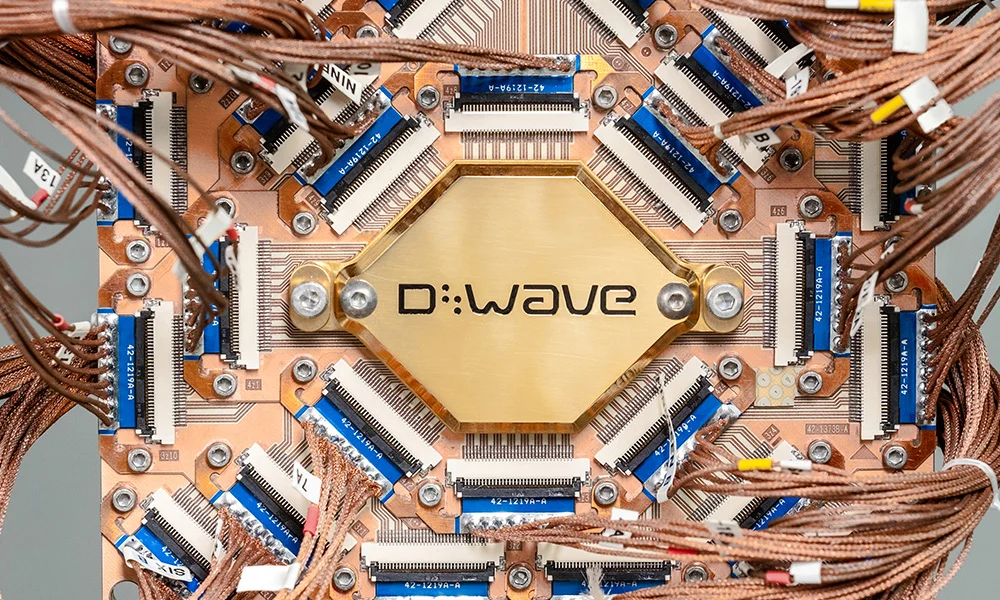
In the study, Alice & Bob said 23,000 qubits is a level that quantum computers cannot currently achieve. For example, D-Wave Advantage2, part of the quantum annealing family of computers, currently reaches 4,400 qubits. The challenge lies in the backend infrastructure needed to operate a quantum computer, while also ensuring the entire system fits in a reasonably sized laboratory.
"But building such a quantum computer will be feasible in the next few years," the team wrote in the research results. "Although it is an estimate, this could become a reality by the end of the decade, and the RSA-2048 encryption algorithm will become obsolete."
The group recommends that the cybersecurity community needs to control the RSA-2048 algorithm more strictly. At the same time, it is possible to study converting the system to new algorithms before quantum computers become more popular.
The day quantum computing can break encryption forms used in information technology, also known as Q-Day, is predicted by the community to come soon. In mid-year, Google warned that quantum computers could be capable of attacking some encryption systems by 2029, 6-15 years earlier than previous predictions. Similarly, cloud computing services company Cloudflare also announced the deployment of a new form of encryption in 2029.
According to experts, once quantum computers have enough stability to operate and break traditional cryptography, all "sensitive" data such as financial transactions, medical records, emails or accounts protected by popular algorithms today can be opened. Over the years, hacker groups are said to have "stored" encrypted data files that cannot be opened, with the intention of decrypting them as soon as possible.
However, the bottleneck is how to create more stable qubits. Currently qubits only operate in extremely cold and very low pressure environments, limiting any interaction with the environment to make them more stable. Even the most advanced qubits, such as the superconducting qubits being developed by Google and IBM, have a lifespan measured in milliseconds.
Dustin Moody, a mathematician participating in the post-quantum cryptography project at the US National Institute of Standards and Technology (NIST), said large, multinational corporations are well aware of the decryption threat of quantum computers and are "acting quite quickly". Speaking to Reuters, he said the White House recommends 2035 as the date that organizations should aim for to complete the adoption of post-quantum cryptography. NIST completed a set of encryption algorithms in 2024, designed to withstand cyber attacks from quantum computers.
Bao Lam summary
- Vietnam 'needs to prepare immediately' for quantum security risks
- The world's most accurate quantum computer sets a new record
- Security concerns in Vietnam when Q-Day comes early
- Quantum computer solves 110 year problem in 19 seconds
- Experts propose three stages towards mastering post-quantum cryptography technology