Russia permanently closed the gas leak area on the ISS station
Executive Briefing
Synthesized and verified with gemini-2.0-flash-thinking-exp
“# Russia permanently closed the gas leak area on the ISS station The Roscosmos space agency will cl”
Key Takeaways
- 1.# Russia permanently closed the gas leak area on the ISS station The Roscosmos space agency will close the tunnel connecting the Russian module on the ISS after years of unsuccessful attempts to repair the gas leak.
- 2.*Gizmodo* reported on October 27 that after many years of efforts to find and repair gas leaks on the International Space Station (ISS) but failed, the Russian space agency Roscosmos is preparing to close the affected area.
- 3.The gas leak was first discovered in 2019 in the PrK transit tunnel connecting the docking port with the Russian Zvezda module.
The Roscosmos space agency will close the tunnel connecting the Russian module on the ISS after years of unsuccessful attempts to repair the gas leak.
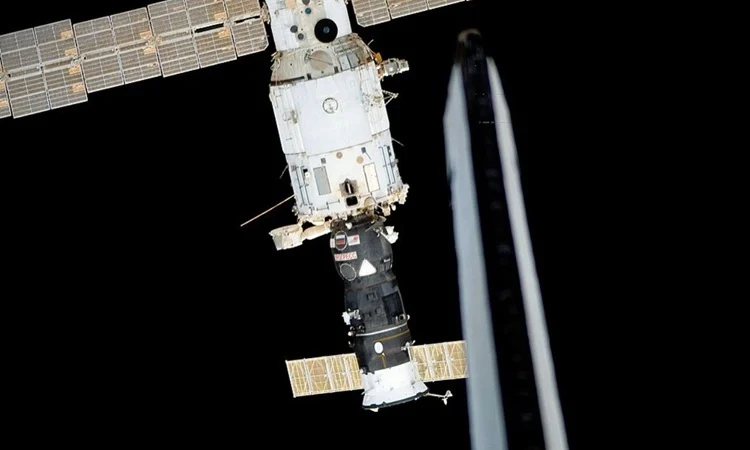
Gizmodo reported on October 27 that after many years of efforts to find and repair gas leaks on the International Space Station (ISS) but failed, the Russian space agency Roscosmos is preparing to close the affected area. The gas leak was first discovered in 2019 in the PrK transit tunnel connecting the docking port with the Russian Zvezda module. Since then, NASA and Roscosmos have conducted many patching efforts but were unsuccessful. Anatoly Zak, the American journalist in charge of RussianSpaceWeb, said Roscosmos seems to have decided to permanently close the hatch between the Zvezda module and the PrK tunnel to isolate the leak location from the rest of the space station.
According to Space News, PrK is a small capsule located in the tail of the Zvezda service module, serving as a transfer tunnel for astronauts to travel and transport cargo between the station's main living space and the Progress transport ship or Soyuz spacecraft docked in the rear archway. Because it is located between two hatches, PrK is an isolated sealed compartment. When necessary, astronauts can tightly close the separation hatch to turn PrK into an independent compartment, helping to pressure isolate from the rest of the station.
Russian space industry analyst Georgy Trishkin, citing private sources, affirmed that NASA pressured Roscosmos to permanently close the PrK tunnel to completely prevent the gas leak incident. The two space agencies once disagreed about the root cause and severity of the incident. Tensions peaked earlier this year when five ISS astronauts were told to shelter in place as Roscosmos prepared a risky plan to fix the leak.
Ars Technica said that after identifying several new suspected leak locations in PrK, Roscosmos directed two Russian astronauts to use saws to access and repair the area suspected of contributing to the incident. NASA officials disagree with Russia's approach and emphasize that the new solution could increase risks to structures there.
Since being discovered, the leak has not only persisted but also become more serious. A report by the NASA Office of Inspector General shows that the gas leak rate from the service module doubled from 0.5 to 1 kg/day in February 2024, then peaked at nearly 1.7 kg/day in April of the same year, forcing US authorities to raise the risk of a leak to the highest level.
In June 2025, the situation looks better. NASA measured a new pressure signal (a change in airflow or cabin pressure detected by sensors), suggesting the leak may have been sealed. Less than a year later, Russian cosmonauts were unloading cargo from the Progress 95 when they discovered the pressure in the PrK tunnel was slowly decreasing. This means air is still escaping from the space station and any positive signs are mistaken. After Russia abandoned plans to cut a support inside the tunnel, the two space agencies continued to argue over the issue before Roscosmos agreed to stop using the PrK tunnel.
Russia will launch the Progress MS-36 cargo ship next month to provide necessities to the ISS station. According to Zak's report, this will be the first resupply mission affected: instead of unloading via the Zvezda module, the Progress MS-36 will use the hatch of Poisk, another module managed by Russia.
An Khang summary