Vietnam proposes three directions for AI cooperation with Korea
Executive Briefing
Synthesized and verified with gemini-2.0-flash-thinking-exp
“# Vietnam proposes three directions for AI cooperation with Korea Hanoi Deputy Minister Tran Trung”
Key Takeaways
- 1.# Vietnam proposes three directions for AI cooperation with Korea Hanoi Deputy Minister Tran Trung Tinh proposed that Vietnam and Korea strengthen cooperation in research, infrastructure development and AI human resource training, towards commercialized products.
- 2.The content was mentioned by Deputy Minister of Science and Technology Tran Trung Tinh at the Vietnam - Korea AI and Digital Technology Forum 2026, taking place on October 29.
- 3.The event was jointly organized by the Ministry of Science and Technology with Korean agencies, including the Ministry of Science and ICT, the Ministry of Foreign Affairs and the National Information Technology Industry Promotion Agency (NIPA), to promote technology cooperation and connect businesses of the two countries.
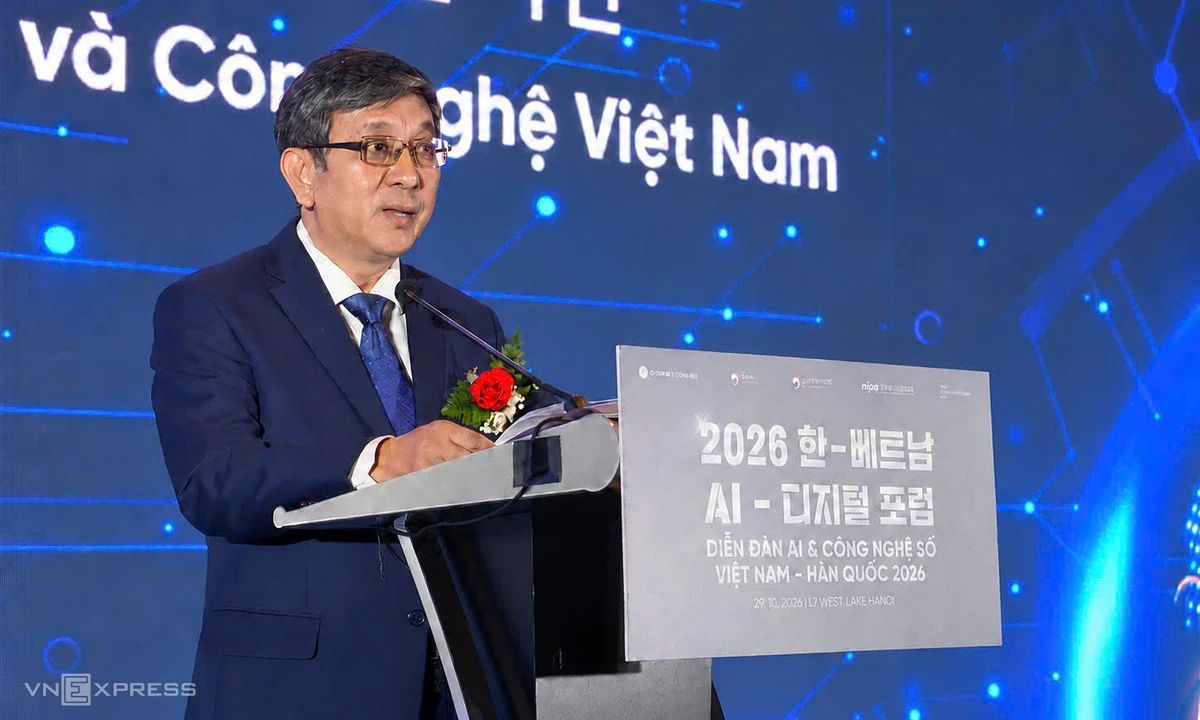
Hanoi Deputy Minister Tran Trung Tinh proposed that Vietnam and Korea strengthen cooperation in research, infrastructure development and AI human resource training, towards commercialized products.
The content was mentioned by Deputy Minister of Science and Technology Tran Trung Tinh at the Vietnam - Korea AI and Digital Technology Forum 2026, taking place on October 29. The event was jointly organized by the Ministry of Science and Technology with Korean agencies, including the Ministry of Science and ICT, the Ministry of Foreign Affairs and the National Information Technology Industry Promotion Agency (NIPA), to promote technology cooperation and connect businesses of the two countries.
According to the Deputy Minister, artificial intelligence is changing production and management methods and becoming an important factor determining the competitiveness of each country. Vietnam identifies AI as one of the strategic technologies and important driving forces to innovate growth models, improve productivity and competitiveness. In this process, Vietnam attaches importance to international cooperation, combining access to global resources with endogenous capacity development, participating more deeply in the global AI value chain.
He assessed Korea as an important partner to realize the above directions. Korea's strengths in research, high technology and innovation, combined with human resources, dynamic market and Vietnam's need for technology application are conditions for the two sides to build cooperative relations.
From there, the Deputy Minister proposed three key cooperation directions in the coming time. The first is research, development and application of AI, especially AI models, platforms, large language models and solutions for production, business and services. According to him, cooperative projects need to stem from practical needs, aim at products that can be commercialized, and at the same time improve the technology mastery capacity of the two countries.
The second is to develop AI infrastructure, including data, energy, computing capacity, testing infrastructure and semiconductor technology. The two sides need to promote investment cooperation, connection and effective exploitation of resources, thereby expanding opportunities to access infrastructure and technology for businesses and research organizations.
Training and attracting AI human resources associated with technology research and development activities also plays an important role. The Deputy Minister proposed strengthening links between businesses, universities and research institutes through expert exchange, joint research, engineer training, and improving AI application skills for workers.
To make it a reality, he hopes the business communities of the two countries proactively identify needs and connect to jointly invest and implement specific projects. Enterprises play the role of putting research results into practice, commercializing technology and expanding markets.
Sharing the same opinion, Ms. Lee Miyon, Korean Ambassador to Vietnam, said that the two countries need to expand cooperation from traditional manufacturing to future technology industries such as AI and digital technology. The two sides can build AI data centers, new generation telecommunications networks and strengthen joint research in strategic fields such as semiconductors and AI. Research results also need to be transformed into specific products and services, while creating development opportunities for the two countries' teams of scientists and engineers.
Ms. Lee Miyon also emphasized the potential for applying AI to industries that have deep connections between Vietnam and Korea, such as semiconductors and display screens. Developing solutions suitable for each industry can increase production capacity and product competitiveness in the international market.
Besides technology, she believes that human resource development is a decisive factor in long-term competitiveness. Universities, businesses and research institutes need to coordinate to develop high-quality training programs, connecting knowledge with the actual needs of industry.
Mr. Kim Deuk Jung, Vice President of NIPA, said digital technology cooperation between the two countries previously mainly focused on software and research and development. The two sides now have the opportunity to expand into AI, infrastructure, and data-driven transformation. NIPA plans to strengthen consulting and support activities for businesses in Vietnam, while promoting connection programs, finding technology partners and investments.
According to NIPA representatives, this year's forum is not only a place to share technology and experience but also aims to form joint development projects, test solutions, cooperate in investment and expand markets. Through business connection activities and pairing technology needs, the two sides expect to turn exchanges at the forum into business opportunities.
Vietnam - Korea AI and Digital Technology Forum 2026 has the theme "Beyond digital transformation cooperation, towards an era of AI innovation for everyone", with sessions on AI policy, large language models, computing infrastructure, AI chips and applications in industries. On the sidelines of the forum, there are also activities to introduce artificial intelligence applications and semiconductor technology from Korea to connect and cooperate with Vietnamese businesses.
Nam Nguyen
- AI4VN 2026 explores the potential of autonomous AI