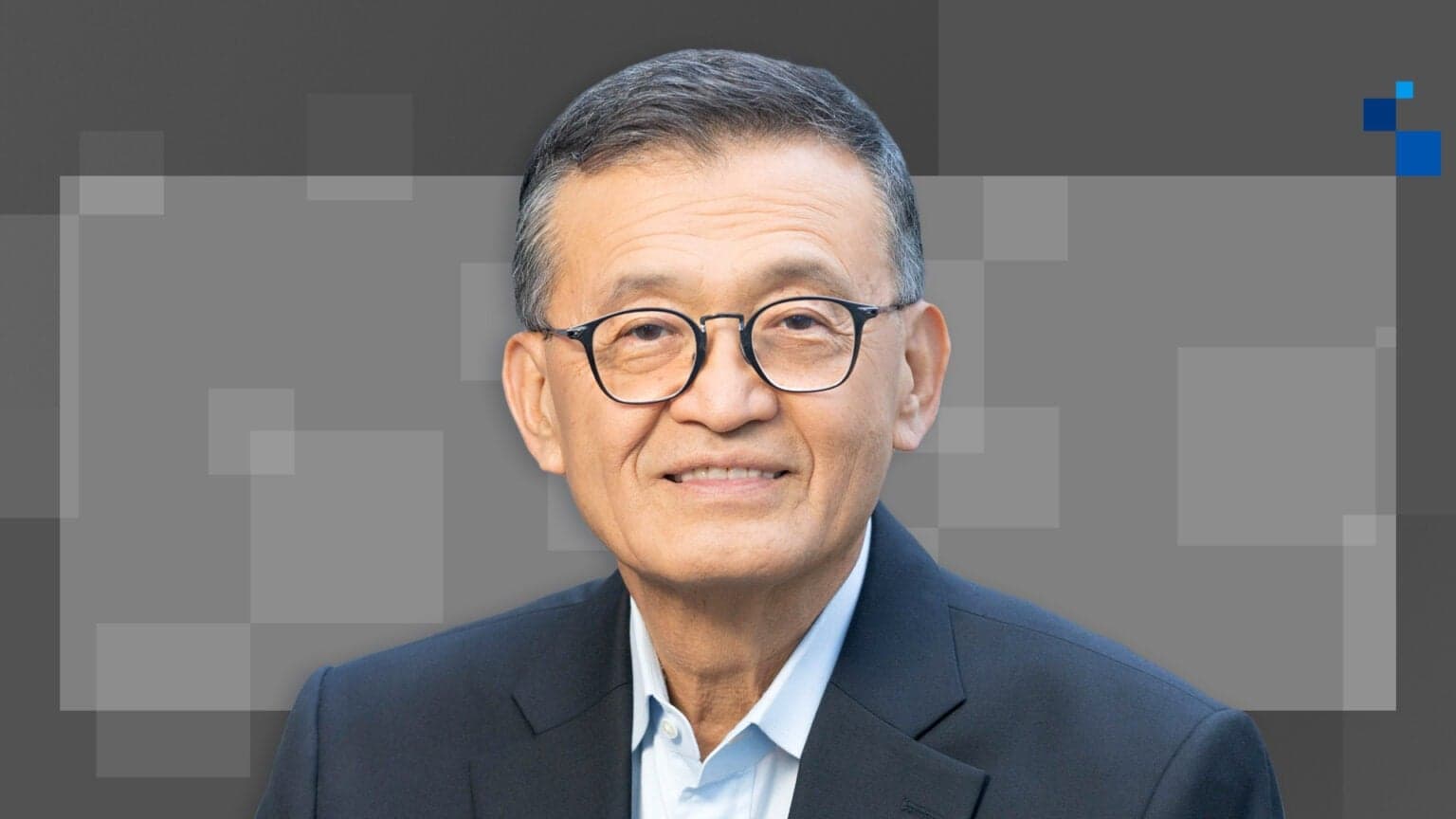
Intel CEO Lip-Bu Tan: Millions of AI agents will be the biggest security challenge
Executive Briefing
Synthesized and verified with gemini-2.0-flash-thinking-exp
“In a conversation with Jasper Zhang, CEO of Hyperbolic, Lip-Bu Tan, CEO of Intel, gave important war”
Key Takeaways
- 1.In a conversation with Jasper Zhang, CEO of Hyperbolic, Lip-Bu Tan, CEO of Intel, gave important warnings about the future of artificial intelligence.
- 2.This event took place when Hyperbolic had just successfully raised $30 million, with the participation of Walden Catalyst, a venture capital fund headed by Tan himself.
- 3.The CEO affirmed that the development momentum of AI will continue and be even greater than the previous Internet revolution.
In a conversation with Jasper Zhang, CEO of Hyperbolic, Lip-Bu Tan, CEO of Intel, gave important warnings about the future of artificial intelligence. This event took place when Hyperbolic had just successfully raised $30 million, with the participation of Walden Catalyst, a venture capital fund headed by Tan himself.
The CEO affirmed that the development momentum of AI will continue and be even greater than the previous Internet revolution. However, he also pointed out that protecting millions of AI agents from unauthorized actions is a core challenge that needs to be addressed right now.
Bottlenecks in AI expansion
Tan analyzes in detail the barriers that are holding back the growth of AI infrastructure today. He listed three major shortages related to data center construction, including memory, GPUs, and power. In addition, financial problems are also highlighted as a serious bottleneck. Tan commented that capital mobilization for infrastructure projects is becoming a factor limiting the industry's development.
Tan's predictions are quite consistent with his previous statements. At that time, Intel CEO predicted that the hardware shortage would last for about three years. He also emphasized that return on investment (ROI) is a key factor to maintain capital flowing into the AI sector. This view is not alone among technology leaders. Elon Musk also predicted the collapse of several AI companies at the end of last month. Tan believes that the market is about to witness a certain correction, but he still maintains an optimistic attitude about the long-term prospects.
Security for millions of AI agents
An important highlight of Tan's speech was the issue of security for AI agents. He describes that we are at the "node" of a new era where there will be "millions" of AI agents operating simultaneously. The biggest challenge lies in how to protect these systems. Tan asked how to prevent agents from performing actions for which they are not authorized. He is concerned about AI agents being able to enter "unexplored territories" and perform tasks beyond the allowed scope. This is a complex problem as the number of agents increases exponentially.
Tan believes that once the hardware and financial constraints are resolved, the industry will continue to grow strongly. Managing security for an ecosystem of millions of independent agents requires new solutions. Companies like Intel are focusing on providing CPUs to meet the computing needs of AI agents. Tan also shared that he often lets AI agents work overnight and evaluates the results in the morning. This approach is similar to the habits of Satya Nadella, CEO of Microsoft. Both leaders consider agent security a top concern in the process of deploying AI into real work.
Perspective
The excitement surrounding artificial intelligence is facing a harsh reality check. Although it is expected to create an influence far beyond the Internet revolution, AI's expansion is being directly constrained by physical and financial limits. The contradiction between theoretical growth rates and the shortage of GPU supply, electricity, and capital flows is creating great risks for AI infrastructure projects. When data center construction costs skyrocket but investment returns are not clear in the short term, the technology infrastructure market is at risk of facing fierce adjustments.
Besides the infrastructure problem, the system security warning from Lip-Bu Tan reflects a shift in awareness of hardware suppliers. The emphasis on AI agent security at a time when Intel is selling CPUs to this segment shows that pressure for accountability is increasing in the industry. Technology companies cannot simply focus on selling computing power, they are facing the problem of controlling systemic risks to avoid unpredictable consequences when millions of AI agents automate tasks beyond their authority.
Tan's three-year hardware shortage forecast could directly impact data center expansion plans of major customers. This time frame will force cloud service providers to re-evaluate the entire roadmap. Instead of just racing to expand the scale of physical servers, businesses will be forced to optimize processor architecture and maximize performance on each available computing core to maintain capacity during a period of hardware tightening.
Attribution & Original Source
Synthesized and verified from Tinhte.vn. All copyrights and intellectual property belong to the original publication.