China creates cassette tapes made from human DNA, which can contain the entire music store of humanity
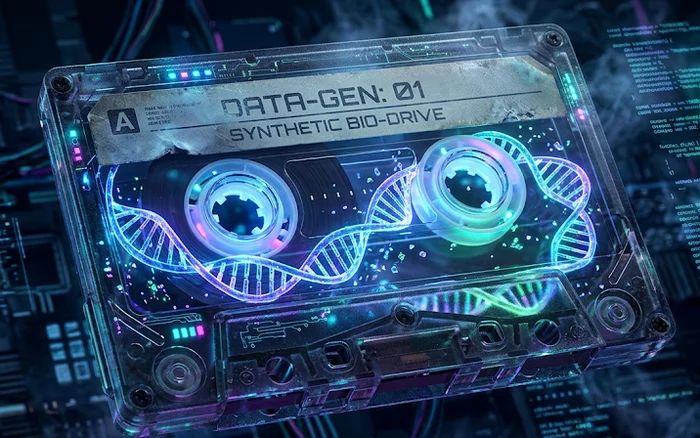
Executive Briefing
Synthesized and verified with gemini-2.0-flash-thinking-exp
“**Once containing only a few dozen songs, Chinese scientists used the same design to store data in a”
Key Takeaways
- 1.**Once containing only a few dozen songs, Chinese scientists used the same design to store data in a completely different way, opening up new directions for the storage problem of the future.** Each side contains around 12 songs, and the data is recorded on a strip of polyester film coated with a layer of magnetic particles.
- 2.Cassette tapes were once the pinnacle of music storage and countless legendary artists have sold their works on this ancient storage format.
- 3.While music lovers are rediscovering cassette tapes as a nostalgic hobby, a group of Chinese scientists are turning the old technology into the future of digital storage.
Once containing only a few dozen songs, Chinese scientists used the same design to store data in a completely different way, opening up new directions for the storage problem of the future.
Each side contains around 12 songs, and the data is recorded on a strip of polyester film coated with a layer of magnetic particles. Cassette tapes were once the pinnacle of music storage and countless legendary artists have sold their works on this ancient storage format. While music lovers are rediscovering cassette tapes as a nostalgic hobby, a group of Chinese scientists are turning the old technology into the future of digital storage.
They claimed the new tape they had just created could contain every piece of music ever recorded by humans.
Behind this idea is Professor Jiang Xingyu, majoring in biomedical engineering at Southern University of Science and Technology in Guangdong. Combining the convenience of the classic cassette design with DNA sequences, the Professor and his colleagues created a long-term storage medium, in a context where putting DNA storage into practical applications is still an unsolved problem.
In the new tape, the magnetic particle layer is replaced with a long plastic strip attached to synthetic DNA molecules. According to Professor Jiang, the team programmed four types of DNA bases, including A, T, C and G, to create the necessary sequences for encoding digital files onto tape. Because DNA bonds are inherently fragile, the researchers coated them with a layer of zeolitic imidazolate "armor" that stands the test of time. Each kilometer of ice carries 28.6 mg of DNA, with the same data being saved in multiple copies so that the information retains its integrity for hundreds of years.
The tape is divided into a very large number of addressable partitions, and the system can process up to 1,570 partitions per second. To be able to read the data on the DNA cassette, the research team developed a separate "drive". In testing, the drive randomly stores incomplete image parts to free partitions, then retrieves, deletes, and performs other storage operations on the synthetic DNA sequence within 50 minutes. However, to fully restore an image, people still need "new generation" DNA sequencing and decoding techniques.
The new capacity figure is what makes the comparison with the old cassette so lame. The total capacity of the DNA tape reached 36 petabytes, so if each song took up about 10 megabytes, it could hold more than 3 billion songs, whereas the original cassette system only had enough for two dozen songs on both sides.
According to research, DNA has extremely high storage density, about 455 exabytes per gram. The authors suggest that a compact, high-speed cassette design could help industry bring this promising technology into current computer systems.

