While Siri AI is available in Vietnamese, iPhones in China are just now preparing to be updated with Apple Intelligence, Siri AI does not even support it.
Executive Briefing
Synthesized and verified with gemini-2.0-flash-thinking-exp
“**Apple confirms Apple Intelligence coming to iPhones in mainland China with iOS 27.3 in...”
Key Takeaways
- 1.**Apple confirms Apple Intelligence coming to iPhones in mainland China with iOS 27.3 in...
- 2.**Apple confirms Apple Intelligence coming to iPhones in mainland China with iOS 27.3 in...
- 3.**Apple confirms Apple Intelligence coming to iPhones in mainland China with iOS 27.3 in...
Apple confirms Apple Intelligence coming to iPhones in mainland China with iOS 27.3 in December, open beta from November 4, with Qwen handling Siri requests that cannot be done on its own.
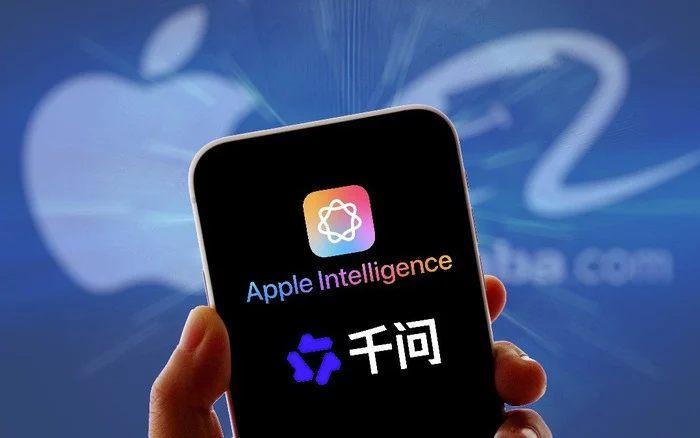
On October 31, Apple confirmed on its Chinese news site that Apple Intelligence will be available in mainland China with iOS 27.3 in December. Testing began on November 4 in the iOS 27.3 developer beta, which was just released. The company partnered with Alibaba to make the Qwen model work in Siri, Writing Tools and Visual Intelligence. Apple has not stated an exact date in December.
The way Qwen appears is quite specific. When requests exceed the capabilities of Apple's self-built model, Siri can turn to Qwen for broader knowledge, and users can also ask about photos, PDF documents or presentations. The writing tool has an additional "Compose with Qwen" section to create text and images from descriptions. Visual Intelligence has an "Ask Qwen" section to identify the object or location the camera is pointed at. Users access with Qwen account or Sign in with Apple. Apple said the machine will ask permission before sending questions, documents or images to Qwen, and Alibaba said it will not use user requests and feedback to train the model.
The rest run on models built by Apple itself. According to Apple's site, the list includes Writing Tools, Genmoji, Clean Up to remove excess detail from photos, summarize and prioritize notifications, Visual Intelligence and Live Translate via AirPods, and Type to Siri. A source said that Apple uses its own model for China, training with the support of Alibaba.
The Chinese version lacks quite a lot. Siri AI, the rebuilt assistant that Apple introduced at WWDC 2026, and its newest features are not included this time, nor is Image Playground. Only the iPhone has been released, as the iPad and Mac have not yet completed approval and do not have a date yet. Default features are off, users must enable them themselves.
Conditions of use are also strict. Supported devices include iPhone 15 Pro and 15 Pro Max, all iPhone 16 and above, iPhone Air and iPhone Duo, but regular iPhone 15 and 15 Plus are not available. Siri and device languages must be set to English or Simplified Chinese. The device must be purchased in China, or both the device location and Apple account region are set to China.
The process to get here was long. Apple Intelligence launched in the US in October 2024, but in China it was blocked because regulations on generative AI services require appraisal and registration. In late 2024, reports said the partnership with Baidu broke down because of disagreements over collecting iPhone user query data, while Apple was also rumored to have talked to Tencent and ByteDance. On July 15, 2026, China's cyberspace administration included Apple Intelligence in the list of seven licensed AI services integrated into phones, along with Huawei, Xiaomi, OPPO, vivo, Samsung and Nubia. Baidu's current role has not been announced by Apple.
There's one question that doesn't have a clear answer: where does the data go? Apple and Alibaba have not announced where requests sent to Qwen will be processed or how long they will be stored. Some analysis suggests that cloud requests from China go into Alibaba's infrastructure instead of Private Cloud Compute, the cloud system Apple uses in other markets, and that the no-training pledge is now based on Alibaba's statement. No independent audit has been announced.
The market context explains why Apple needed this step. According to IDC, smartphone deliveries in China in the third quarter of 2026 reached about 57.9 million units, down 15.4% over the same period. Apple ranked second with 17.8% market share, shipments decreased by 4.3%, much lighter than the whole market, and behind Huawei with 21%.
With this iOS 27.3 beta, Siri AI in other markets received additional languages, including Vietnamese, Traditional Chinese, Turkish and Norwegian, bringing the number of languages to 10. The two changes are not technically dependent on each other, just the same update. Siri AI's language list includes traditional Chinese but not simplified, and Apple still says Siri AI is not yet available in mainland China.
For Vietnamese users, Siri AI in the beta version is still labeled beta, requires iPhone 15 Pro or higher and the device's language must match Siri's language. Apple's release notes do not describe how Siri AI handles Vietnamese, so the actual quality remains to be verified. iPhone Duo is available in Vietnam from October 23 with a starting price of 64,999,000 VND.
Apple has not announced a specific release date for iOS 27.3 in December, and there is no date for iPad or Mac in China.
