3D motion sensing 'skin' for virtual reality and medical
Executive Briefing
Synthesized and verified with gemini-2.0-flash-thinking-exp
“# 3D motion sensing 'skin' for virtual reality and medical MIT engineers develop a silicon sensor p”
Key Takeaways
- 1.# 3D motion sensing 'skin' for virtual reality and medical MIT engineers develop a silicon sensor panel capable of self-tracking and reproducing 3D moving shapes in real time.
- 2.The research by a group of engineers at the Massachusetts Institute of Technology (MIT) was published in the October magazine *Advanced Intelligent Systems*.
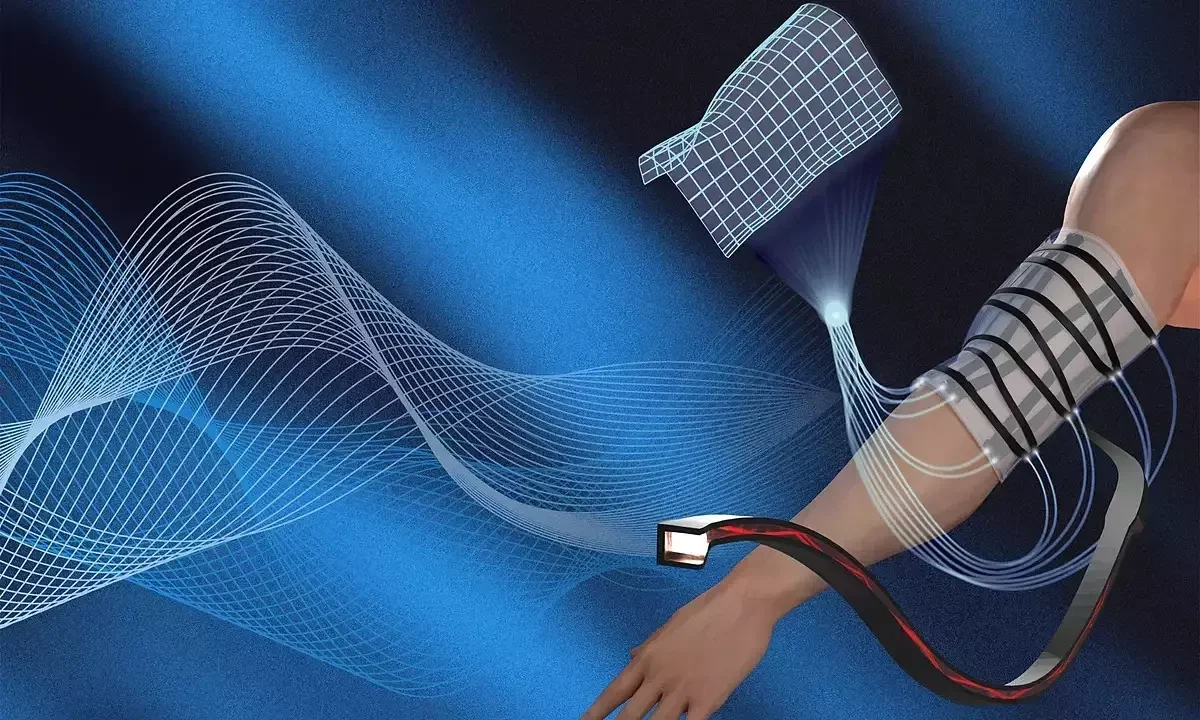
- 3.The special feature of the device lies in the application of an optical waveguide array integrated directly into the soft silicone substrate.
MIT engineers develop a silicon sensor panel capable of self-tracking and reproducing 3D moving shapes in real time.
The research by a group of engineers at the Massachusetts Institute of Technology (MIT) was published in the October magazine Advanced Intelligent Systems. The special feature of the device lies in the application of an optical waveguide array integrated directly into the soft silicone substrate.
Instead of using traditional rigid fiberglass, the team designed flexible fiber optics with a flexible rubber core and black coating. One side of the fiber is intentionally rough. When the optical fiber bends in different directions, the amount of light lost at the output will change accordingly, helping the system accurately determine the bending direction and impact force.
In the test, a silicone sheet measuring 16 x 16 cm, 0.5 cm thick was woven with 14 optical fibers in a zigzag pattern with two layers. One end of the fiber is attached to an LED light and the other end is connected to an optical sensor. The light data collected is processed by the control chip and the algorithm will recreate the 3D model of the sensor panel at a frequency of three times per second.
According to Tom's Hardware, in laboratory tests, the measurement error of the 3D shape of the sensor plate remained below 0.5 cm and reached between 0.28 and 0.45 cm when placed on a 3D model mold. Qifan Yu, a graduate student in mechanical engineering at MIT, said the accuracy is superior to conventional rigid sensor designs, which have errors of 1 to 2 centimeters, and is "at least equivalent to current tracking technologies."
Besides, the fiber array structure helps the device maintain high durability. Even when up to 3 out of 14 optical fibers are severed or disconnected, the system can still reproduce the overall shape with an error of less than 0.3 cm.
According to professor Kaitlyn Becker at MIT, the group's goal is to develop a tool to help physical therapists measure and track patients' recovery progress quantitatively and accurately through each training session. In addition, this flexible device is safer when interacting closely with humans, opening up great potential for remotely controlling robots or making motion simulation costumes for VR environments.
In the coming time, the team plans to shrink the fiber size from 1 millimeter to several tens of micrometers. Increasing the number of ultra-thin optical fibers on the fabric will allow the creation of smart clothes that monitor the entire body in the future.
Huy Duc

