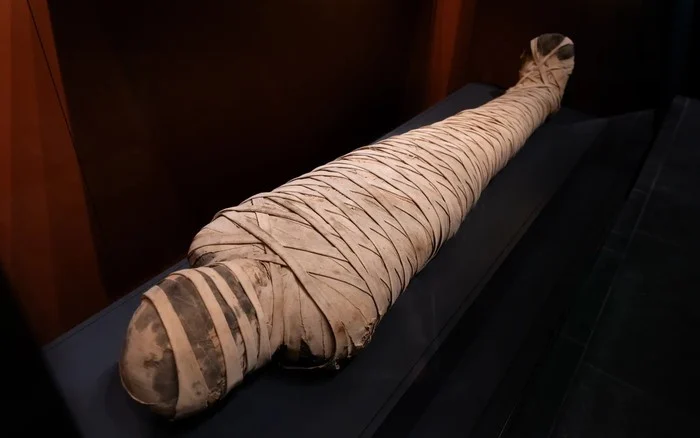
A strange remedy made from ancient Egyptian mummies unexpectedly helps cells fight the flu virus
Executive Briefing
Synthesized and verified with gemini-2.0-flash-thinking-exp
“**Once considered a strange treatment method in the Middle Ages, a remedy made from Egyptian mummies”
Key Takeaways
- 1.**Once considered a strange treatment method in the Middle Ages, a remedy made from Egyptian mummies has just been proven by scientists to have the ability to prolong the life of flu-infected cells.
- 2.However, the secret of the real active ingredient is still a big question.** **Bizarre medicinal fever in history** Going back in time to the Middle Ages and early modern times, the Western medical community once witnessed a special treatment method: doctors regularly prescribed powder scraped from mummies as a panacea.
- 3.Ancient people believed that the embalming compounds used by the ancient Egyptians had magical powers to help restore the exhausted state of the sick.
Once considered a strange treatment method in the Middle Ages, a remedy made from Egyptian mummies has just been proven by scientists to have the ability to prolong the life of flu-infected cells. However, the secret of the real active ingredient is still a big question.
Bizarre medicinal fever in history
Going back in time to the Middle Ages and early modern times, the Western medical community once witnessed a special treatment method: doctors regularly prescribed powder scraped from mummies as a panacea. Ancient people believed that the embalming compounds used by the ancient Egyptians had magical powers to help restore the exhausted state of the sick.
This fatty substance, known in medical literature as Mumia vera aegyptiaca, quickly became an extremely expensive commodity when Egyptian mummies began to penetrate global trade networks. According to historical documents, this remedy was prescribed to treat a variety of diseases, ranging from skin wounds and respiratory diseases to paralysis and epilepsy.
The need for treatment is so great that the trade in ancient mummies once boomed. This situation lasted until the Egyptian government had to ban the export of this item in the 16th century. However, because of the huge profits, unscrupulous traders at that time even turned to counterfeiting products by using modern dried bodies to continue profiteering.
Although Mumia has been trusted by Arab and European physicians for centuries, the material composition and biological activity of this thick mixture for a long time remained a mystery to modern medicine. In order to clarify the nature of the remedy, scientists collected and analyzed 24 specimens kept at university collections and pharmaceutical museums.
Unexpected findings in the laboratory
The analysis results have revealed unexpected details that have never been seen before. This ancient extract contains ingredients that have never been recorded in ancient Egyptian mummification recipes. Specifically, researchers found metabolites related to the aloe vera plant inside many samples.
This suggests that aloe vera may have been included in the mummification process thousands of years ago, a finding that has never appeared in previous analysis reports of Egyptian mummification mixtures.
Besides aloe vera, one of the most commonly occurring ingredients is a compound called 7-oxodehydroabietic acid - a substance often found in the sap of coniferous trees such as turpentine. Previously, this ingredient was targeted by researchers and suspected to be the main active ingredient that creates the medicinal properties of Mumia.
To verify the actual biological effects, the research team tested the Mumia vera aegyptiaca extract on dog kidney cell samples infected with four different strains of influenza virus. The results showed that, when compared with the control group without intervention, cells directly exposed to mummy extract had a significantly longer survival time.
The test recorded a clear effect on two strains of seasonal flu viruses that are common every year, H1N1 and H3N2, proving that the ancient remedy really creates a certain protective effect for cells.
Mysterious active ingredients and confirmation from the scientific community
Despite the documented protective effect on cells against influenza viruses, scientists are faced with a new puzzle. When 7-oxodehydroabietic acid was isolated from conifer sap in independent testing, the compound did not provide any protective effect.
This means that conifer sap is not the source of the remedy's protective properties as originally hypothesized.
According to the research authors, the actual active ingredients that create the antiviral mechanism cannot yet be identified. This effect most likely originates from very low concentrations of compounds, or is the result of complex synergistic interactions between many different components present in the extract.
However, the researchers emphasized that the findings published in the journal Proceedings of the National Academy of Sciences do not mean that medieval physicians ever cured patients of influenza with this mummy powder.
Antiviral activity recorded in modern laboratories cannot be used to validate historical treatment claims, because influenza is not at all included in the list of diseases for which treatment with Mumia vera aegyptiaca is indicated in ancient texts.
However, the work has proven that ancient remedies sometimes still contain real biological phenomena that take modern science centuries to decipher.

