American AI startup bets on Vietnam, assigning a domestic team to develop core technology
Executive Briefing
Synthesized and verified with gemini-2.0-flash-thinking-exp
“**TinyFish opens an office in Ho Chi Minh City, with a Vietnamese team participating in developing c”
Key Takeaways
- 1.**TinyFish opens an office in Ho Chi Minh City, with a Vietnamese team participating in developing core AI models and bringing web-based work automation solutions into practical use.** On October 23, TinyFish, an AI agent infrastructure startup from Silicon Valley, officially opened an office at The Waterfront Saigon, Ho Chi Minh City.
- 2.After more than a year of collaborating with domestic personnel, the company expanded its presence in Vietnam with a team responsible for everything from core AI model development to engineering, marketing, project implementation and market development.
- 3.The problem TinyFish pursues appears when AI is assigned tasks that need to be done on the internet.
TinyFish opens an office in Ho Chi Minh City, with a Vietnamese team participating in developing core AI models and bringing web-based work automation solutions into practical use.
On October 23, TinyFish, an AI agent infrastructure startup from Silicon Valley, officially opened an office at The Waterfront Saigon, Ho Chi Minh City. After more than a year of collaborating with domestic personnel, the company expanded its presence in Vietnam with a team responsible for everything from core AI model development to engineering, marketing, project implementation and market development.
The problem TinyFish pursues appears when AI is assigned tasks that need to be done on the internet. For example, to track the selling price of a product at multiple stores, the system must find the right page, select the version, check the status of the goods, and then summarize the results. Some information only appears after logging in or taking additional steps. When work repeats thousands of times per day, maintaining stability becomes a major requirement for development teams.
According to TinyFish, a good inference model can still encounter difficulties when the website changes its interface, requires authentication or automatically blocks access. Tasks that run during demonstrations are therefore unlikely to operate effectively at enterprise scale. The company builds infrastructure to help AI agents, which are AI agents, perform work according to assigned goals, interact with websites and complete multi-step processes.
The platform breaks work into interconnected components. TinySearch searches for information, TinyFetch reads page content and converts it into convenient data for AI to process. TinyBrowser provides a cloud browser for tasks that require face-to-face interaction, while TinyAgent takes natural language targets for navigation, fills out forms, and returns structured results. Gathering tools in the same platform helps developers reduce the effort of building and connecting infrastructure themselves.
At the model layer, TinyFish developed Mako to specialize in handling tasks on the web. According to the company, Mako was built starting from an Alibaba Qwen model, then trained with real-world task execution data, including successes and failures. The model currently behind Web Agent, with the goal of selecting the right element to operate on the page, maintaining context across multiple steps and reducing processing costs. This is a development direction that requires combining AI research capacity with product operating experience.
An example of an application announced by TinyFish is ClassPass, a platform that connects users with gyms and workout classes. AI agent logs into the facility's system, checks schedules, vacancy status and detects discrepancies. Within deployment at 835 locations, TinyFish said the solution reduces manual workload by 98.6%. For businesses, the benefit lies in updating information more frequently, while reducing repetitive checking operations on each website.
As of October 20, 2026, TinyFish had more than 400,000 users, up from the 100,000 mark in 30 days. More than 500 teams are running real work on the platform, from startups developing AI-based products to Fortune 500 enterprises. Announced customers include DoorDash, ClassPass, Grubhub, NESIC and Digital Garage.
TinyFish currently offers TinySearch and TinyFetch for free on all service plans, within the platform's usage limits. This helps students, independent programmers, or startup teams test applications that need up-to-date web data at a lower initial cost. Tasks using agents and browsers have their own billing mechanisms, so the development team still needs to calculate costs for the entire process when putting the product into use.
It is these requirements for stability, efficiency and cost that clarify the role of the Vietnamese team. Domestic personnel directly participate in developing TinyFish's core AI model. This is an opportunity to work on the problems that arise when technology serves real customers: choosing the right actions on the website, completing long tasks, and staying productive as workload increases.
In addition to technology, locating both the project implementation and market development departments in Vietnam also creates conditions for personnel to closely follow the process of bringing products to customers. Usage needs, implementation problems, and feedback on effectiveness are important inputs to improve technology. With this organization, accumulated team experience can range from building features to understanding why businesses choose and continue to use the product.
Mr. Huy Vo, Country Director of TinyFish Vietnam, is the company's first employee in Vietnam and built the team from scratch. The story of returning and developing his career in Vietnam was also the content of the discussion session at the opening ceremony, with the participation of Mr. Huy Vo, CRO Daisy Hoang, Overseas Vietnamese founder Quang Do and Head of Marketing Florence Le.
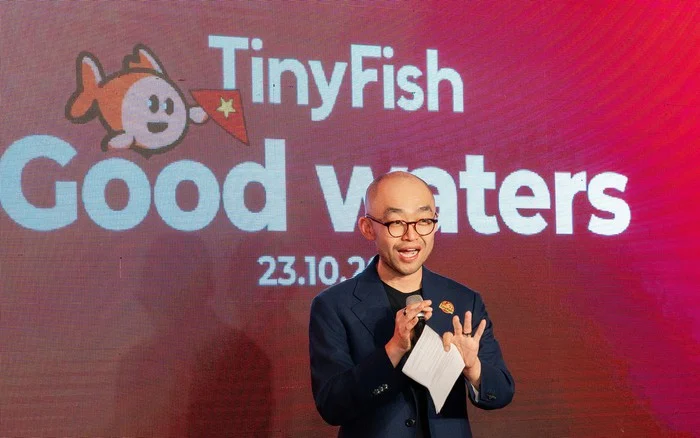
The event is called "Good Waters - Good water brings fish", inspired by the proverb "Good land, birds perch", aiming at an environmental message for talented people to choose to stick with and grow. "Each country only has one breakthrough period like this. Vietnam is right in the middle of that period, and we want TinyFish to grow up with Vietnam," shared Keith Zhai, co-founder and COO of the company.
Before expanding in Ho Chi Minh City, TinyFish raised $47 million in a Series A round in August 2025 led by ICONIQ, with the participation of USVP, Mango Capital, MongoDB Ventures and Sandberg Bernthal Venture Partners. After opening, the Vietnam office continued to recruit in the areas of engineering, marketing, project implementation and market development.
For local engineers and product makers, the significant value of this expansion lies in the opportunity to co-build technology that is being used by international customers. From an AI model to a system that can get work done on the web is a process of development, testing and adjustment to real needs. Deeply participating in that process right in Vietnam can help the team accumulate both technological capacity and product development experience for the global market.

