Animal picking machine converted into picking eggs, rice, toilet paper: A business model that attracts customers in the midst of inflation
Executive Briefing
Synthesized and verified with gemini-2.0-flash-thinking-exp
“**Instead of just stuffed animals or toys, gift picking machines in Japan turn into eggs, rice, laun”
Key Takeaways
- 1.**Instead of just stuffed animals or toys, gift picking machines in Japan turn into eggs, rice, laundry detergent and toilet paper.
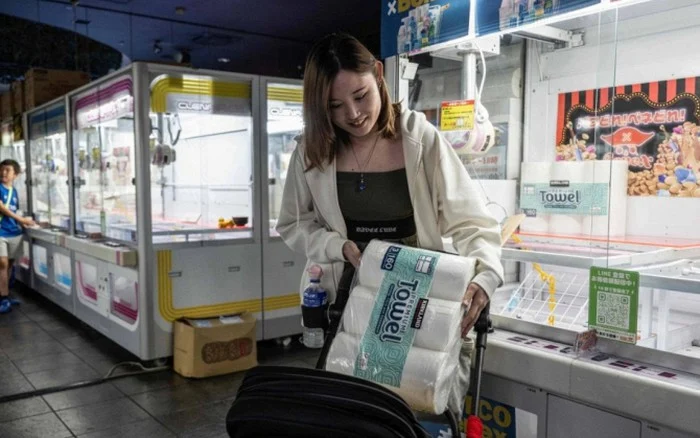
- 2.This model of combining entertainment with shopping is thriving as families look for ways to save money.** While looking after her baby in a stroller, Minae Kamata operated a grabber at an entertainment center on the outskirts of Tokyo, with the goal not of getting a stuffed animal but a pack of toilet paper.
- 3.This 25-year-old woman won the prize after only two tries, each costing 100 yen (about 16 thousand VND).
Instead of just stuffed animals or toys, gift picking machines in Japan turn into eggs, rice, laundry detergent and toilet paper. This model of combining entertainment with shopping is thriving as families look for ways to save money.
While looking after her baby in a stroller, Minae Kamata operated a grabber at an entertainment center on the outskirts of Tokyo, with the goal not of getting a stuffed animal but a pack of toilet paper.
This 25-year-old woman won the prize after only two tries, each costing 100 yen (about 16 thousand VND). "If you're a little lucky, it's like buying discounted goods", Kamata shared.
As inflation puts pressure on Japanese household budgets, many large-scale entertainment centers on the outskirts of cities are putting eggs, rice, laundry detergent and other essential items into gift picking machines.
This model combines shopping with entertainment, giving families the opportunity to find valuable items and enjoy an outing without feeling like they have to choose between shopping for necessities and spending money on leisure activities.
According to experts, the above trend comes from a situation of prolonged price increases in Japan, while people's income has not kept up with the price increase for many years.
Ms. Naoko Kuga, consumer behavior expert at NLI Research Institute, said spending on food and daily use items has continuously decreased over the past five years. These are often the first items families cut when they have to tighten their budget.
Therefore, retailers are looking for ways to turn shopping into a more enjoyable experience to encourage people to continue spending, while reducing the feeling of guilt when spending money on shopping, Ms. Kuga said.
Gift picking machines become a billion-dollar business
In fact, gift picking machines have been thriving in Japan since before the wave of inflation appeared. According to the Japan Entertainment Industry Association, the gift-picking game market in this country has more than doubled within 10 years, reaching 417.7 billion yen (about 2.7 billion USD) by 2024. This type currently contributes nearly 70% of game centers' revenue.
In recent years, families looking for essential goods have also become an increasingly important customer group.
In Kawasaki, an area south of Tokyo, hundreds of Benex gift-picking machines are filled with soft drinks, candy and laundry detergent.
Mr. Teruaki Tsuchiya, leader of Tisco - the company that operates the Benex system, said the difference in the model lies in what customers bring home after the fun.
"When a family spends 10,000 yen on a day of karaoke or bowling, they have fun and that's it. But at Benex, you can take home toilet paper, soft drinks and toys," he said.
According to Mr. Tsuchiya, in the context of rising prices, parents are tending to choose forms of entertainment that bring more practical value.
Benex currently has five locations in the Tokyo metropolitan area and says it welcomes more than one million visitors each year. Last year, the business phased out video games and coin-operated machines to focus on the slot machine model. Revenue from selling household items through this model has increased 2.6 times within two years.
Mr. Tsuchiya compared Benex's operations with large retail chains such as Costco or Ikea. Facilities are often located in suburban areas, where space costs are lower. Loyal customers can drive in, spend a lot of time shopping and spending here.
People have fun while looking for ways to save money
Inflation in Japan in recent months has remained around the central bank's target of 2%. This is a relatively modest increase compared to many other developed economies, but it creates a shock for people in a country that has been accustomed to decades of prices barely increasing or even falling.
At a Benex center, Ms. Chiaki Sugai, 56 years old, a sushi restaurant employee, spent about 2-3 hours playing the gift picking machine. At the end of the game, she pushed a large cart filled with prizes, with a total cost of nearly 8,000 yen.
"Before, I used to buy a lot of snacks at convenience stores, but now I pick them up here," Ms. Sugai said.
Another customer, Ms. Sachiko Iyokawa, 49 years old, also expressed satisfaction with the reward she received: two boxes of premium eggs at a lower price than buying at the supermarket.
"Normally I am very careful with spending, but here I reward myself a little," she shared.
Not only businesses specializing in games, large retailers in Japan also quickly joined this trend.
Aeon Fantasy, the entertainment subsidiary of Aeon Group, opened its first area dedicated to food and household goods rewards, targeting female customers and mothers, in October 2025.
To date, the business has 7 such areas and aims to expand to about 60 locations by 2030.
Mr. Yuya Shiozawa, manager at Aeon Fantasy, said the business wants to bring an experience that combines entertainment and the feeling of finding bargains in a context where consumers are increasingly sensitive to costs.
He cited the example of customers who, after picking vegetables, continued to the supermarket next door to buy more ingredients to complete dinner for the family.
According to expert Naoko Kuga, this trend may continue even when inflationary pressures ease. The reason is that traditional stores are having to look for new ways to attract customers, in the context of more and more people turning to buying household goods through online services, such as Amazon's subscription to recurring deliveries.
She predicts stores will continue to expand initiatives that bring customers in person, whether it's gift-picking machines or other forms of shopping experiences.
According to Janpan Times

