Decoding the terrifying mystery of ghosts: Science explains the feeling of having someone behind you
Executive Briefing
Synthesized and verified with gemini-2.0-flash-thinking-exp
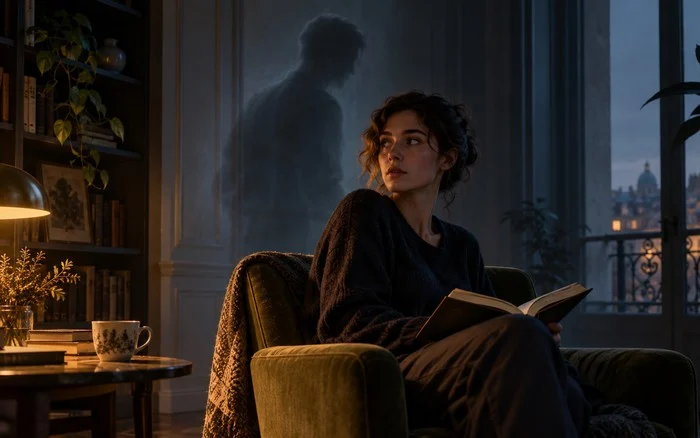
“**Have you ever been alone but have a chilling feeling like someone invisible is staring behind you?”
Key Takeaways
- 1.**Have you ever been alone but have a chilling feeling like someone invisible is staring behind you?
- 2.Don't panic, science has stepped in and discovered the surprising truth behind these mysterious ghosts.** Have you ever sat alone in a quiet room, without a sound or shadow, but swore you were not alone?
- 3.That feeling was extremely real, even though there were no footsteps or silhouettes appearing.
Have you ever been alone but have a chilling feeling like someone invisible is staring behind you? Don't panic, science has stepped in and discovered the surprising truth behind these mysterious ghosts.
Have you ever sat alone in a quiet room, without a sound or shadow, but swore you were not alone? That feeling was extremely real, even though there were no footsteps or silhouettes appearing.
For centuries, this chill has been the source of countless ghost stories and supernatural legends. However, under the lens of modern medicine, psychologists call this phenomenon by a scientific name: felt presence.
The surprising thing is that this phenomenon is more common than we think and science is gradually removing the veil of mystery surrounding it. A large-scale study in the Netherlands in 2024 on 10,447 people showed that up to 1.6% of participants had experienced this feeling within just the previous month. Some people felt like they were being watched, others shivered and felt like someone was placing their hand on their shoulder.
According to a new study published in the journal Psychosis, the appearance of these invisible guests depends greatly on the psychological state and beliefs of each individual. Two psychologists Tatiana Baxter and Sohee Park from Vanderbilt University conducted analysis on 337 adults.
The results showed an unexpected connection: about 60% of participants had felt this at least once. In particular, the group of people who have strong spiritual beliefs, regularly connect with the Supreme Being or spirits, and have unusual perceptions related to mental disorders, are the ones who experience this feeling most intensely.
However, the most interesting point in this study lies in how people feel joy or fear. This is when the findings take a completely unexpected turn. Some encounters are strangely comforting, while others cause intense grief.
In particular, having faith does not mean the experience will be any less scary. Among groups of people at high risk of psychosis, those who reported strong spiritual experiences actually found the invisible presence more disturbing.
How we interpret this invisible guest will determine our own emotions. If you believe it is a deceased loved one, comfort will come. But if you assume it's an evil lurking, the experience will become a terrifying nightmare.
In fact, in a 2023 review in The Lancet Psychiatry, experts such as Joseph Barnby, Sohee Park and Tatiana Baxter theorized that this phenomenon comes from the brain's process of recognizing our bodies and distinguishing them from others.
Scientists also emphasize that the feeling of having someone nearby is not automatically a sign of mental illness. A widow in deep grief may find her deceased husband sitting next to her. An exhausted climber on a crag can also see an invisible companion. Whatever the reason, the core feeling is very real.
The real mystery lies in how the brain works. Our brains continuously collect information from our muscles, skin and vision to determine our body's position in space. When there is a loss of synchronization or distortion in the processing of these signals, the brain can be fooled into taking information from your own body and attributing it to someone else.
In 2014, neuroscientists at the Swiss Federal Institute of Technology performed a bold experiment. They used robots to simulate touches on the volunteers' backs. When there was a small delay between the participant's action and the robot's touch, the brain was fooled and some volunteers immediately reported a creepy feeling that a ghost was standing near them.
Similarly, in 2006, a study in the journal Nature also recorded the case of a woman with epilepsy who saw a dark shadow mimicking her every movement when doctors electrically stimulated a specific area of her brain.
Besides neurological factors, culture also plays a key role. Anthropologist Tanya Luhrmann from Stanford studied more than 2,000 people globally and found that cultural beliefs combined with a tendency to become absorbed in personal thoughts shape each person's spiritual experience. It is the expectations that society instills in our minds that make the invisible real.
Science may never (or yet) be able to answer the question of whether ghosts are real or not, just like it cannot prove the existence of Santa Claus. But through medical evidence, we now understand why the chilling feeling of an invisible person standing behind you can be so real and haunting.

