'Disillusioned' because of hasty application of AI
Executive Briefing
Synthesized and verified with gemini-2.0-flash-thinking-exp
“# 'Disillusioned' because of hasty application of AI Many companies around the world are having a h”
Key Takeaways
- 1.# 'Disillusioned' because of hasty application of AI Many companies around the world are having a headache dealing with the mess caused by hastily applying AI when the tool is not really stable, leading to loss of employee time, disclosure of confidential information and increased costs.
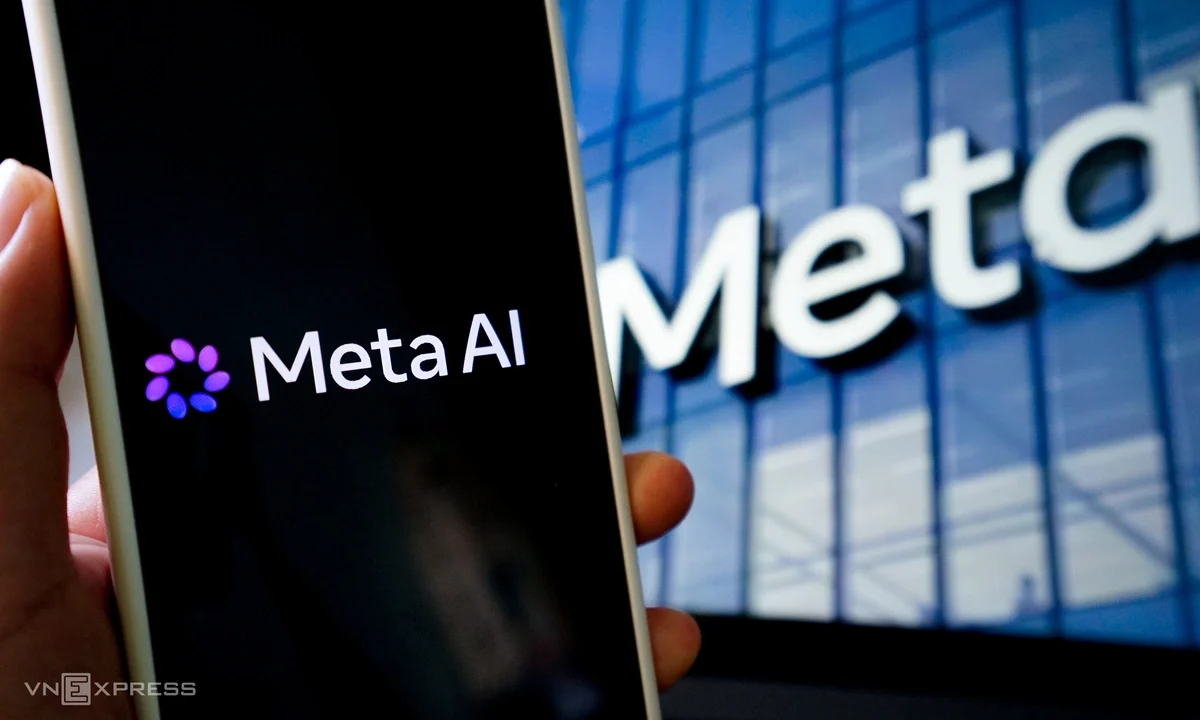
- 2.According to *Reuters,* Meta postponed plans to cut staff and increase the use of AI because employees spent too much time handling technical and security errors that arose.
- 3.After the 2023 organizational streamlining, the company is having to recruit and expand the middle management team again.
Many companies around the world are having a headache dealing with the mess caused by hastily applying AI when the tool is not really stable, leading to loss of employee time, disclosure of confidential information and increased costs.
According to Reuters, Meta postponed plans to cut staff and increase the use of AI because employees spent too much time handling technical and security errors that arose. After the 2023 organizational streamlining, the company is having to recruit and expand the middle management team again.
At Microsoft, which widely adopts AI internally, executive vice president Ryan Roslansky recently complained about the pervasiveness of AI garbage in daily work. After receiving a document "written by AI at first glance" from a colleague, he used the same tool to summarize it and did not get any new ideas. Roslansky warns people against falling into this harmful endless loop because the agent both writes and reads, ultimately only creating "an ocean of identical things".
Business Insider said that employees at Walmart's stores and warehouses encountered many problems due to unreasonable requests, system errors and false warnings from AI tools used to divide work, schedule work and track performance. They reflect that chatbots impose unreasonable standards on humans, while they themselves are full of errors and operate inefficiently. AI maps out silly routes for warehouse workers, making it harder for them to complete orders quickly. They also constantly issue useless safety warnings and arrange unrealistic schedules, forcing store employees to work in a haphazard manner to meet deadlines. A manager shared that these systems assume that people must always be 100% perfect and affirmed, "We will not force employees to bear such impossible standards."
Although businesses around the world have poured billions of dollars into artificial intelligence in recent years, the actual effectiveness is still unclear. In a study released in February by the Federal Reserve Bank of Atlanta, 90% of leaders admitted that their efforts to deploy AI have not increased productivity. A survey published last month by Ernst & Young showed that up to 36% of senior managers at companies with revenue of one billion USD or more admitted to having encountered agent-related incidents, causing data loss, financial loss, brand damage or operational disruption.
Forbes said AI has the ability to read and answer questions very well but cannot make judgments for humans. It also cannot remember past interactions or build relationships with customers. For example, after laying off content writers, the marketing department realized that AI-generated articles were less attractive because the model did not understand the brand's unique identity and customers' true desires. Similarly, the agent processes invoices and transactions very quickly but cannot detect abnormalities that only veteran accountants can recognize through experience. For sales teams, although AI can help filter potential customers, it is completely powerless to build a trusting relationship to close the deal.
Jessica Reif, assistant professor of business administration at the Wharton School of the University of Pennsylvania, points out that one barrier keeping AI from making a bigger breakthrough is the tendency to provide results that appear convincing but actually contain weaknesses or errors that are difficult to detect immediately. This easily leads to errors being propagated through the entire workflow instead of being corrected immediately, resulting in problems multiplying and getting worse.
According to an Indeed survey in July, more than half of employees said they did not receive as much training in AI as they wanted. Meanwhile, only 45% of leaders feel competent to lead employees who are proficient in this technology.
Similarly, Zack Mabel, director of research at Georgetown University's Center on Education and the Workforce, said many employees feel forced to use tools without being taught how to most effectively deploy them. On the contrary, the management team is also under pressure to apply immediately to increase productivity but absolutely not reduce the quality of work.
Some companies try to solve the above gap by stopping organizing "instant noodle" online seminars for employees. They are gradually shifting to a model of intensive, long-term training that closely follows each job position.
Many large corporations, from Microsoft to McKinsey, are restricting employees from using AI tools because the number of new models is exploding and their indiscriminate abuse is becoming a cost burden for businesses. Microsoft realized that adding agents to an inefficient process does not solve the problem at its root, and that speeding up one step only increases delays in the next step. Instead, focusing on employee training such as pairing new engineers with experienced colleagues actually increases productivity. Some other companies such as Palantir, Booz Allen Hamilton and Nvidia have had to tighten regulations because of concerns about AI companies leaking security data.
In a paper published in May, a research team at the University of Pittsburgh concluded that productivity did not increase after companies invested in AI and cut staff. According to Challenger, Gray & Christmas, more than 112,000 job cut announcements in the US from the beginning of 2026 until now have been related to AI, making it the leading reason for layoffs.
Mark Ma, a University of Pittsburgh professor and AI layoff researcher, said leadership is focused on short-term performance, so they're trying to move forward quickly by investing in AI and cutting staff. "A lot of mistakes could have been avoided. Now I feel some managers have learned lessons," Ma said.
"We're driving and assembling cars at the same time, that's the problem. If we could go back in time, we should use AI more slowly and thoroughly," Guardian quoted Johnny C. Taylor Jr, president and CEO of the Society for Human Resource Management (SHRM).
An Khang summary