Don't be foolish to put these 7 things in the microwave: They can easily explode, burn, or damage the oven
Executive Briefing
Synthesized and verified with gemini-2.0-flash-thinking-exp
“**Just one incorrect reheating can cause the microwave to malfunction.** Microwave ovens are famili”
Key Takeaways
- 1.**Just one incorrect reheating can cause the microwave to malfunction.** Microwave ovens are familiar appliances in the kitchens of many Vietnamese families.
- 2.In just a few minutes, cold food can be hot again without having to turn on the stove or wash extra pots and pans.
- 3.However, because it is so convenient, many people have the habit of putting anything in the oven without rarely checking.
Just one incorrect reheating can cause the microwave to malfunction.
Microwave ovens are familiar appliances in the kitchens of many Vietnamese families. In just a few minutes, cold food can be hot again without having to turn on the stove or wash extra pots and pans. However, because it is so convenient, many people have the habit of putting anything in the oven without rarely checking. From the lunch box just ordered to your home, the pot of leftovers to seemingly harmless dishes, all can cause trouble if used incorrectly. Below are 7 things to pay special attention to, because they can cause explosions, fires or damage to the device.
1. Whole eggs
Eggs are one of the foods that easily cause problems when heated in a microwave. As the temperature increases, water vapor inside the egg rapidly accumulates, creating great pressure. If there is no escape route, the egg can explode, causing the white and yolk to splatter throughout the oven cavity. Notably, this risk occurs not only with raw eggs in the shell but also with peeled boiled eggs. Eggs can even explode after being removed from the oven, for example when cutting or biting into them with a knife. Therefore, absolutely do not roast whole eggs in the microwave. If you want to prepare eggs with this appliance, you should crack the eggs into a suitable bowl, puncture the yolk and follow the safe cooking instructions.
2. Disposable plastic containers for home delivery of food
This is a very easy mistake to make in everyday life. When ordering rice, noodles or other dishes delivered to your home, many people have the habit of putting the entire plastic box in the microwave to heat it up, which is both quick and reduces the need to wash dishes. However, not all plastic containers can withstand the temperature of roasting in the oven. Some disposable containers may soften, warp, deform, or melt. Using inappropriate packaging also increases the risk of unwanted substances from the materials contaminating the food. In particular, you should not think that just because the plastic box is thick, hard, or can hold hot food, it can definitely be used in the microwave. Heat resistance and suitability depend on material, design and manufacturer's instructions. A safer way is to transfer food to a ceramic bowl or glass container with a microwave-safe symbol before reheating.
3. Stainless steel pots, stainless steel bowls for storing food
Many families have the habit of storing leftover food in a stainless steel pot and then putting it in the refrigerator. At the next meal, instead of pouring food into a bowl, some people conveniently put the entire pot in the microwave to warm up. This is something that should not be done with a regular household microwave. Metal reflects microwaves, which can cause food to heat unevenly. Under certain conditions, especially when items have sharp edges, are placed close to the oven wall or are in contact with other metal parts, sparking may occur.
These sparks have the risk of scorching the oven cavity, causing damage to the appliance, or leading to a fire if there are flammable materials inside. Therefore, you should not put stainless steel pots, stainless steel bowls, metal spoons or similar items into the microwave if the manufacturer does not allow it. If you want to reheat food in a pot, your family can put the pot on the stove or transfer the food to a specialized microwave oven.
4. Sausages with intact casings
Sausages are a familiar dish, especially for families with young children. Because they want to save time, many people often take sausages from the refrigerator and put them straight into the microwave. However, if the sausage still has plastic packaging or has a sealed casing that makes it difficult for steam to escape, the increased temperature can cause internal pressure to build up. At that time, the sausages can easily swell and burst, causing grease and the meat inside to splatter all over the oven. In addition to being unhygienic, grease that stays for a long time can also create an unpleasant odor and burn during subsequent uses.
5. Cup of water boiled too long
Many people use the microwave to boil a cup of water to make tea, coffee or milk. This seemingly simple operation still poses a risk if the water is boiled for too long. Under some conditions, especially when using a cup with a very smooth surface, the water can overheat, meaning the temperature has exceeded the boiling point but there has not been a clear boiling phenomenon like when heated on the stove. At this time, as long as the user lifts the cup, stirs the water or adds tea or coffee, the water can suddenly boil and rush out. This phenomenon can easily cause burns, especially when the user stands close to the cup. To limit risks, do not boil water for too long in the microwave. It is best to use a specialized kettle. If you need to heat water in the oven, follow the appliance's instructions, avoid overheating, and use caution when removing the cup.
6. Food wrapping foil
Foil is often used to wrap meat, fish or preserve food. However, many people mistakenly think that this type of paper can be used in the microwave just like in the oven. In fact, foil is a metallic material. When placed in the microwave, especially if it is wrinkled, has sharp edges or is lying close to the wall of the oven, foil can cause sparks. If sparks occur near paper, grease or other flammable materials, the risk of fire increases. Some manufacturers allow the use of small amounts of foil under very specific conditions, but that does not mean users can arbitrarily cover food with foil and put it in the oven. With a home microwave, it's easiest to remove the foil before reheating, unless the appliance's instructions specifically allow for use in a specific way.
7. Sealed glass container
Many families use glass containers to preserve food in the refrigerator. When it's time to eat, just take the box out and put it in the microwave to have a hot dish right away. However, a common mistake is to keep the lid tightly closed throughout the heating process. As food heats up, steam inside the can can build up and cause pressure to rise. If the lid is locked tightly, the heat has no way to escape, causing the lid to pop off or damage the box. With boxes that are not suitable for use in microwaves, the risk of cracking is even more worrying.
In addition, not all glass containers can withstand sudden temperature changes. Boxes that are chipped, cracked or do not have clear instructions for use should not be arbitrarily placed in the oven. Before reheating, check the microwave symbol, open the lock or loosen the lid to allow steam to escape. If using a lid, make sure it is also suitable for the microwave and has a vent.
What to do if the microwave suddenly sparks or smoke?
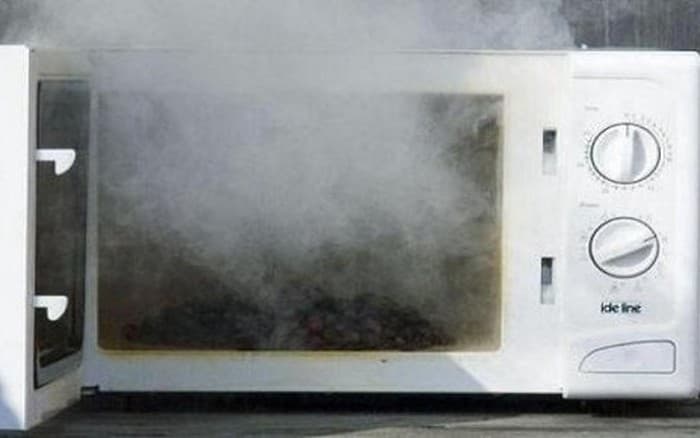
If you are heating food and detect sparks, crackling sounds, burning smells or unusual smoke, users need to handle it properly:
1. Stop the oven immediately: Press the stop button, do not continue to rotate to check if the phenomenon goes away on its own.
2. Keep the oven door closed if there is a fire: Do not rush to open the door because air entering can cause a fire to flare up.
3. Turn off the power if safe: Unplug or turn off the circuit breaker when possible without entering the hazardous area.
4. Do not pour water into the oven cavity: Especially when the device is still connected to the power source.
5. Check before using again: If the oven has sparked strongly, has burn marks or a lingering burning smell, let a technician check it. If there is an uncontrolled fire, leave the area and call the fire department.
Microwaves save a lot of cooking time, but you don't have to just put food in and press a button. By just paying attention to the container material, food characteristics and heating method, the family can limit most unnecessary incidents. In particular, don't just put plastic containers, stainless steel pots, or foil-wrapped foods in the oven because you want to save a few minutes of washing dishes, because convenience can sometimes lead to much more costly problems.
Attribution & Original Source
Synthesized and verified from GenK. All copyrights and intellectual property belong to the original publication.