Elon Musk: 'Saving money for the future is meaningless'
Executive Briefing
Synthesized and verified with gemini-2.0-flash-thinking-exp
“# Elon Musk: 'Saving money for the future is meaningless' Elon Musk, CEO of Tesla and SpaceX, belie”
Key Takeaways
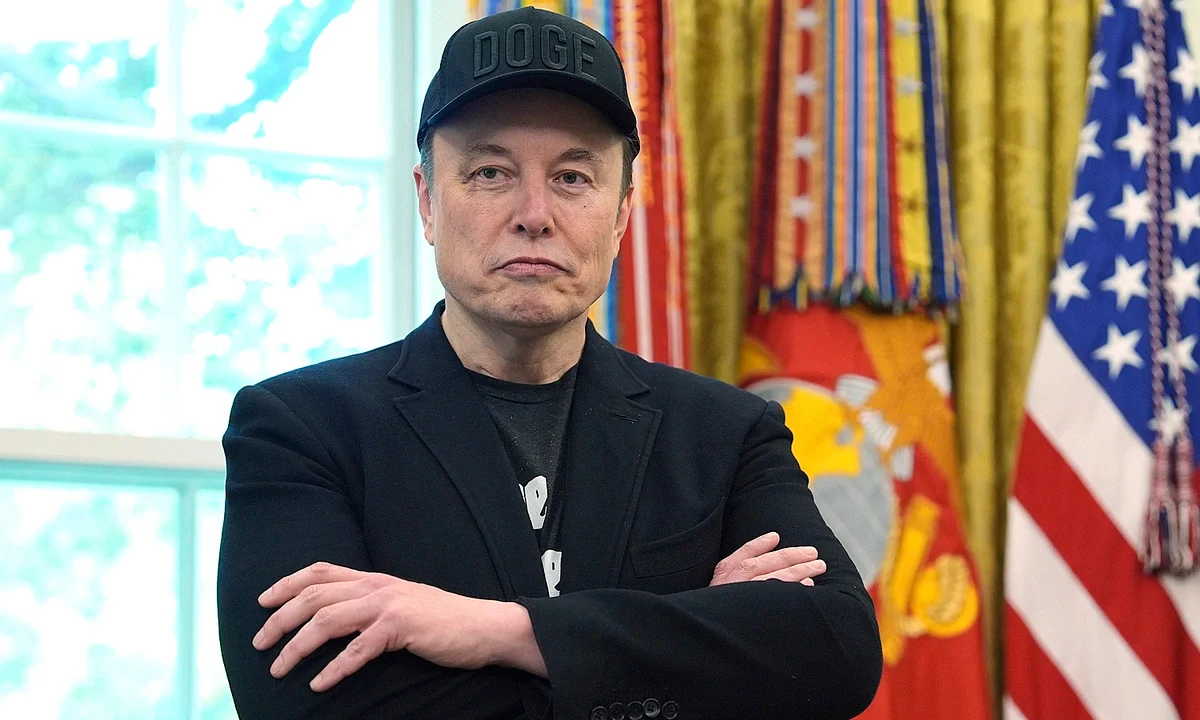
- 1.# Elon Musk: 'Saving money for the future is meaningless' Elon Musk, CEO of Tesla and SpaceX, believes that long-term savings are not worth it, reaffirming a view he has stated many times.
- 2."Saving money for the distant future is meaningless when super intelligence brings abundance," the world's richest billionaire shared on social network X on October 29, attracting more than 2.8 million views and 4,000 comments after one day.
- 3.Musk made the comment in response to a user who said they weren't too worried about their own "questionable financial decisions", because they believe the world is moving towards a prosperous future, making it "almost unimportant".
Elon Musk, CEO of Tesla and SpaceX, believes that long-term savings are not worth it, reaffirming a view he has stated many times.
"Saving money for the distant future is meaningless when super intelligence brings abundance," the world's richest billionaire shared on social network X on October 29, attracting more than 2.8 million views and 4,000 comments after one day.
Musk made the comment in response to a user who said they weren't too worried about their own "questionable financial decisions", because they believe the world is moving towards a prosperous future, making it "almost unimportant".
However, Musk's article received many mixed opinions. "He said that because he has money. People without money cannot say that," The Data Lens account commented.
"As a former high school teacher, I hope you stop talking about this. All the kids will hear is I don't need to work hard or put in any effort," the Wendy account complained.
According to Forbes, Musk currently owns a fortune of $916.8 billion. Futurism estimates that if he burned $100 million every day for the next 20 years, he still wouldn't be able to spend all the money.
This is not the first time the American billionaire has expressed his views on money. In The Builders podcast broadcast on October 20, he commented: "Traditional currencies still exist, but are no longer important. Value will be measured in mass and capacity or energy."
When talking with Peter Diamandis, President of the XPrize Foundation, in June, Musk said AI and robots will produce so many goods and provide so many services that there will be excess, exceeding the money supply, leading to deflation. With cheap automated labor and a stagnant money supply due to work being done by robots instead of humans, money is no longer needed.
Previously, in the Moonshots with Peter Diamandis podcast in January, the billionaire also gave advice: "Don't worry about hoarding money to retire in about 10 or 20 years. It's not important. You won't need to save for retirement."
Last week, Nate Soares, a former Google engineer and current President of the Machine Intelligence Research Institute (MIRI), said he was no longer saving to prepare for retirement. "I had a retirement savings account when I worked at Google, but I stopped adding to it for the past decade," Soares shared on The Most Interesting Thing in AI podcast.
However, instead of believing that AI will bring an era of abundance like Musk, Soares stopped saving because he believes there is a more than 50% chance that humanity will no longer exist in 10 years. "I'm not really someone who worries that AI will wipe out jobs. In fact, I think AI will destroy all of humanity," he said.
Soares' concerns echo those of some tech leaders and researchers over the past few months. In September, Jacob Coxon, a senior researcher at Anthropic and formerly of OpenAI, suddenly resigned because he was worried that AI would grow out of control and "could kill us all by the end of the decade". Evan Hubinger, Head of the Regulatory Science Group at Anthropic, then agreed: "We really believe AI can destroy humanity. Personally, I think this possibility will reach more than 10% in the next decade."
Thu Thao summary