Google's AI satellite sends first response from space
Executive Briefing
Synthesized and verified with gemini-2.0-flash-thinking-exp
“# Google's AI satellite sends first response from space The first satellite equipped with Google's”
Key Takeaways
- 1.# Google's AI satellite sends first response from space The first satellite equipped with Google's Tensor Processing Unit (TPU) is operating well in Earth orbit, sending back poetry and technical data.
- 2.Google on October 30 announced that it had received the first response from a satellite operating in space under the long-term Suncatcher project, serving the purpose of researching the possibility of building an AI data center in orbit.
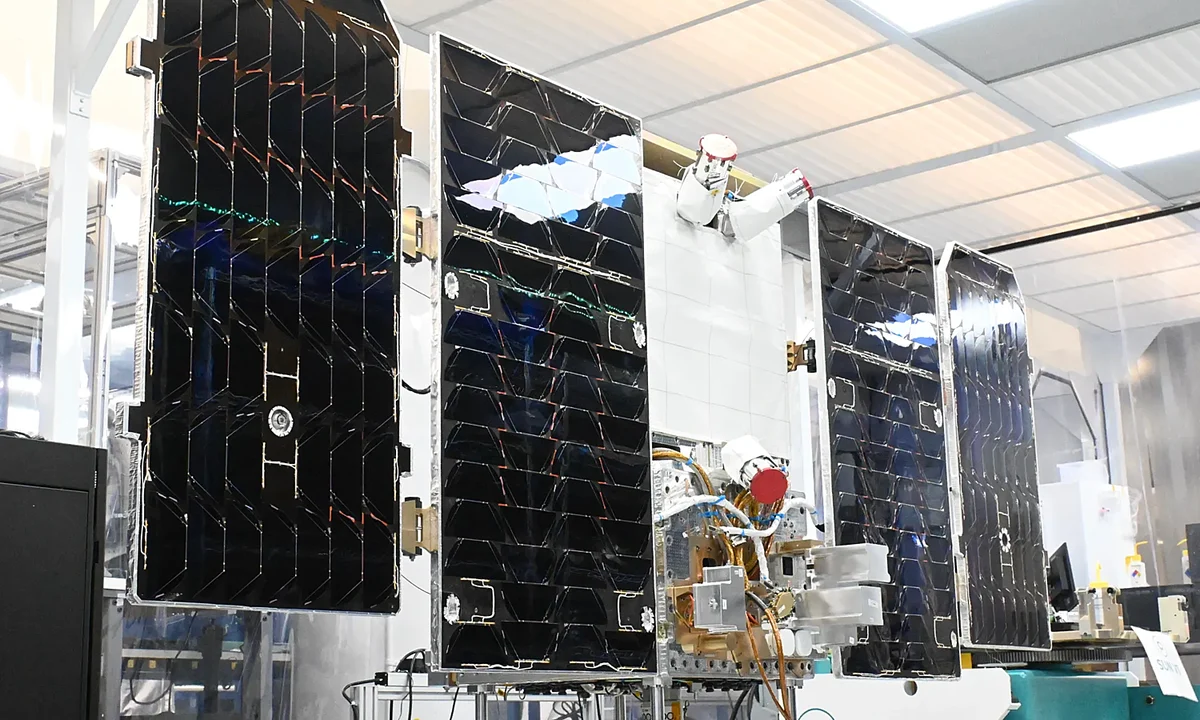
- 3.The satellite was built by Planet Labs, equipped with 4 Tensor processors (TPUs) developed by Google, solar cells with a capacity of about 1 kW and a cooling system.
The first satellite equipped with Google's Tensor Processing Unit (TPU) is operating well in Earth orbit, sending back poetry and technical data.
Google on October 30 announced that it had received the first response from a satellite operating in space under the long-term Suncatcher project, serving the purpose of researching the possibility of building an AI data center in orbit. The satellite was built by Planet Labs, equipped with 4 Tensor processors (TPUs) developed by Google, solar cells with a capacity of about 1 kW and a cooling system. This is the first satellite of the Suncatcher project, flying into space thanks to SpaceX's Falcon 9 rocket on October 1.
According to Tech Crunch, with the power needs of TPUs, satellites can only turn on one TPU for about 20 minutes at a time, making communication between space and the ground difficult. After about three weeks of testing the subsystems, the satellite is ready for operation.
This week, engineers on Earth sent their first command, asking Google DeepMind's Gemma 4 model, built into the satellite, to write a haiku about being in space. Response model: "Blue marble below. Data streams in silent grace. Starlight feeds my core" (Blue marble below. Data streams in silent grace. Starlight feeds my heart).
Google says this is the first AI response from an orbiting data center-grade TPU. The company then continued testing by asking the satellite to compose short humorous poems on space themes, and also asking the satellite to report surrounding orbital conditions. A Google spokesperson said the satellite is operating normally.
According to The Verge, Google will continue to conduct a series of tests to evaluate the performance of TPU under heat and radiation in orbit. "Verifying that TPU can reliably perform missions in space will pave the way for the next milestone: putting two interconnected satellites into orbit in 2027," the search giant said.
With the Suncatcher project, Google envisions a network of 81 satellites operating in parallel, taking advantage of the almost constant source of sunlight in low Earth orbit, where satellites receive about 8 times more energy than on the ground. However, the project still needs to solve bandwidth, latency, heat and scalability problems.
In research published in Joule magazine last month, a team of experts from the Suncatcher project estimated that it would take about 1,800 launches of SpaceX's Starship super rocket in the next 10 years to complete a space data center.
Thu Thao summary
