How fast is light and why nothing can surpass it: the speed limit of the universe
Executive Briefing
Synthesized and verified with gemini-2.0-flash-thinking-exp
“Light travels in a vacuum at exactly 299,792,458 meters per second, or about a billion kilometers pe”
Key Takeaways
- 1.Light travels in a vacuum at exactly 299,792,458 meters per second, or about a billion kilometers per hour.
- 2.Light reflected from the Moon to our eyes takes about 1.3 seconds, while light from the Sun takes about 8 minutes and 19 seconds.
- 3.But what makes this number special is not its magnitude.
Light travels in a vacuum at exactly 299,792,458 meters per second, or about a billion kilometers per hour. Light reflected from the Moon to our eyes takes about 1.3 seconds, while light from the Sun takes about 8 minutes and 19 seconds. But what makes this number special is not its magnitude. According to the theory of relativity, this is the speed limit of the entire universe: no matter, energy or information can travel faster.
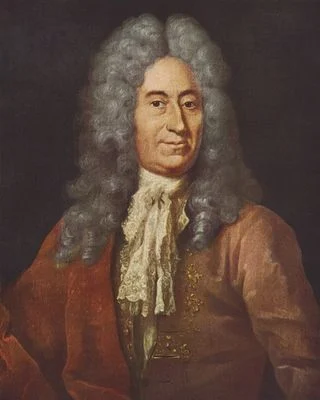
Danish astronomer Ole Rømer (1644-1710). In 1676, he used the time when the satellite Io was eclipsed by Jupiter to make the first quantitative estimate of the speed of light
From "instant" to an exact number
Johannes Kepler and René Descartes once believed that the speed of light was infinite. In 1638, Galileo proposed an experiment of two people holding lanterns standing far apart, but no delay was measured.
The turning point came in 1676. Ole Rømer noticed that the period of Io, Jupiter's innermost moon, seemed to shorten as Earth approached Jupiter and lengthen as Earth receded. He explained that light takes time to cover that changing distance, and estimated that light takes 22 minutes to travel the diameter of Earth's orbit. Christiaan Huygens based on this result calculated about 220,000 km/s, 27% lower than the true value.
In the 19th century, Hippolyte Fizeau measured the speed of light right on the ground with a rotating gear and a mirror placed far away, about 315,000 km/s. In 1862, Léon Foucault replaced the gear with a rotating mirror and achieved 298,000 km/s. In 1865, James Clerk Maxwell proposed that light is an electromagnetic wave. By 1983, the International Conference on Weights and Measures redefined the meter according to the distance light travels in 1/299,792,458 seconds, so the speed of light is now an absolutely precise constant, no longer a measurement result.
The laser reflector was placed on the Moon by the Apollo 11 crew in 1969. Measuring the time the laser beam goes and returns, observatories calculate the distance to the Moon
Why can't anything overcome it
In the late 19th century, many physicists believed that light propagated in an invisible medium called the ether. In 1887, Albert Michelson and Edward Morley tried to measure the Earth's motion through the ether, but the results were always within zero error. In 1905, Albert Einstein took this as a premise: the speed of light in a vacuum is the same for all observers, regardless of how the light source or the person measuring is moving. From there was born the special theory of relativity.
As a result, as an object goes faster, its clock slows down, the length in the direction of motion shrinks, and the energy needed to accelerate it further increases by a quantity called the Lorentz coefficient. At normal speeds, this coefficient is close to 1 so we don't notice it. But when approaching the speed of light, it increases indefinitely:
- 50% speed of light: Lorentz coefficient about 1.15.
- 90%: about 2.29.
- 99%: about 7.09.
- 100% correct: the denominator is 0, the coefficient becomes infinite, meaning it requires infinite energy.
Diagram illustration: the Lorentz coefficient skyrockets as the speed approaches c, so an object with mass needs infinite energy to reach the speed of light
Therefore, a particle with mass can only approach but never reach c. Only things that have no rest mass, such as photons or gravitational waves, always go exactly c. There is another reason related to cause and effect: if a signal travels faster than light, there will be frames of reference in which the effect occurs before the cause. No experiment has recorded that.
Advertisement
Things that look faster than light
- Light in materials: in glass with a refractive index of about 1.5, light is only about 200,000 km/s. Charged particles can travel faster than light in water or glass and emit Cherenkov radiation, but still slower than c.
- The expanding universe: very distant galaxies are receding from us at a calculated speed greater than c. This is an expanding space, not an object moving through space, so it is not contrary to the theory of relativity.
- Neutrinos of 2011: an experiment that reported faster-than-light neutrinos was later determined to be due to an error in the experiment.
LHC accelerator tunnel at CERN. The proton here runs up to 99.9999991% of the speed of light but still cannot reach c
According to CERN documents, at the design energy level, protons in the LHC accelerator run at 99.9999991% of the speed of light, but to go a little further, you have to pump in a lot of energy. The fastest object humans have ever built is the Parker Solar Probe, reaching about 192 km/s on December 24, 2024 according to NASA, only about 0.064% of the speed of light.
The finite speed of light also means that everything we see is an image of a past moment. The Sun we see is the Sun from more than 8 minutes ago, and the signal between Earth and the spacecraft always has a delay.
Source:
Wikipedia
,
Britannica
,
CERN - LHC the guide
,
NASA

