Inside Boston Dynamics' humanoid robot factory
Executive Briefing
Synthesized and verified with gemini-2.0-flash-thinking-exp
“# Inside Boston Dynamics' humanoid robot factory USABoston Dynamics is aiming to create one robot e”
Key Takeaways
- 1.# Inside Boston Dynamics' humanoid robot factory USABoston Dynamics is aiming to create one robot every hour through integrating design, machining and testing processes at the factory.
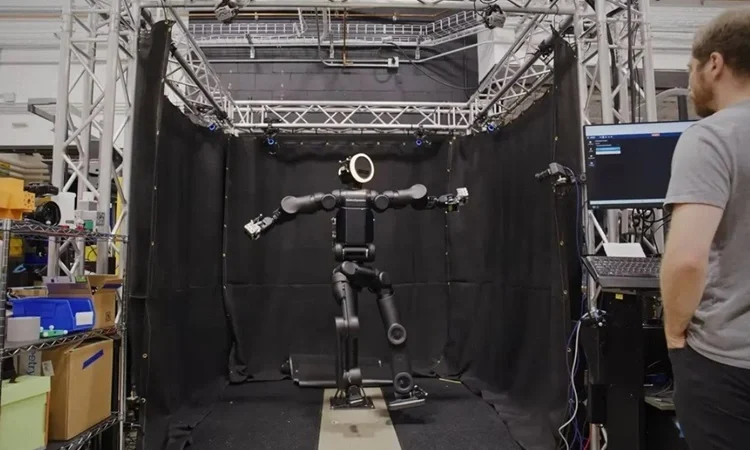
- 2.*Interesting Engineering* reported that Boston Dynamics on October 14 shared a video recording the process of the prototype operations team building and maintaining the Atlas humanoid robot at its factory in Waltham, Massachusetts.
- 3.The film reveals how engineers combine precision machining, assembly and repair to accelerate robot development.
USABoston Dynamics is aiming to create one robot every hour through integrating design, machining and testing processes at the factory.
Interesting Engineering reported that Boston Dynamics on October 14 shared a video recording the process of the prototype operations team building and maintaining the Atlas humanoid robot at its factory in Waltham, Massachusetts. The film reveals how engineers combine precision machining, assembly and repair to accelerate robot development. Factory production processes support rapid hardware development, allowing for faster transitions from design changes to component fabrication and robot assembly. The company says it can now build one robot a day and aims to reduce the time to about an hour next year.
Boston Dynamics' manufacturing testbed brings together engineers and machinists to jointly develop, produce, assemble and maintain robot hardware. Instead of relying on external suppliers of specialized components, they do precision machining on-site, making it easy to adjust parts and manufacturing processes as they improve designs.
Work includes manufacturing components with extremely high dimensional accuracy and performing specialized techniques such as cutting gears. These stages are very important for humanoid robots, which need precisely manufactured mechanical parts to move smoothly, operate continuously and operate reliably.
Because the manufacturing workshop is located close to the design department, the response time between idea generation and testing is significantly shortened. Engineers can directly discuss component requirements with mechanics, make immediate corrections, and evaluate improved details without wasting time waiting for outside manufacturing partners. After being processed, components are immediately transferred to the assembly stage the same day or the next day, so the engineering team can test changes on actual equipment much faster.
Boston Dynamics' factory also researches production methods to make new components most efficiently, including choosing the right cutting tools, optimizing the machining process and integrating robotic arms into the assembly process.
Engineers prioritize production efficiency right from the design stage of the Atlas robot. Robot components must ensure a balance of many factors such as dexterity, durability, reasonable cost and ease of maintenance, especially aimed at widespread application in industrial environments. Integrated workflows also support maintenance and repairs, helping development teams identify hardware issues and get robots back to testing faster.
In early October, Boston Dynamics launched a four-fingered hand for Atlas, showing that robot hardware needs to be designed based on real-world needs. Robotic hands need to be able to handle many different tasks, while also being durable and easy to maintain for repeated use. The ability to develop prototypes faster will allow engineers to evaluate the pros and cons of each design through real-world testing, thereby improving components before mass production.
According to Tech Times, a day is the time it takes to assemble an Atlas robot from parts, not the speed of the production line. The push to shorten Atlas manufacturing times comes as humanoid robot companies increasingly focus on production scale. In April, Figure AI announced that its BotQ factory in San Jose was producing one robot every hour. This is a number that measures the productivity of the entire line (ie the number of robots completed and off the line per hour), not the time needed to assemble a robot. BotQ's design capacity is 12,000 humanoid robots annually, equivalent to about 1.4 units/hour if the line operates continuously. A line that produces one unit every hour can still take up to 12 hours (or longer) to complete the finished product if there are 12 robots going through different stages of assembly at the same time.
According to The Information, Tesla produces hundreds of Optimus robots per week as of August 2026, although most are for internal training, data collection and testing rather than delivery to customers. In China, Agibot announced production of its 20,000th robot in September, a total of products from the A, X and G product lines, not a single humanoid robot platform.
An Khang summary