Malaysia blocks 30 servers containing AI chips at the airport: Southeast Asia is caught in the middle of a chip war
Executive Briefing
Synthesized and verified with gemini-2.0-flash-thinking-exp
“Malaysian officials said frankly: there is a ring that is using Malaysia as a transit station to avo”
Key Takeaways
- 1.Malaysian officials said frankly: there is a ring that is using Malaysia as a transit station to avoid chip export control regulations.
- 2.And this isn't the first time.
- 3.This article talks about what happened, why AI chips are now guarded like military goods, and why brothers in Vietnam should also pay attention.
Malaysian officials said frankly: there is a ring that is using Malaysia as a transit station to avoid chip export control regulations. And this isn't the first time. This article talks about what happened, why AI chips are now guarded like military goods, and why brothers in Vietnam should also pay attention.
What happened at Kuala Lumpur airport
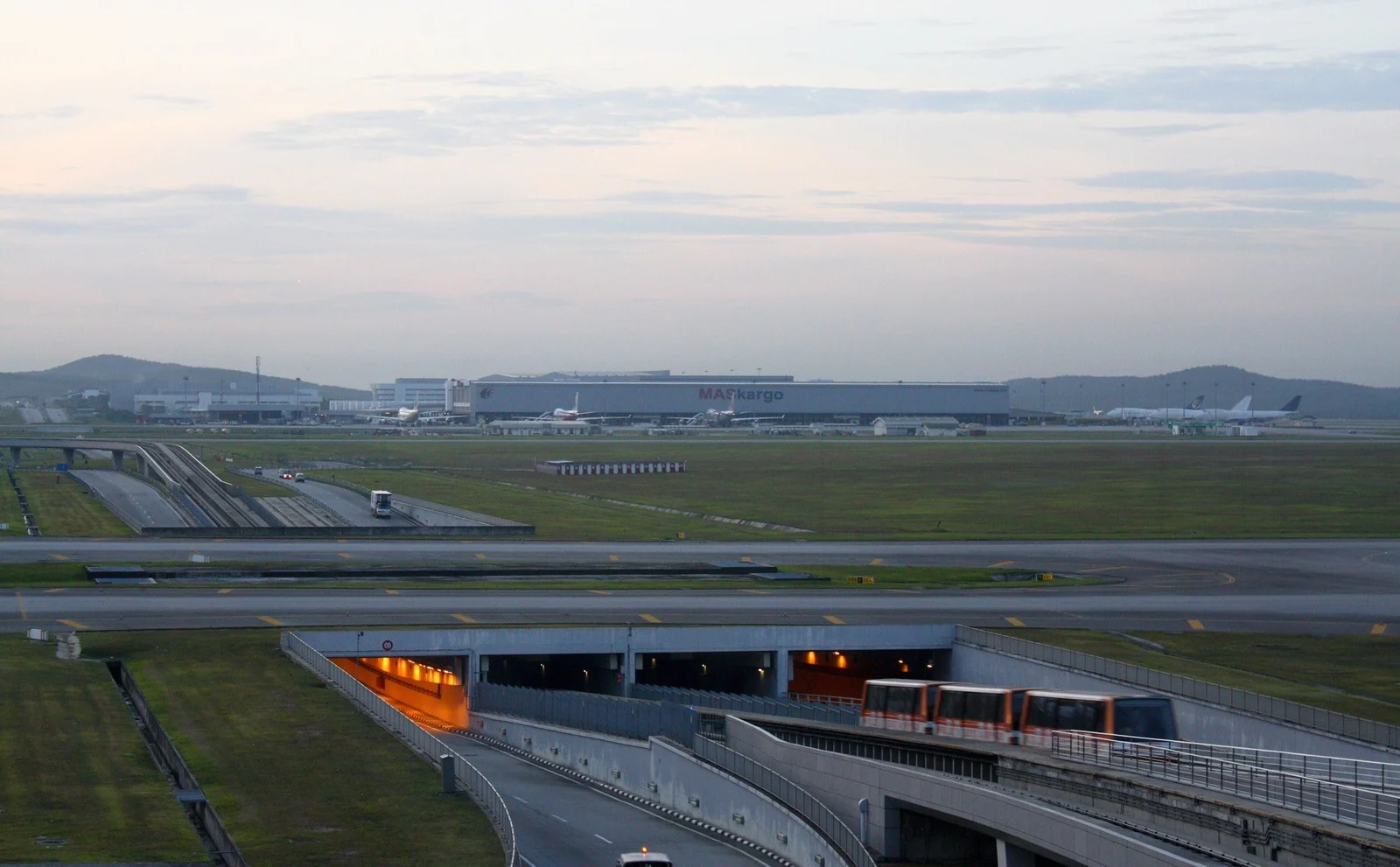
According to state news agency Bernama, on October 15, the enforcement team of KLIA airport customs inspected a warehouse in the airport's free trade zone and discovered 30 servers containing high-end AI chips. The shipment was brought in from an Asian country, declared together in an air waybill as electronic components, according to customs to bypass the authorities. It will then be re-exported to another Asian country.
Ms. Aspalila Ag Tuah, director of KLIA customs, said this line uses Malaysia as a transit point for the server batch to go to the next destination without export restrictions. The Malaysian Ministry of Investment, Trade and Industry said it could not announce the chip brand, country of origin and receiving country because the case is still under investigation.
Notably, this is the fifth case related to the same line that customs has recorded this year, with a total value of more than 100 million ringgit. The companies handling the shipments have been invited to work, but so far no one has been arrested.
Why are AI chips treated like military goods
Many people think AI chips are just something to run chatbots or create images. But in Malaysian law, high-performance AI chips are classified as dual-use goods, meaning they can be used for both civilian use and to develop military technology. This product group is under Malaysia's Strategic Trade Act 2010.
Since last year, Malaysia has been required to apply for a license when exporting, transiting or transporting high-performance AI chips originating from the US. According to AP and Reuters, this regulation was born under US pressure, to prevent chips from being bypassed by third countries to enter China. The license must be obtained 30 days in advance when bringing chips into Malaysia. The fines are also heavy: businesses can be fined up to 20 million ringgit, while individuals who intentionally violate them can be fined up to 10 million ringgit, jailed for up to 10 years, or both.
Need to clarify: in this case, Malaysia has not said which company the chip is from or where the shipment is going. So I don't conclude that it's Nvidia chips or going to China. But the general context is quite clear: The US wants to keep the most powerful AI chips out of China's hands, and transit countries like Malaysia are asked to tighten the door.
Advertisement
The story of Nvidia and Singapore shows how big the problem is
That same week, there was another news showing that the AI chip story has now become an intelligence story. The New York Times reported, citing people briefed on US intelligence surveillance, that an executive at Megaspeed, a data center company in Singapore, was considered by US officials to be a Chinese intelligence asset. This person was once suspected of helping bring Nvidia's AI chips to China, and according to this newspaper, he had a close relationship with Nvidia CEO Jensen Huang.
Nvidia countered. A company spokesperson said that Megaspeed is just one cloud customer in the region, it is normal for Jensen Huang to meet with their leaders because he meets thousands of customers every year, and customers do not have access to business secrets or information related to national security. Nvidia also said that the allegation of Megaspeed diverting chips had been thoroughly investigated and refuted since last year.
I don't know which side is right, and the Malaysia and Singapore cases are not said to be related. But side by side, they show that Southeast Asia, with its big data and logistics hubs, is right in the path of AI chips.
Southeast Asia caught in the middle
The position of Southeast Asian countries is quite difficult. On the one hand, everyone wants to attract data centers, semiconductor factories and AI investments, so they need strong chips and good relationships with American companies. On the other hand, because it is a commercial and transportation center, this area is susceptible to being used as a back door by power lines.
Advertisement
If control is loose, a country may be suspected by the US and restrict chip sources. If control is too tight, legitimate businesses will be bothered by procedures. Malaysia is choosing to show itself seriously: publicizing arrests, clearly stating the law and fines. I think that is also a way to send a signal to Washington that Malaysia is not a loophole.
What should brothers in Vietnam think
Vietnam is also wanting to participate more deeply in the semiconductor and AI chains. Jensen Huang also went to Vietnam to work with agencies and businesses. That means we will also need powerful AI chips, and will also have to prove ourselves as a trustworthy partner in the eyes of countries that set control laws.
For businesses, whether they just buy servers to do AI or cloud services, I think the lesson from the Malaysia case is quite practical: the origin of goods, licenses and intermediary partners are now as important as price. A shipment of goods declared to be electronic components can also draw the whole company into investigation.
In short, AI chips are no longer a purely technological commodity but a strategic commodity, like oil in the past. Where do you think Southeast Asia should stand in this race?
Source: Bernama via Malay Mail and Free Malaysia Today, AP, Reuters, Dow Jones Risk Journal, New York Times, CNBC, TechCrunch.