Not only is there a shortage of chips or electricity, AI is also making experimental monkeys scarce: Prices have increased nearly 7 times
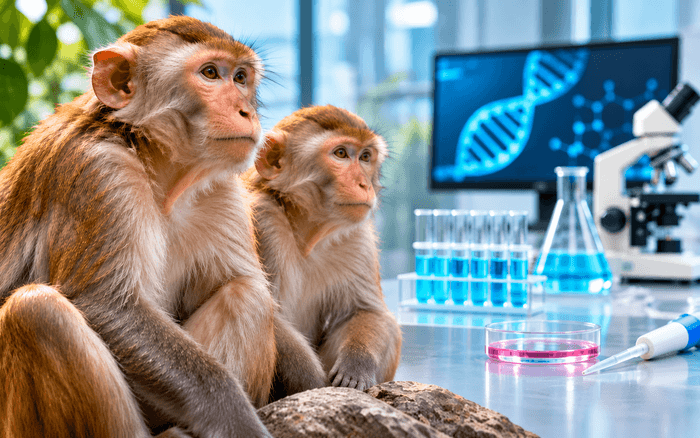
Executive Briefing
Synthesized and verified with gemini-2.0-flash-thinking-exp
“**Even though AI was not the starting point for the lack of laboratory monkeys, the emergence of AI”
Key Takeaways
- 1.**Even though AI was not the starting point for the lack of laboratory monkeys, the emergence of AI makes the crisis more serious than ever.** AI is creating an unexpected crisis in the US pharmaceutical industry: a shortage of laboratory monkeys.
- 2.As this technology helps scientists discover and design new drugs faster, the need to test potential compounds also increases.
- 3.Meanwhile, the supply of macaque monkeys has been shrinking many years ago, pushing the price per animal from about 3,000 USD in 2019 to more than 20,000 USD today.
Even though AI was not the starting point for the lack of laboratory monkeys, the emergence of AI makes the crisis more serious than ever.
AI is creating an unexpected crisis in the US pharmaceutical industry: a shortage of laboratory monkeys. As this technology helps scientists discover and design new drugs faster, the need to test potential compounds also increases. Meanwhile, the supply of macaque monkeys has been shrinking many years ago, pushing the price per animal from about 3,000 USD in 2019 to more than 20,000 USD today.
Macaque is a primate commonly used in pharmaceutical research thanks to biological characteristics similar to humans. Before taking a new drug into human clinical trials, researchers may need to use it to evaluate the drug's toxicity, safety, and biological effects.
AI is changing the pace of drug discovery. New tools allow researchers to search for promising compounds and generate more drug candidates in less time. However, finding a promising compound does not mean it can be used on humans immediately. These candidates may still need to undergo laboratory studies, including animal testing.
That creates a paradox: The more AI helps the pharmaceutical industry develop more drug candidates, the greater the pressure on the supply of laboratory animals. And macaque monkeys are becoming one of the scarcest resources.
However, AI is not the cause of the crisis. The US supply of laboratory monkeys has been problematic since 2020, when China, a country that used to provide nearly 60% of US laboratory monkey imports, issued an export ban.
After that, American laboratories turned to sourcing supplies in Cambodia. But by 2022, investigations discovered monkeys were illegally captured in the wild and then declared as animals raised on farms. These findings caused US laboratories to stop purchasing monkeys from the above source, making the shortage even more serious.
The price of experimental monkeys therefore increased sharply. From about 3,000 USD per animal in 2019, the price has now exceeded 20,000 USD. In China alone, the price was recorded at about 26,000 USD per animal. Meanwhile, US laboratories still need to import about 20,000 animals each year to serve drug research and development activities.
Increasing supply is not as simple as expanding a production line. Female monkeys usually take about 4 years to reach reproductive age, and then only give birth to one baby each year. Therefore, even when large-scale breeding begins, it will take many years for farms to create monkey populations large enough to meet demand.
Faced with this situation, Safer Human Medicine, a startup said to have the backing of Joe Lonsdale, co-founder of Palantir, is planning to build a large-scale monkey breeding facility in the US. The company's goal is to grow the macaque herd to 30,000 in about 20 years.
The project is expected to start with 500-1,000 monkeys purchased from breeding facilities in Asia, then gradually expand the scale. The company hopes that domestic supply will help US laboratories reduce their dependence on increasingly expensive imported monkeys.
However, this plan has faced backlash from animal protection activists. Raising tens of thousands of primates for research and drug testing has been criticized on ethical grounds. Some opinions even call for legal intervention to stop the project.
These controversies may cause difficulties in plans to build a farm and expand breeding activities. Even when implemented, the project will take many years to reach the expected scale.
The laboratory monkey crisis shows that the impact of AI is not limited to familiar areas such as semiconductor chips, electricity or data centers. As technology speeds up drug discovery, the pressure can spread to less visible resources, from laboratory animals to the systems that support biomedical research. But unlike expanding server capacity, monkey supply cannot be increased with just a few investment decisions.
Attribution & Original Source
Synthesized and verified from GenK. All copyrights and intellectual property belong to the original publication.