NVIDIA and SETI Institute collaborate to apply AI in searching for extraterrestrial signals
Executive Briefing
Synthesized and verified with gemini-aistudio-api-key/models/gemini-3.5-flash-lite / reviewer requested: gemini-aistudio-api-key/models/gemini-3.5-flash
“NVIDIA is collaborating with the SETI Institute to deploy an artificial intelligence system...”
Key Takeaways
- 1.NVIDIA is collaborating with the US-based SETI Institute to build an artificial intelligence system supporting the detection of signs from extraterrestrial civilizations, based on the assumption that those civilizations might also possess AI.
- 2.The system utilizes RTX PRO 6000 Blackwell processors capable of handling 2.4 terabits of data per second, allowing near-real-time anomaly detection at the Allen Telescope Array in California.
- 3.During testing, the system successfully identified signals emitted by a pulsar within the Crab Nebula, though this served as a technical test rather than proof of extraterrestrial intelligence.
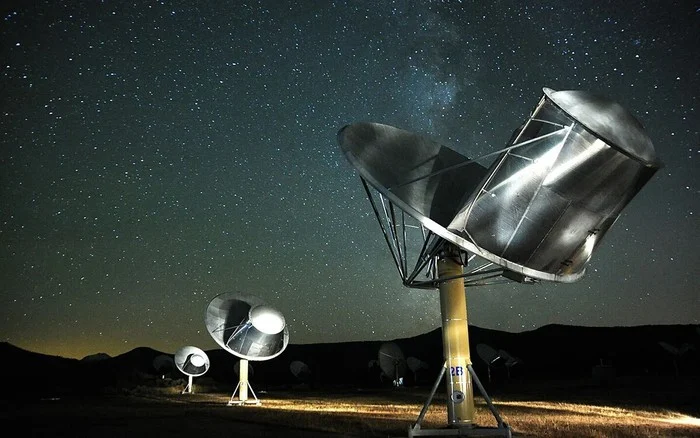
NVIDIA is collaborating with the SETI Institute to deploy an artificial intelligence system at the Allen Telescope Array in the US to automate cosmic data processing in real time and detect anomalous signals.
Key Developments and Technical Context
NVIDIA is collaborating with the US-based SETI Institute to build an artificial intelligence system supporting the detection of signs from extraterrestrial civilizations, based on the assumption that those civilizations might also possess AI.
The system utilizes RTX PRO 6000 Blackwell processors capable of handling 2.4 terabits of data per second, allowing near-real-time anomaly detection at the Allen Telescope Array in California.
During testing, the system successfully identified signals emitted by a pulsar within the Crab Nebula, though this served as a technical test rather than proof of extraterrestrial intelligence.
Strategic Analysis and Industry Implications
Integrating natural language control and high-speed graphical hardware processing helps resolve major data bottleneck challenges in large-scale radio astronomy projects.
The ability to instantly analyze raw data streams with terabit-scale bandwidth enables scientists to significantly shorten the detection cycle for rapidly changing astronomical phenomena.
Outlook and Key Factors to Watch
It remains unclear what specific noise-filtering criteria the AI system applies when confronting heavy terrestrial and cosmic radio interference.
The practical effectiveness of using natural language commands to coordinate the entire complex observation software pipeline still requires further verification over time.

