People distinguish between speech and music through differences in sound vibration amplitude
Executive Briefing
Synthesized and verified with gemini-2.0-flash-thinking-exp
“Have you ever wondered why you can easily distinguish between music and voices without trying too ha”
Key Takeaways
- 1.Have you ever wondered why you can easily distinguish between music and voices without trying too hard?
- 2.Scientists have found a possible reason why you have this ability: differences in the amplitude of sound fluctuations help your brain identify these two types of sounds.
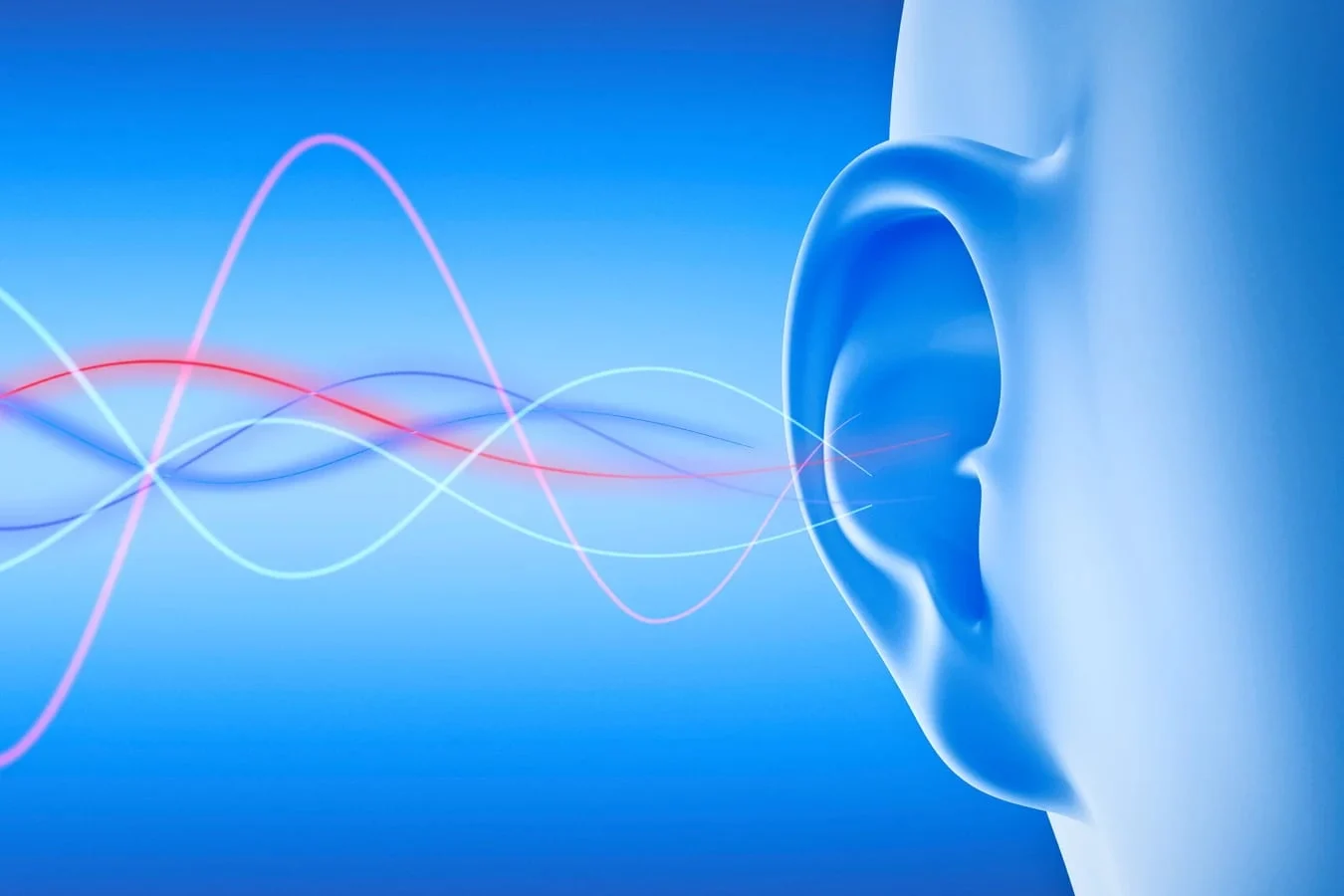
- 3.Basically, when a sound reaches the ear, it will be received by the cochlea, a spiral structure filled with fluid in the ear, whose role is to receive sound, convert it into an electrical signal and send it to the brain.
Have you ever wondered why you can easily distinguish between music and voices without trying too hard? Scientists have found a possible reason why you have this ability: differences in the amplitude of sound fluctuations help your brain identify these two types of sounds.
Basically, when a sound reaches the ear, it will be received by the cochlea, a spiral structure filled with fluid in the ear, whose role is to receive sound, convert it into an electrical signal and send it to the brain. This signal will be transmitted to the corresponding brain area to receive and process. Although music and speech have differences such as pitch, timbre, and melody, how the brain distinguishes these two types of sounds is still a mystery.
The cochlea, the blue part, is where sound is received and converted into electrical signals
There are many previous studies showing that each sound has a different amplitude change (amplitude modulation). This amplitude change inherently describes how quickly/slowly the volume changes over time. For example, speech typically has a higher amplitude, with a frequency of around 4 to 5 Hz. This means that in 1 second, the sound waves of the voice fluctuate about 4-5 times. With music, this oscillation is quite uniform but with a frequency of about 1 - 2 Hz. This difference leads to the question of whether the brain uses it to distinguish between speech and music?
To test this, a research team including scientists from New York University, the University of Hong Kong and the National University of Mexico conducted an experiment to test the brain's ability to distinguish between changes in sound amplitude. First, the team came up with the idea of using white noise to only focus on the change of this element instead of other factors such as pitch and timbre. Short audio clips are designed with varying amplitudes of fast and slow changes, and this change is further adjusted with different rhythms. You can try to listen to these sounds here.
The research team then conducted an experiment with 300 people, asking them to determine whether the sound was music or speech. The results show that clips with lower musical amplitude changes and with more regular tones are often identified as music, and vice versa: unusual, large amplitude changes are speech. And this may be one way the brain uses to distinguish between these two types of sounds.
Understanding how the brain distinguishes between music and speech through vibrational amplitude opens up many questions that need to be answered
This result also shows differences in the role of music and speech throughout evolution. Humans use voice to communicate. When speaking, humans use the muscles of the face, jaw, tongue and lips, and free movement will create sounds with a rhythm of about 4 - 5 Hz, which is also a rhythm that listeners receive very effectively. This compatibility is not a coincidence but the cause has not been clearly explained. Meanwhile, music with its role in creating connections between people often has a slower amplitude, at 1-2 Hz or lower, creating a feeling of comfort and connection.
The results of this research also open up a series of other questions such as: Why are voices and music so different in amplitude changes? Or can the brain distinguish between music and speech from birth or is this a learned skill and what does this learning process look like?
According to Scientific Research