Scientists explain the phenomenon of mysterious two-headed sharks appearing in the ocean
Executive Briefing
Synthesized and verified with gemini-2.0-flash-thinking-exp
“**Shark embryos with two heads have been continuously recorded in many areas around the world, raisi”
Key Takeaways
- 1.**Shark embryos with two heads have been continuously recorded in many areas around the world, raising questions about the cause of the strange deformity.
- 2.However, scientists have not yet determined whether the environment is involved or whether humans are just detecting more cases than before.** Two-headed sharks sound like a creature straight out of a science fiction or disaster movie.
- 3.However, this is a real biological phenomenon, which has been recorded in many areas around the world.
Shark embryos with two heads have been continuously recorded in many areas around the world, raising questions about the cause of the strange deformity. However, scientists have not yet determined whether the environment is involved or whether humans are just detecting more cases than before.
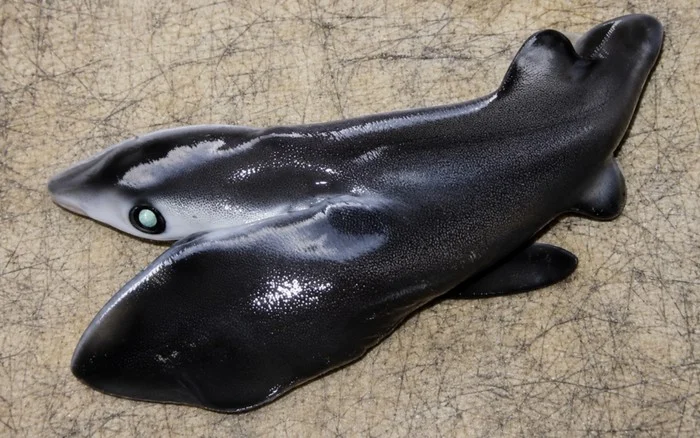
Two-headed sharks sound like a creature straight out of a science fiction or disaster movie. However, this is a real biological phenomenon, which has been recorded in many areas around the world. In recent years, shark embryos with head duplication defects have been discovered in Florida, Mexico and some parts of the Indian Ocean.
Although these cases are rare, they still attract the attention of researchers. The question is why do such deformities appear, do environmental factors affect the shark's development, and are more and more abnormal individuals actually being born?
Experts emphasize that two-headed sharks are not a new predator appearing in the ocean. This is an abnormality in embryonic development. Most individuals with deformities cannot live long enough to fully develop, making research difficult for scientists.
Defects form right from the embryonic stage
Two-headed sharks are not a new scientific discovery. Similar cases have been reported sporadically over the decades, mainly as isolated findings. It is worth noting that the number of reports published in recent years has tended to increase.
According to researchers, this phenomenon is called axial duplication. This is a developmental error that causes the embryo to start forming two heads instead of the normal one head.
Deformities often appear in the early stages of development. The discovered individuals are mainly embryos or very young sharks, often found during fishing or scientific surveys.
The exact cause of this condition has not yet been determined. One theory is that body formation may be disrupted by abnormalities in genetic instructions early in development. However, the scientific community has not yet been able to fully identify the factors that trigger that process.
Pollution and overfishing may be related?
One research direction that is of interest is the impact of environmental pressure. Marine ecosystems are increasingly facing pressure from pollution, climate change and human activities. These factors can affect the reproductive cycle as well as early development in sensitive species such as sharks.
In addition, overfishing was also put on the discussion table. Global shark populations have declined significantly over the past century. Some estimates suggest the decline could be as high as 90% in some areas.
As the number of individuals decreases, the remaining population may face lower genetic diversity. In theory, this could increase the risk of abnormalities during embryonic development.
Declining population density may also cause breeding conditions to become more isolated, thereby affecting genetic stability over time. However, scientists note that there is no definitive evidence of a direct link between these factors and the appearance of two-headed shark embryos.
The reproductive process of sharks is inherently complex and varies significantly between species. Therefore, drawing a general conclusion about the causes of deformities is still a challenge for researchers.
Are there really more two-headed sharks or are they just being discovered more often?
Not all scientists agree with the assertion that two-headed sharks are becoming more common. Some have suggested that the increased number of reports may simply reflect better information recording and sharing, rather than an actual increase in cases.
In the past, unusual individuals may have been overlooked or not reported. Today, the rise of digital databases, mobile phones and international research networks makes it easier for rare discoveries to be recorded, exchanged and published.
Therefore, the increased number of reports is not enough to prove that this phenomenon is occurring more frequently. It is possible that two-headed sharks already appear scattered in nature, but humans have only recently had the conditions to observe and record them more fully.
Why is it difficult for two-headed sharks to survive?
One of the reasons why this phenomenon is rarely studied is the very low survival rate of individuals with deformities. Duplication of vital structures can cause many complications, affecting organogenesis, motility and feeding behavior.
Therefore, scientists almost never encounter adult two-headed sharks in the natural environment. Much of the evidence was collected from shark embryos discovered after a fishing net accidentally caught a pregnant female.
This makes it difficult for researchers to observe the development process of abnormal individuals under natural conditions, while also limiting the ability to determine how long they can live or what problems they encounter during maturation.
Despite their strange appearance, two-headed sharks are not a sign that the ocean is presenting a new threat to humans. This phenomenon mainly shows the complexity of the development process of marine life and the sensitivity of ecosystems to environmental changes.
In reality, sharks still face much greater risks, including habitat loss, fishing pressure and changing ocean temperatures. These problems have a significant impact on shark populations, while deformities such as head doubling remain rare.
Scientists are still trying to figure out whether two-headed sharks are just the result of random developmental errors or whether environmental factors play a larger role. Without enough evidence, the cause of this phenomenon cannot yet be determined.
Each new discovery can add more data to marine biology research, and shows that people still don't understand much about life in the ocean.