Silicon Valley 'runs after' Mr. Trump's new AI term
Executive Briefing
Synthesized and verified with gemini-2.0-flash-thinking-exp
“# Silicon Valley 'runs after' Mr.”
Key Takeaways
- 1.# Silicon Valley 'runs after' Mr.
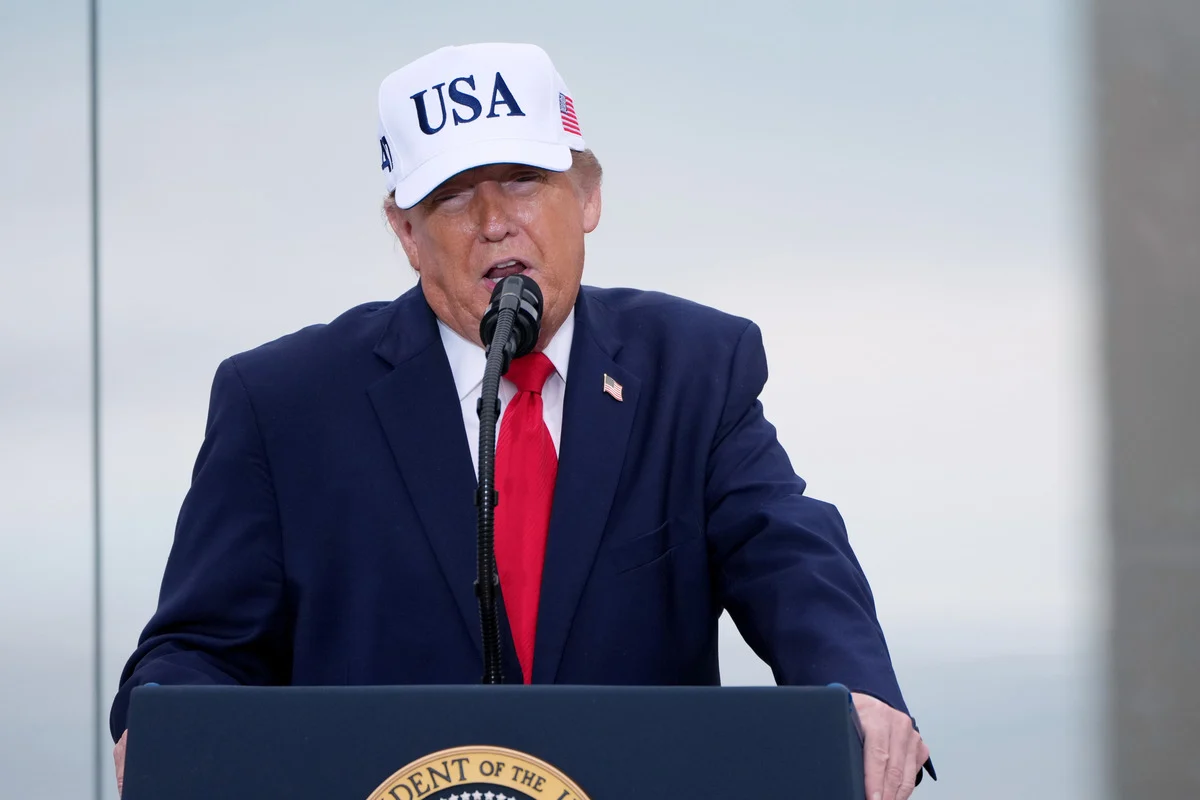
- 2.Trump's new AI terminology US President Donald Trump declared war on the term "artificial intelligence" and wants to switch to using "super intelligence", forcing Silicon Valley to change accordingly.
- 3.It's really great," US President Trump said at the United Nations General Assembly at the end of September about why he called "artificial intelligence" (Artificial Intelligence - AI) "super intelligence" (Super Intelligence - SI).
US President Donald Trump declared war on the term "artificial intelligence" and wants to switch to using "super intelligence", forcing Silicon Valley to change accordingly.
"It's not fake. It's really great," US President Trump said at the United Nations General Assembly at the end of September about why he called "artificial intelligence" (Artificial Intelligence - AI) "super intelligence" (Super Intelligence - SI). A few days later, he signed an executive order renaming all government documents containing the new phrase.
At the end of October on the social network Truth Social, he declared: "The White House considers anyone who uses the term 'artificial intelligence', instead of the new, more widely accepted and more accurate term 'super intelligence', to be an enemy!". The word "enemy" was written in capital letters.
According to WSJ, since then, many technology leaders in Silicon Valley "have always had to keep a balance with language", sometimes even having to adjust in front of the media. Most recently, in a podcast at the end of October, Microsoft President Brad Smith immediately changed "AI" to "SI" in his statement, although a spokesman for the American software company later said leaders "still use many different terms for this technology".
Microsoft's annual report in October also mentioned SI 8 times. "For Microsoft, the central question when entering the era of super intelligence is not how big the opportunity is, but what we do to deliver real-world results worthy of every country, community and business," CEO Satya Nadella wrote.
Meanwhile, Nvidia CEO Jensen Huang, who is considered to have a close relationship with Mr. Trump, uses terminology depending on the context. For example, after several tech leaders signed on to use "SI" early last month, he also used the term on X. But a few weeks later, at a conference in Berlin, Huang still said: "Every business in Europe will become an AI company."
Elon Musk also quickly embraced the new term. He announced SpaceX's AI division "soon to become SpaceXSI". Although it has not officially changed its name, filings with the US Securities and Exchange Commission at the end of October show that Tesla mentioned SI. When mentioning his efforts to develop humanoid robots on social networks, Musk also affirmed that the product "makes a deep impression, but does not use advanced AI or SI".
Mark Zuckerberg acted similarly to Tesla in its financial statements, emphasizing Meta's goal of "providing personal SI to everyone". In fact, Meta used the term SI last year when it established Meta Superintelligence Labs.
IBM CEO Arvind Krishna, who did not attend the working lunch with Mr. Trump in September, uses both "SI" and "AI" in financial reports. "Technological advances in hybrid infrastructure and super intelligence are leading to greater business performance," he said, adding that IBM is evolving as a "software-led cloud and AI platform company."
In some other cases, Intel CEO Lip-Bu Tan said on October 29 that the supply shortage that the semiconductor industry is experiencing is "driven by unprecedented demand for super intelligence". On X, Salesforce CEO Marc Benioff said he was changing the terminology to "accommodate the coming era of super intelligence". The company's AIForce platform is now renamed SIForce. Nikesh Arora, CEO of Palo Alto Networks, repeatedly mentioned "SI" in an interview with CNBC and a post on X on October 30. "The meeting at the White House surrounding SI was the moment of a lifetime," he wrote.
According to Business Wire via data from Factiva, the research database and global business intelligence tracker of Dow Jones & Company, as of last week, of the 119 S&P 500 companies that mentioned artificial intelligence in investor meetings, stock filings or press releases, seven used "SI" or a variant phrase with similar connotations, while 11 used a mixture of "SI" and "AI".
The transition is not considered easy for companies using the brand name "AI". Speaking to Politico, CEO Sam Altman said OpenAI will not change its name because "brands are difficult to change."
"Everyone is struggling to find a solution," Brendan Steinhauser, CEO of Alliance for Secure AI - a nonprofit organization that advocates for artificial intelligence safety policy, told WSJ. "They often find a way not to object to the White House, but also say things like: 'We'll continue to discuss this the way we've discussed it.'"
Previously on X, Steinhauser said the name of the organization he runs will not change. According to him, the term "superintelligence" only describes models "with superior cognitive abilities", while "artificial intelligence" is much more general.
According to experts, in the coming time, many people will still be confused because "AI" is too familiar. "I'm bound to make a mistake at some point," Craig Schlenoff, head of artificial intelligence research, measurement and standards at the US National Institute of Standards and Technology (NIST), said at a robotics conference in Washington in mid-October. "I haven't completely wiped my cache, so natural reflexes will intervene and the word AI will appear."
Bao Lam summary
- US President changes AI's name to 'super intelligence'
- Mr. Trump signed a 'binding ethics' agreement during lunch with the AI billionaire

