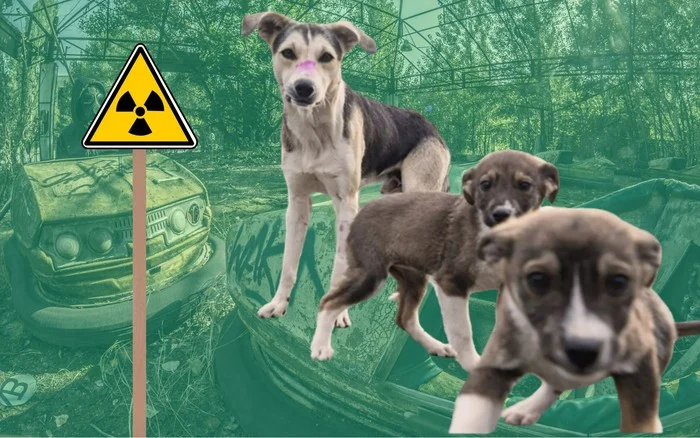
The dogs with unique genetic characteristics at Chornobyl were most likely created by natural selection, not because their DNA was deformed by radiation.
Executive Briefing
Synthesized and verified with gemini-2.0-flash-thinking-exp
“**Wild dogs living around the ruins of the Chornobyl nuclear power plant possess extremely different”
Key Takeaways
- 1.**Wild dogs living around the ruins of the Chornobyl nuclear power plant possess extremely different genes.
- 2.Contrary to rumors about radioactive mutations, the latest scientific work proves that natural selection is the cause.** The Chornobyl nuclear disaster in 1986 turned the entire surrounding land into a desolate blockade, where humans were absent and nature found its own way to survive.
- 3.Among the creatures that stubbornly cling to the dead land, packs of wild dogs living around the nuclear power plant ruins are always the focus of attention of researchers.
Wild dogs living around the ruins of the Chornobyl nuclear power plant possess extremely different genes. Contrary to rumors about radioactive mutations, the latest scientific work proves that natural selection is the cause.
The Chornobyl nuclear disaster in 1986 turned the entire surrounding land into a desolate blockade, where humans were absent and nature found its own way to survive. Among the creatures that stubbornly cling to the dead land, packs of wild dogs living around the nuclear power plant ruins are always the focus of attention of researchers.
They possess completely different genetic characteristics than their counterparts living in the abandoned city of Chornobyl nearby. Previous studies have determined that this difference does not originate from new mutations caused by radiation, but the core cause is still a big question mark that casts a shadow of mystery.
Recently, a study published in the scientific journal Genes has provided a detailed answer to this biological puzzle. The authors confirm that the profound genetic differences in the dog population near the factory most likely stem from the process of natural selection.
This discovery opens up a completely new perspective: these four-legged creatures have adapted themselves to the harsh and unusual living environment around the reactor, instead of becoming mutated creatures with bizarre shapes like in fantasy stories - including individuals with blue fur that were discovered in the blockade area last October.
Dr. Megan Dillon from North Carolina State University said this work has resolved unfinished bottlenecks from previous projects. When analyzing the genetic structure, the research team found that although the two dog populations in the factory and in the city were geographically very close to each other, the level of genetic differentiation between them was extremely profound, and importantly, those changes were not caused by random mutations from radiation.
To find out the truth of the matter, scientists have put on the table the two most possible evolutionary scenarios: genetic drift or natural selection. Theoretically, genetic drift usually occurs when a population falls into a bottleneck situation, that is, the number of individuals suddenly declines and only a small group survives thanks to luck rather than superior adaptive ability.
The Chornobyl dog population actually experienced such an event about 35 to 40 generations ago, coinciding with the nuclear disaster and animal culling by rescuers. The opposite scenario is natural selection, specifically directional selection, where certain superior biological characteristics help individuals reproduce more successfully and gradually shape the genome of the entire population over time.
In order to determine which hypothesis the balance favors, the research team collected the entire genome data of more than 100 dogs inside the blockade area and analyzed in-depth 63 individuals - including 33 dogs in the power plant area and 30 dogs residing in the city of Chornobyl. They also compared past and present population sizes, and included the genome of dogs in the Galápagos Islands - a world-famous isolated animal population - as a comparative reference system.
The experimental results have brought extremely surprising findings. The evidence supporting genetic drift appears weak in the face of directional selection. There was no significant difference in effective population size between the two groups of dogs, suggesting that the factory population did not experience an extreme individual decline event compared to the city population.
Strangest of all, genetic data shows that dogs living in the city of Chornobyl are more similar to dogs in the Galápagos Islands than to their brothers living next door in the power plant area. This fact refutes the assumption that geographic isolation alone creates genetic variation.
By delving into the molecular structure, researchers have identified more than 100 locations bearing clear marks of genetic selection on the genome of dogs living around the power plant. Notably, these locations are concentrated mainly in gene regions directly related to cancer development, DNA replication and repair mechanisms, cell cycle regulation functions and immune system response.
Although these variant characteristics closely match what scientists would expect in a population that has had to adapt over the years to high-dose radiation conditions, researchers still maintain an absolutely cautious attitude. They do not rush to conclude that radiation is the only direct factor driving change, because it is entirely possible that there are other specific environmental factors around the factory area that play a dominant role.
Professor Matthew Breen from North Carolina State University also noted that this result does not mean that the dogs have evolved completely new abilities over the past 35 generations, but it is possible that resilient individuals who survived the initial event already possessed this special genetic diversity to adapt and survive.