The Giza pyramids did not require machines: ramps, sleds and paid work crews
Executive Briefing
Synthesized and verified with gemini-2.0-flash-thinking-exp
“The Khufu Pyramid at Giza, also known as the Great Pyramid, was built around 2600 BC as a tomb for p”
Key Takeaways
- 1.The Khufu Pyramid at Giza, also known as the Great Pyramid, was built around 2600 BC as a tomb for pharaoh Khufu of the 4th Dynasty.
- 2.When completed, the tower was about 146.6 m high, making it the tallest man-made structure in the world for more than 3,700 years; Now there is about 138.5 m left.
- 3.The builders had no pulleys or iron tools.
The Khufu Pyramid at Giza, also known as the Great Pyramid, was built around 2600 BC as a tomb for pharaoh Khufu of the 4th Dynasty. When completed, the tower was about 146.6 m high, making it the tallest man-made structure in the world for more than 3,700 years; Now there is about 138.5 m left.
The builders had no pulleys or iron tools. Egyptologists still do not agree on the exact technique, but the general picture has become clearer thanks to archaeological discoveries over the past few decades.
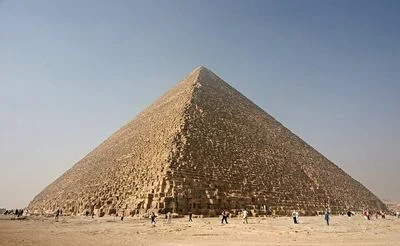
Khufu Pyramid at Giza. The original white limestone cladding is almost completely gone
Huge numbers
- Volume: about 2.3 million stone blocks. Wikipedia records a total of about 6 million tons, Britannica records 5.75 million tons.
- Material: mainly limestone mined right in Giza. The white facing stone comes from the Tura mine across the Nile; Granite for the King's Chamber was transported from Aswan more than 900 km away, with blocks weighing 25 to 80 tons.
- Accuracy: bottom edge is about 230.3 m, four sides deviate from the four main directions on average about 3 minutes 38 arc seconds.
- Time: Herodotus wrote 20 years, Wikipedia records about 26 years.
Cutting stone and transporting stone by boat
Miners used copper chisels, wooden mallets and stone tools. Using replicas of tools found in a Khufu-era quarry, stonemason Franck Burgos had four people split a 2.5-ton block in four days, six hours a day, and estimated that about 3,500 miners could make 250 blocks per day.
The rocks are far away from the waterway. In 2013, archaeologist Pierre Tallet's team found the oldest known papyrus scrolls at Wadi al-Jarf on the Red Sea, including the diary of the official Merer, commander of a team of about 200 people, recording the shipments of limestone from Tura to Giza by boat in the 27th year of Khufu's reign. In 2024, a study also determined that the disappeared branch of the Nile River called Ahramat, about 64 km long, once flowed near the pyramid chain.
Ramps and sleds
On the ground, stones were pulled on wooden sleds. The relief in the tomb of Djehutihotep, from the 12th Dynasty, many centuries later than Khufu, depicts 172 people pulling a statue weighing 60 tons, some pouring water in front of the sled to reduce friction. In a 1992 NOVA experiment, 12 to 20 people pulled a 2-ton block on a sled running on wooden rails.
John Gardner Wilkinson's drawing of the relief of Djehutihotep's tomb: a person pulling the statue on a sled, a person pouring liquid in front of the sled
To lift rocks up, most Egyptologists consider a slope as the most feasible, but the type of slope is still debated:
- Straight slope perpendicular to one side of the tower: almost rejected because the embankment would be huge.
- Corrupted slope on one side (Uvo Hölscher), or slope leaning against the unfinished body (Dieter Arnold).
- Slope twisted around the body (Mark Lehner). Britannica considers a steep bank surrounded by brick, dirt and sand to be the most reasonable; The weakness is that the slope covers the building, making it difficult to control the edges.
- Internal slope (Jean-Pierre Houdin): external slope for about 30% of head height, the upper part uses underground slope in the tower body. Unproven; Egyptologist David Jeffreys calls it farfetched.
Diagram illustrating four proposed ramp types, not to scale
Advertisement
In 2018, at the Hatnub alabaster mine, archaeologists revealed a slope sandwiched between two stairs with wooden stake holes for tying ropes, showing that Egyptians during Khufu's time dragged rocks up the slope by 20% or more. As for the top, Lehner suggests that leverage is used for the top few percent of volume.
Diagram illustrating the wrap-around slope hypothesis: the tower body and slope gradually increase, then the slope is removed from top to bottom
Not a slave
The ancient Greeks believed the pyramids were built by slaves, but modern discoveries show otherwise. In 1990, Zahi Hawass found a workman's cemetery south of the Crow Wall. About 600 skeletons were unearthed, many with traces of trauma treatment. Mark Lehner excavated the bakery and residential area, which according to the Smithsonian could accommodate up to 20,000 people, with large rations of beef.
Red painted letters on the stone blocks above the King's Chamber bear the names of the workmen, such as "Friends of Khufu".
"Payment" should be understood in the sense of that time: there was no coin yet, wages were food, beer, meat and shelter. Hawass believes that there was a permanent team of skilled workers, paid by the king, who worked together in rotating shifts. Lehner leans toward some form of labor obligation, but admits the extent of coercion is unclear. The number of human resources also differs widely:
Advertisement
- Herodotus: 100,000 people, working three-month shifts.
- Britannica: maybe about 20,000 people.
- A 1999 study: average about 13,200 people, peak about 40,000.
An original capping stone of Khufu's Pyramid at the British Museum. Much of the cladding was removed in the Middle Ages
Khufu's pyramid therefore does not need mysterious technology to explain: copper gouging, sleds, ropes, water, the Nile and a state capable of organizing tens of thousands of people for many years. As for how to bring the last blocks of stone to the top, there is still no definite answer.
Source:
Wikipedia (Great Pyramid of Giza)
,
Wikipedia (Egyptian pyramid construction techniques)
,
Britannica
,
Smithsonian Magazine
,
PBS NOVA

