The mystery of a thousand-year-old tomb at the bottom of the Yangtze River and the excavated artifacts have revealed an ancient technology that has been lost for a long time.
Executive Briefing
Synthesized and verified with gemini-2.0-flash-thinking-exp
“**A flood on the Yangtze River in the 1970s is said to have exposed the ancient tomb of a Chu offici”
Key Takeaways
- 1.**A flood on the Yangtze River in the 1970s is said to have exposed the ancient tomb of a Chu official.
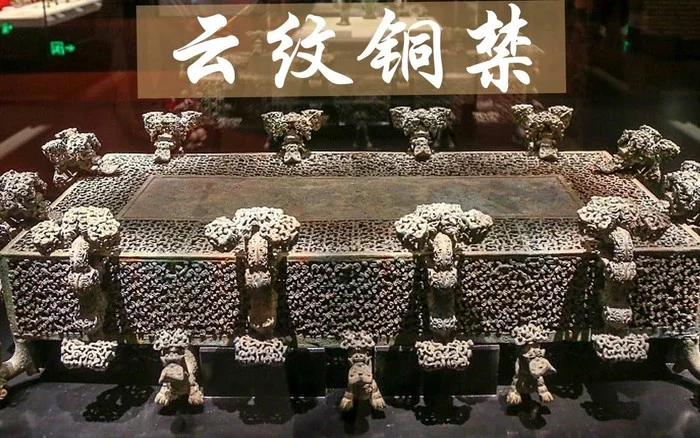
- 2.In particular, the rattan-patterned bronze Cam unearthed here attracts attention as it shows the sophisticated craftsmanship of the ancients, associated with the long-standing method of wax casting.** An ancient tomb discovered after a flood on the Yangtze River in the 1970s has brought a bronze artifact back into the spotlight.
- 3.The cloud-patterned Bronze Cam (Van Van Dong Ban) found here is a remarkable testament to the metal casting skills of the Chinese during the Spring and Autumn - Warring States period, and also opens up debate about the origin of the wax casting technique.
A flood on the Yangtze River in the 1970s is said to have exposed the ancient tomb of a Chu official. In particular, the rattan-patterned bronze Cam unearthed here attracts attention as it shows the sophisticated craftsmanship of the ancients, associated with the long-standing method of wax casting.
An ancient tomb discovered after a flood on the Yangtze River in the 1970s has brought a bronze artifact back into the spotlight. The cloud-patterned Bronze Cam (Van Van Dong Ban) found here is a remarkable testament to the metal casting skills of the Chinese during the Spring and Autumn - Warring States period, and also opens up debate about the origin of the wax casting technique.
The ancient tomb contains special artifacts of the So country In the 1970s, flood operations at a reservoir on the Yangtze River exposed an ancient tomb. After receiving the information, the cultural relics management agency quickly sent archaeological experts to the scene to conduct rescue and excavation work.
The owner of the tomb was identified as a commander of the So country, who lived during the Spring and Autumn - Warring States period. This is a high-status official position, equivalent to prime minister. Given the status of the person being buried, the tomb is said to have many valuable burial items.
Among the discovered artifacts, the notable one is Van Van Dong Ban, also known as Cloud-patterned bronze platform. This is a type of bronze ritual weapon used in ancient sacrificial rituals.
Rituals played an important role in social life during the Spring and Autumn - Warring States period. Therefore, items serving these rituals are often elaborately crafted, with complex structures and many sophisticated decorative details.
The rattan-pattern bronze platform attracts attention with its elaborate decorative lines, reflecting the shaping ability of ancient artisans. Not only is it an artifact with artistic value, the bronze item is also considered an important document for researching metal casting techniques of this period.
In particular, the artifacts show characteristics associated with the wax casting method, a technique capable of creating products with complex shapes and many details that are difficult to make using simple molding methods.
The wax casting technique has a long history Wax casting is a method of using wax models to shape casting objects. This technique is suitable for products with complex structures, many decorative lines or details that require high precision.
The history of this method is said to originate from the Spring and Autumn - Warring States period. In addition to the rattan-patterned copper pedestal unearthed at the So grave site in Ha Tu, Tay Xuyen district, many other artifacts are also mentioned as examples of the bronze crafting skills of the ancients.
Among them is a bronze iron table found at the tomb of Tang Marquis At in Loi Co Don, Sui Chau. These artifacts demonstrate sophisticated shaping abilities and show that complex casting techniques were applied in the making of ritual objects very early on.
The method of casting wax models continued to be passed down through many generations, from the Han and Tang dynasties to the Ming and Qing dynasties. Some ancient documents, including Tuyen Duc Dinh Di Pho, also mention the use of yellow wax as a model when casting incense burners during the Ming Dynasty.
This technique was also passed down in many Chinese localities in modern times, including Beijing, Shanxi, Inner Mongolia, Jiangsu, Guangdong, Yunnan, Qinghai and Tibet. Manufacturing centers such as Foshan and Suzhou are also associated with traditional casting activities.
From archaeological artifacts to historical records, wax casting demonstrates the long-term evolution of metalworking techniques. This is also a reminder that ancient technology is not always as simple or less sophisticated as popular perception.
Although there are many modern manufacturing technologies today, wax casting still has practical value in creating objects with complex shapes. This technique allows the craftsman to control the details of the product, thereby expanding the ability to create castings with high requirements for form.
The artifact revives debate about its technological origins Besides its artistic and historical value, the rattan-patterned bronze monument is also notable because it is related to debates about the origin of the wax casting technique.
Some statements in the US have recognized this method as their country's achievement. In addition, a laboratory in the US is said to have applied for a patent related to the above technique.
The appearance of an artifact dating from the Spring and Autumn - Warring States period has provided additional data to study the history of wax casting methods. If the manufacturing characteristics are accurately identified through archaeological analysis, the artifact could contribute to proving that this technique has been applied in China since ancient times.
However, determining the history of a technique needs to rely on many types of evidence, including artifact dates, manufacturing characteristics, historical documents, and professional research results. Evidence that a technique has been used since ancient times should also be distinguished from the issue of ownership of a particular technological process.
The available information does not clearly state the name of the laboratory in the US, the content of the patent file or the results of related expertise. Therefore, there is not enough basis to confirm that the artifact has completely resolved all debates about the origin of the wax casting technique.
However, the cloud-patterned bronze pedestal is still a notable artifact in the study of the history of bronze casting. The details on the item not only reflect the craftsmanship of the ancients, but also provide data to understand how ancient artisans handled complex shapes.

