Vietnam and Japan discuss how to monitor AI
Executive Briefing
Synthesized and verified with gemini-2.0-flash-thinking-exp
“# Vietnam and Japan discuss how to monitor AI Quang NinhVietnam and Japan both emphasize risk asses”
Key Takeaways
- 1.# Vietnam and Japan discuss how to monitor AI Quang NinhVietnam and Japan both emphasize risk assessment, safety testing and monitoring of AI during operation, instead of solely relying on governance principles.
- 2.At a workshop on implementing cooperation within the framework of the "Group of Friends" of the Hiroshima AI Process Initiative, between Vietnam and Japan on October 29 in Quang Ninh, representatives of management agencies and businesses of the two countries shared experiences in controlling risks, assessing safety and ensuring AI operates reliably.
- 3.The event was held within the framework of Vietnam International Digital Week 2026.
Quang NinhVietnam and Japan both emphasize risk assessment, safety testing and monitoring of AI during operation, instead of solely relying on governance principles.
At a workshop on implementing cooperation within the framework of the "Group of Friends" of the Hiroshima AI Process Initiative, between Vietnam and Japan on October 29 in Quang Ninh, representatives of management agencies and businesses of the two countries shared experiences in controlling risks, assessing safety and ensuring AI operates reliably. The event was held within the framework of Vietnam International Digital Week 2026.
Ms. Nguyen Thi Ngoc Trang, Acting Director of the Institute of Digital Technology and Digital Transformation, Ministry of Science and Technology, said that AI is opening up opportunities to improve productivity, innovate public services and promote economic growth, but also poses challenges in safety, security, transparency and accountability.
According to Ms. Trang, as AI becomes more deeply involved in processes and decisions that directly affect people, trust becomes an important condition for technology to be accepted and create sustainable value. However, "The gap from unifying principles to practical application is still large," she said, adding that Vietnam needs operable governance frameworks, appropriate assessment tools, qualified human resources and reliable AI systems.
The Hiroshima AI Process, launched at the G7 Hiroshima Summit in 2023, aims to promote innovation, international cooperation, and create a platform to promote safe, secure, and trustworthy AI governance. At a meeting in early October in Tokyo, the Minister of Science and Technology of Vietnam and the Minister of Internal Affairs and Communications of Japan also discussed concretizing cooperation in AI, digital infrastructure, AI management and human resource development.
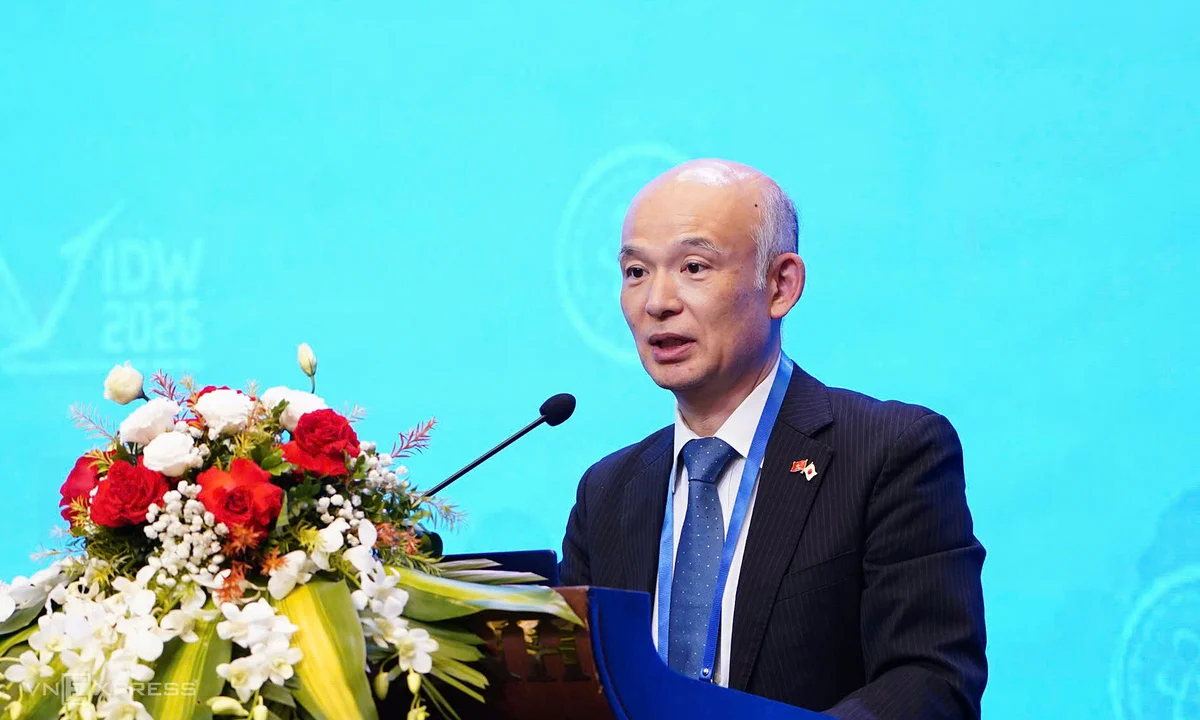
On the Japanese side, Mr. Koizumi Hidechika, Director of International Affairs, Ministry of Internal Affairs and Communications, said that the Hiroshima AI Process has expanded from the G7 framework to the "Group of Friends" with 70 participating countries, including Vietnam. "The initiative shows the international community's growing interest in safe and trustworthy AI," Mr. Hidechika said. According to him, this participation also shows international expectations in promoting AI governance, aiming to ensure safe, secure and reliable technology.
At the conference, Mr. Dang Chien Cong, representative of the National Institute of Digital Technology and Digital Transformation, Ministry of Science and Technology, said that reliable AI needs to be guaranteed with practical assessment capacity. Testing methods and data sets need to be appropriate to the language, application domain, and risk level of each system.
He also mentioned three requirements in AI governance including data protection, transparency and human responsibility, and the ability to monitor and respond to incidents. The operating principle is to evaluate before deployment, monitor during use and intervene or replace the system when necessary.
Businesses from the two countries also provided examples of how to put AI governance into practice. FPT representative introduced CASANOS, a system that converts management principles into operating procedures, including access control, monitoring and risk detection. One mechanism mentioned by businesses is the centralized AI Gateway, which helps filter commands, prevent data leaks and detect forms of attacks to overcome AI protection barriers.
And Mr. Balmukund Prasad, Senior Director of Rakuten Symphony (Japan), emphasized the role of human supervision, data management, transparency, traceability and auditing. According to businesses, trust needs to be built right into AI products, instead of just supplemented by external regulations.
The workshop also mentioned specific directions for cooperation between the two countries, including building reliable AI assessment methods and datasets, developing AI for local languages and knowledge, and testing open AI architecture with connectivity. These directions are set in the goal of developing a safe, autonomous but still internationally connected AI ecosystem.
Liu Quy