'Vietnam needs smart infrastructure to improve competitiveness'
Executive Briefing
Synthesized and verified with gemini-2.0-flash-thinking-exp
“# 'Vietnam needs smart infrastructure to improve competitiveness' WEF experts recommend that Vietna”
Key Takeaways
- 1.# 'Vietnam needs smart infrastructure to improve competitiveness' WEF experts recommend that Vietnam should prioritize developing a smart connected economy to increase coordination efficiency between factories, seaports, and transportation.
- 2.The suggestion was made by Mr.
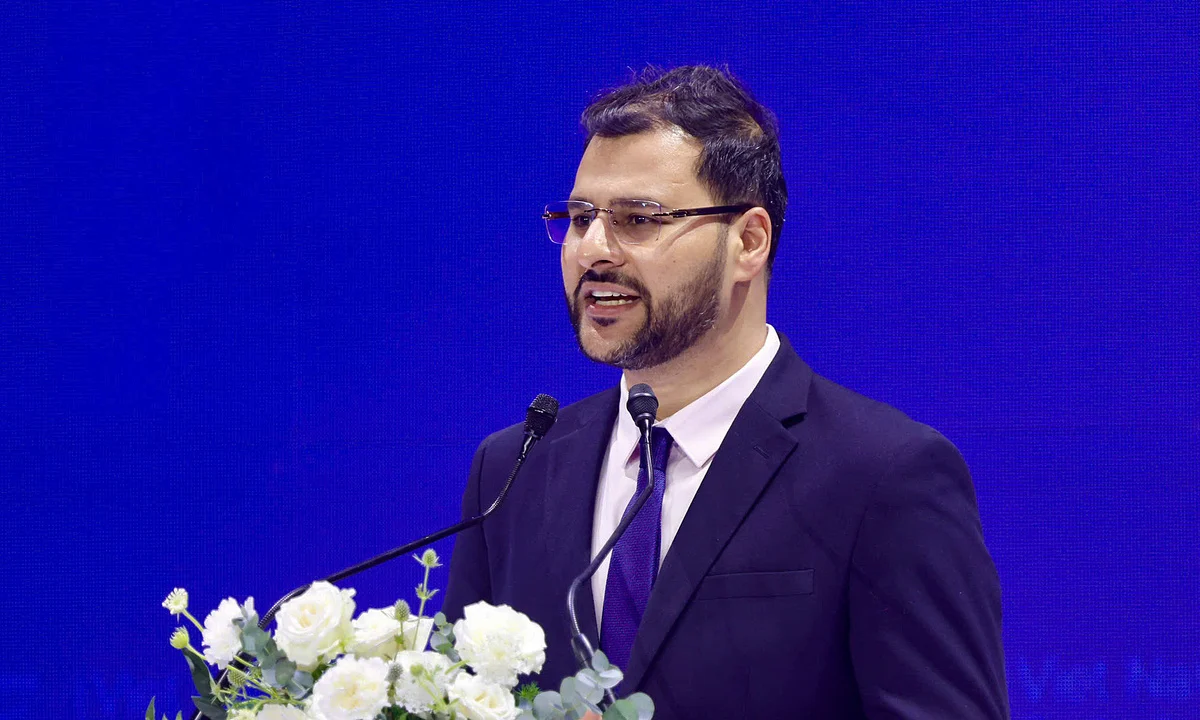
- 3.Devendra Jain, Head of AI and Pioneering Technology Group, World Economic Forum (WEF), at the discussion session and in-depth dialogue on the cooperation framework in the new era within the framework of the Fall Economic Forum 2026 (AEF 2026) on the afternoon of October 28 in Ho Chi Minh City.
WEF experts recommend that Vietnam should prioritize developing a smart connected economy to increase coordination efficiency between factories, seaports, and transportation.
The suggestion was made by Mr. Devendra Jain, Head of AI and Pioneering Technology Group, World Economic Forum (WEF), at the discussion session and in-depth dialogue on the cooperation framework in the new era within the framework of the Fall Economic Forum 2026 (AEF 2026) on the afternoon of October 28 in Ho Chi Minh City.
According to WEF experts, Vietnam has built a growth model based on production, becoming a major investment destination and production center. However, the next stage of development requires Vietnam not only to expand its physical infrastructure but also to improve coordination between components of the economy.
Mr. Devendra Jain said that unlike digital infrastructure that mainly supports system observation, smart infrastructure allows the system to proactively respond. Like a traffic system, with digital infrastructure, signal lights can be connected but operate on a fixed schedule. Meanwhile, the intelligent traffic system analyzes the actual situation, then adjusts signals throughout the network to match vehicle traffic.
"Smart infrastructure that combines physical infrastructure, connectivity, data and AI will improve productivity, resilience and investor appeal," Mr. Jain said. "Digital infrastructure helps observe the system, while smart infrastructure helps the system react more effectively."
Based on international experience, Mr. Jain said smart infrastructure needs to be built on a foundation of cooperation between governments, businesses, technology providers and standards organizations. In particular, the government provides policy and infrastructure; businesses contribute data, assets, and application needs; platform development technology units; Standards organizations also establish general rules.
For example, Saudi Arabia has deployed a national industrial network, using defense spectrum to provide dedicated connectivity to the industrial sector; or China has more than 4,000 smart factories using 5G, thanks to policies that create conditions for businesses to access private 5G networks.
The process of developing smart infrastructure is assessed as needing to go through many stages. According to WEF experts, countries can focus on a series of priorities such as developing advanced communications networks, building reliable digital and data infrastructure, establishing interoperability standards, and developing system-level industrial intelligence platforms.
Regarding data specifically, the big challenge lies in providing high-quality industrial data sets. Unlike consumer data that can be found on the Internet, industrial data often resides in separate systems. Building a shared data source will help businesses, especially small and medium enterprises (SMEs), access resources to develop AI.
After identifying smart infrastructure as an important factor to improve industrial competitiveness, Mr. Jain said it is necessary to consider the significance of this approach for Vietnam, especially Ho Chi Minh City. Based on Vietnam's development priorities and the orientation in the draft Ho Chi Minh City Master Plan to 2050, he sees two immediate opportunities.
First is the opportunity to build a reliable coordination layer, connecting factories, logistics units, inland ports and seaports along production - export corridors. The second opportunity lies in building a shared layer, supporting manufacturing enterprises, especially SMEs, to apply and expand smart production. This direction can be developed based on VSM 70 - a pilot program to support businesses in smart production transformation and improve competitiveness in the value chain, launched by the Center for the Fourth Industrial Revolution in Ho Chi Minh City (HCMC C4IR).
"Vietnam can go further," Mr. Jain assessed. "Common challenges such as connectivity, data standards, digital twins, AI tools and cybersecurity can be solved through shared infrastructure, rather than forcing each business to develop its own capabilities."
Building a technology belt in Ho Chi Minh City with six functional poles
At the event, Associate Professor. Dr. Le Quoc Cuong, member of the Subcommittee on Science and Technology, Innovation and Digital Transformation of the Ho Chi Minh City Development Research Board, presented research on multipolar technology and innovation belts for the city, referring to Asian experiences and proposing an integrated governance framework.
Citing research, Mr. Cuong assessed that Ho Chi Minh City needs to shift from a growth model based on expanding production scale to a model that takes science, technology and innovation as the driving force. According to him, the development of individual industrial parks, high-tech parks, software parks and innovation centers is difficult to create synchronous growth momentum. Regions can be spatially, functionally and administratively dispersed, making it difficult for resources to connect.
Surveying experiences from 6 Asian economies, including Japan, Taiwan, China, Korea, Singapore and Thailand, the study identifies that the effectiveness of a technology belt depends not only on the scale of resources, but also on the quality of specialization, the ability to absorb knowledge, the level of connection between subjects and the coordination mechanism of the entire system.
From there, Mr. Cuong cited research results proposing to build a technology belt in Ho Chi Minh City with 6 functional poles, participating in the common value chain from knowledge creation to production and commercialization in the global market.
In particular, the intellectual pole is associated with Ho Chi Minh City National University, focusing on research and training high quality human resources; high-tech pole focusing on strategic areas such as semiconductors, AI, biotechnology and new materials; Advanced manufacturing pole aims to transform large industrial parks into high-tech and smart manufacturing centers; The finance and innovation pole connects international financial centers with research, startups and technology commercialization; The global logistics pole plays the role of connecting production activities with the supply chain; and extreme blue economy and marine economy.
In addition to spatial planning, Mr. Cuong also said it is necessary to determine a unified coordination mechanism for specialized poles to operate effectively. In particular, it is proposed to build a governance framework with pillars connecting capital, technology and innovation, as well as establish a cooperation framework to help entities participate in the ecosystem.
"The value of the model is in the quality of connections between poles, not just the scale of each pole. The level of connectivity will determine the strength and efficiency of the network," Mr. Cuong said.
AEF 2026 takes place October 26-29, attracting global science, technology, innovation centers and hundreds of international businesses, associations, diplomatic agencies, and consulates of countries in Vietnam. This year is the second time Ho Chi Minh City has hosted the Fall Economic Forum and the first time cooperating and co-branding with WEF.
Bao Lam