Why do many countries advise people to prepare "survival food"?
Executive Briefing
Synthesized and verified with gemini-2.0-flash-thinking-exp
“**In the face of rising geopolitical tensions, extreme weather and the risk of power interruptions a”
Key Takeaways
- 1.**In the face of rising geopolitical tensions, extreme weather and the risk of power interruptions and cyber attacks, many governments encourage people to prepare to respond.** According to reports from international media, at least 33 countries around the world have issued instructions, advising households to stockpile food, water and essential items to be ready to respond to emergency situations.
- 2.Recommended stockpiling periods vary from country to country.
- 3.In particular, France and England asked people to prepare enough necessities to maintain daily activities for at least 72 hours.
In the face of rising geopolitical tensions, extreme weather and the risk of power interruptions and cyber attacks, many governments encourage people to prepare to respond.
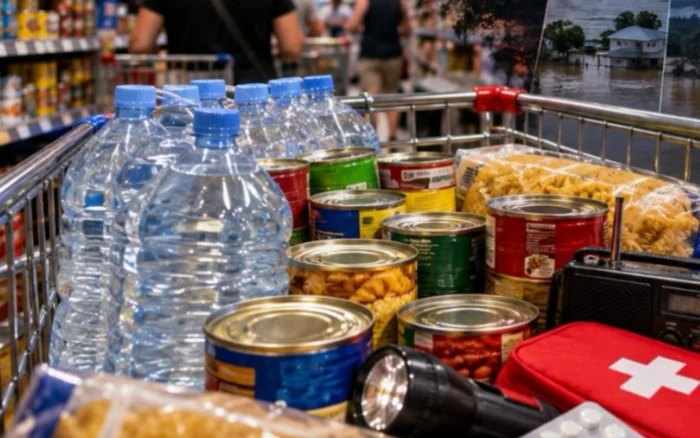
According to reports from international media, at least 33 countries around the world have issued instructions, advising households to stockpile food, water and essential items to be ready to respond to emergency situations.
Recommended stockpiling periods vary from country to country. In particular, France and England asked people to prepare enough necessities to maintain daily activities for at least 72 hours.
The government of France's Normandy region also called on people to proactively prepare early, instead of waiting until an incident occurs to find ways to respond. " Don't wait until an emergency occurs to prepare. Act now", the Normandy regional government emphasized in a message posted on social networks.
In the UK, Prime Minister Andy Burnham also encouraged households to stockpile foods that can be stored for a long time, such as canned beans and canned soup, for use when needed.
Canada, Japan, Mexico and the Netherlands also recommended stocking up on three days' worth of essentials. Meanwhile, Sweden and Norway advise households to prepare essential supplies for up to a week.
Notably, Germany recommends that people stock up on essential supplies for up to 10 days, to help households maintain livelihoods in case emergency relief operations or essential services are interrupted.
In the US, official government guidance also encourages people to prepare food, water and necessary items to last for several days.
The Pentagon has launched the FORTRESS initiative to increase the resilience of military facilities to supply disruptions. The goal is to help multiple military bases operate independently for up to 90 days if the supply chain is disrupted.
FORTRESS is a separate program for the military sector, and is not synonymous with the US Government's recommendations to the public on stockpiling necessities.
India recommends that families prepare disaster response kits, although the reserve time has not been specified. Recommended items include non-perishable foods, drinking water, medications, batteries, flashlights, and radios.
In Southeast Asia, Thailand is promoting recommendations for people to prepare emergency bags. On November 2, the Department of Disaster Prevention and Mitigation (DDPM) under the Ministry of Interior of Thailand recommended that each family reserve enough food, water, medicine and essential items for the first 72 hours after a disaster or emergency situation occurs. The agency emphasized that survival bags need to be compact, waterproof, easy to carry when evacuating and periodically checked to ensure they are always ready for use.
At the regional level, the European Union (EU) has implemented a crisis preparedness strategy since March 2025, in the context of increasing geopolitical tensions, risks of conflict and disasters related to climate change.
Experts note that the fact that many governments simultaneously emphasize the need to prepare for emergency response does not mean they predict war or a major disaster is about to happen.
Instead, this is a preventive measure to help people and communities maintain basic living needs, proactively overcome temporary disruptions, and be able to cope on their own while waiting for rescue and relief forces to approach.