Why is the sky blue and sunsets red: Decoding Rayleigh scattering
Executive Briefing
Synthesized and verified with gemini-2.0-flash-thinking-exp
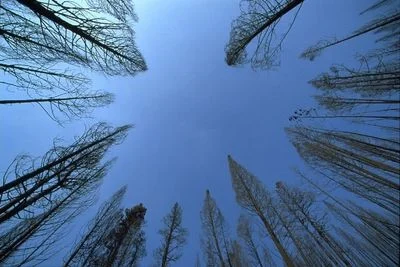
“*Blue sky seen from under the trees: the light we see is sunlight scattered by air molecules* ## **”
Key Takeaways
- 1.*Blue sky seen from under the trees: the light we see is sunlight scattered by air molecules* ## **White light is a mixture of many colors** Isaac Newton's prism experiment showed that white light splits into a range of colors from red to purple.
- 2.Each color corresponds to a wavelength: purple and blue have the shortest wavelengths, red the longest.
- 3.According to NASA, light travels straight until it encounters an obstacle, and there are three ways an obstacle can change its direction: - **Reflection**: light bounces back, like when it meets a mirror.
Blue sky seen from under the trees: the light we see is sunlight scattered by air molecules
White light is a mixture of many colors
Isaac Newton's prism experiment showed that white light splits into a range of colors from red to purple. Each color corresponds to a wavelength: purple and blue have the shortest wavelengths, red the longest. According to NASA, light travels straight until it encounters an obstacle, and there are three ways an obstacle can change its direction:
- Reflection: light bounces back, like when it meets a mirror.
- Refraction: light is bent, as when passing through a prism.
- Scattering: light is bounced in many directions, such as when encountering gas molecules in the atmosphere.
How does Rayleigh scattering work
Rayleigh scattering occurs when light encounters particles much smaller than the wavelength, usually less than one-tenth of the wavelength. Nitrogen and oxygen molecules, the two main components of air, meet this condition. The oscillating electric field of the light wave pulls the charges in the molecule to oscillate at the same frequency, turning the molecule into a small dipole that re-emits light to the surroundings. That part of the light that's emitted is what we see from across the sky.
The key point is that the scattering intensity is inversely proportional to the fourth power of the wavelength:
- If the wavelength is halved, the light will be scattered 16 times more strongly.
- Therefore, blue and purple light are scattered more strongly than red and orange light.
- This is elastic scattering: light changes direction but does not change color.
Why is the sky blue and not purple
If violet has the shortest wavelength, the sky should be purple. A study in the American Journal of Physics cited by Wikipedia suggests that sky color is the result of three factors at the same time:
- The spectrum of sunlight reaching the atmosphere is more blue than purple.
- Rayleigh scattering on oxygen and nitrogen molecules.
- The human eye, according to the Royal Greenwich Observatory, is more sensitive to blue light than purple.
Our eyes perceive that mixture as blue light mixed with white, which is a light blue color. The more you look towards the horizon, the lighter the sky becomes, because the light from there passes through more air, is scattered many times, and the colors mix together. The nearly white region around the Sun is mainly due to Mie scattering from dust and larger particles, which has little wavelength dependence.
Red sunset: blue light is filtered out along the way
When the Sun is low, light has to penetrate a much thicker layer of atmosphere than at noon. Over that long distance, most of the blue and purple light has been scattered away from the line of sight, the remainder reaching the eye is mainly red, orange and yellow.
Advertisement
Sunset in Tromsø, Norway: close to the horizon the light turns orange-red, above the sky is still blue
According to NASA, small dust, polluted smoke and other aerosols also scatter blue light, sometimes making an entire corner of the sky glow red. After large volcanic eruptions, sulfate aerosols remain for many years in the stratosphere and change the color of the sky. Some researchers believe that the red skies in J. M. W. Turner's paintings may be related to the Tambora eruption.
Why are clouds white
Water drops in clouds are much larger than the wavelength of light, so they do not follow Rayleigh scattering. According to HyperPhysics, scattering from these droplets is almost independent of wavelength, all colors are reflected equally and clouds appear white or gray. Milky white fog is also due to this reason.
Opal glass viewed from the side appears blue, while the light passing through appears orange, like the sky at sunset
From Leonardo da Vinci to Lord Rayleigh
- Around 1506 to 1510, Leonardo da Vinci conjectured that small particles in the air scatter sunlight to create the color of the sky.
- In 1869, John Tyndall saw light shining through microscopic particles with a pale blue light, but could not explain why.
- In 1871, Rayleigh quantified this phenomenon; In 1881 he showed that it was consistent with Maxwell's theory of electromagnetism.
- In 1899, he showed that scattering occurs right on each gas molecule, laying the foundation for the sky color model used today.
Advertisement
The sky is elsewhere
The atmosphere of Mars is thin, less than one percent of Earth's, and contains a lot of fine dust. During the day, Mars's sky is orange-yellow, but at sunset the area around the Sun turns blue-gray, the opposite of Earth. On the Moon there is almost no atmosphere, light is not scattered, so the sky is always black, even during the day.
Source:
Wikipedia (Rayleigh scattering)
,
Wikipedia (Diffuse sky radiation)
,
NASA Space Place
,
Royal Observatory Greenwich
,
HyperPhysics