Five ways Jensen Huang’s ouster from Nvidia could damage the AI industry
Tóm lược nhanh
“Nvidia's ousted CEO Jensen Huang's downfall isn’t just your run-of-the-mill salacious billionaire sex scandal. He was using his influence to push the AI industry in some very specific ways.”
Nvidia CEO Jensen Huang’s confession that he had an affair (and reports of another one with a direct report) that led the board to oust him on Thursday isn’t just your run-of-the-mill salacious billionaire CEO sex scandal.
In this case, one of his lovers is suspected by the U.S. government of being a spy for China. She’s also an executive of a Singapore-based neocloud that is suspected of smuggling Nvidia chips to China.
These affairs show undeniably poor judgment by Huang and, I’d argue, unchecked hubris on many levels. Such choices are not only a betrayal of his wife of 40 years, they’re also a liability for his company. Sleeping with any Nvidia partner is bad enough, but he also chose one in a tinderbox of a geopolitical situation. Even if Alice Huang’s company wasn’t suspected of helping Chinese firms evade chip restrictions (and he was somehow unaware of this), it was still exploiting a legal loophole by renting out powerful AI infrastructure to Chinese companies.
It’s those potential national consequences that may land him in a hellscape of ongoing public humiliation. Republican committee chairs are already summoning him to testify in closed-door sessions about the security ramifications.
Will Democrats, who are set to take over key committees when the new Congress convenes in January, also haul him in to testify on the Hill? No one knows yet, but Huang has flaunted his close relationship with President Trump. Remember when Trump called him while he was on stage at the All-In Summit in September? Nvidia also donated $25 million to Trump’s ballroom, a deeply unpopular project with American voters. Several Democratic lawmakers have already vowed to investigate the money behind it.
In other words, he is a billionaire close to Trump. He was — until Thursday — the face of AI and data centers (also a deeply unpopular political topic with voters), and he has publicly admitted to having an affair with an alleged Chinese spy. Even though he’s no longer CEO, that seems too juicy a target for Democrats to ignore.
Beyond whatever may be coming, Huang’s influence has been lost right when he was using it to push the tech industry in a number of directions. These areas have now lost their biggest champion.
Open-weight AI models as competitors to closed-source labs
Huang has been the biggest, loudest advocate for open weight AI models in the tech industry and among government policymakers. Nvidia not only offers its own open-weight models, it also offers a lot of other open source tech for agents, AI security and more. It has even agreed to acquire the biggest site that hosts them, Hugging Face, for $12.9 billion. (That deal is supposed to close in the first half of next year, pending regulatory approval.)
In July, when Anthropic and OpenAI were reportedly urging the Trump Administration to ban Chinese open-weight models, Huang organized a letter of support for open-weight models generally (if not Chinese models specifically), signed by hundreds of tech companies.
Open-weight models give enterprises choice in the market and reduce costs. Without Huang, the next biggest advocate for them is perhaps Microsoft’s Satya Nadella, but he’s not out there organizing the industry to speak up.
Pushing the AI industry to clean up its security
Both OpenAI and Anthropic revealed incident after incident this year as their AI agents hacked into others’ networks or performed other misdeeds. Huang loudly proclaimed the AI industry still didn’t need regulation and would deal with safety itself.
As the industry mulled over what they should do (auditors? a FINRA-like board?), Huang rallied the tech industry again. Nvidia got over 100 companies to sign on to his Open Agent Safety Platform, a largely open-source effort to solve the epidemic of misbehaving AI agents.
Naturally, this effort hasn’t instantly solved the problem, and now the top spokesperson for self-regulation via technology solutions is out of his position of influence.
Arguing AI is a tool, not a life form
Huang has also been among the loudest voices insisting that AI is an engineered system that creates products, and so can be controlled like any other engineered system. This viewpoint counters the AI doomers and even the big AI labs themselves, which sometimes position their models as on the verge of consciousness (Anthropic) or as alien minds (OpenAI).
While Huang deals with the fallout of his actions, the loudest voice of this counter-narrative is, for the foreseeable future, silenced.
A new Nvidia-powered AI PC industry
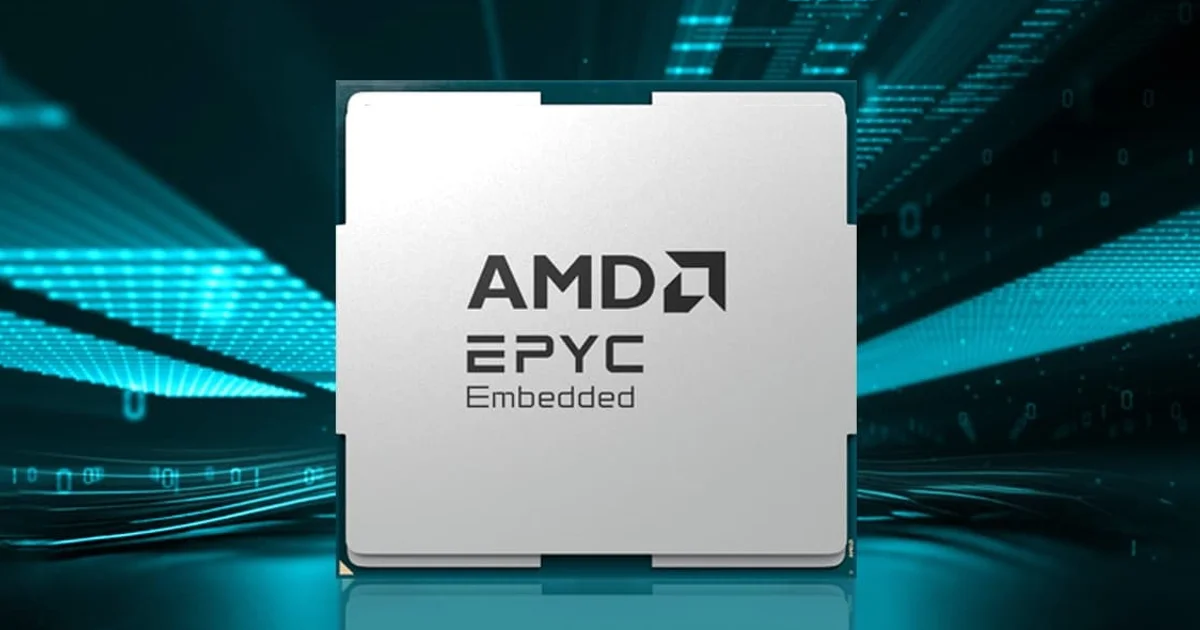
Huang also just convinced a long list of PC makers to buy into his long-time dream of providing CPUs (the main processor chips) for them. In this age, when most Americans have not experienced AI beyond a chatbot, he orchestrated a new line of high-end AI PCs geared for running agents locally.
These new PCs are due out this holiday season, and they may sell well for their intended targets: creators, developers, and others already savvy with agents. But now that Huang has become a meme for cheating on his wife with an alleged spy, he’s perhaps not the best choice to help market these devices as a cool alternative to the Mac mini.
Financial engineering to fund data centers
Huang demolished his reputation right as bond underwriters (lenders) and bond buyers are pretty much over AI build-out related debt. Of roughly $80 billion in data center bonds issued this year, nearly half were rated high-risk “junk,” Forbes reports.
Undeterred, Huang has been coming up with ways to continue financing the boom and keep his company’s revenues growing. Certainly, he’s authorized a mind-boggling number of so-called circular deals, where Nvidia buys stakes in companies to fund their expansion so they can buy chips. By some accounts, the company had committed to $750 billion in such deals as of July, Bloomberg reported. In August, Nvidia got even bolder, agreeing to backstop $105 billion in financing for an OpenAI data center in Ohio, CNBC reported.
Huang also convinced a whole new set of financiers to pony up. In August, he announced that deep-pocketed PE firms Apollo, BlackRock, Blackstone, Brookfield, Goldman Sachs and KKR had committed up to $500 billion for data center build outs. He promised them that the data centers’ Nvidia GPUs could be used as collateral because Nvidia was guaranteeing the chips would retain value.
Huang sold a vision of Nvidia as “investable infrastructure” with a long resale cycle, like airplanes. Then he made the rounds with the financial press, as he often did, to pitch his vision. Now, however, Wall Street is concerned that Nvidia’s stock will crash and take their portfolios, and possibly the economy, with it.
Nvidia has lost its top salesperson and the AI industry has lost its top hype man. Even if Huang somehow comes back into the public eye to champion AI again, every interview and meeting will be about his sex life, choices, and national security — not his vision for the industry.
We’ll have to wait and see how Nvidia navigates the scandal Huang heaped onto it, but now that the company is finally in its post “founder mode” era, and hunting for a new CEO, it’s doubtful it has the cache to push the industry the way Huang was.