Who could replace Jensen Huang? A highly unscientific list of possible successors
Tóm lược nhanh
“Nvidia has no succession plan and a CEO in hot water, so we’ve drafted a shortlist.”
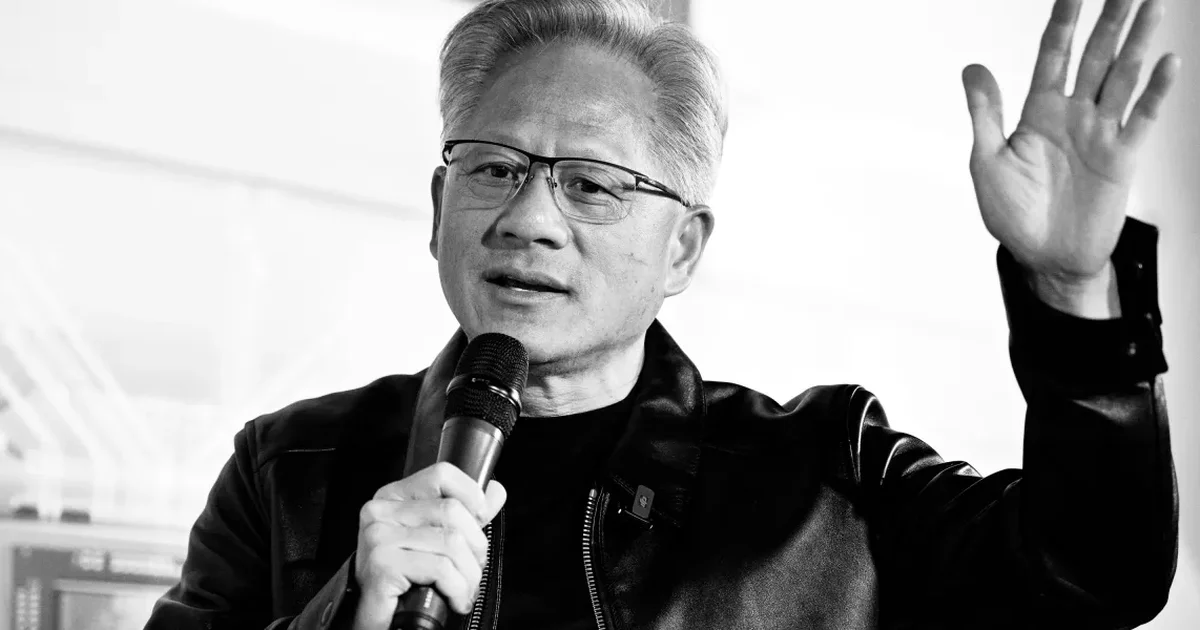
It’s almost inconceivable that Nvidia would fire its rock star CEO. Yet here we are, on the precipice of this happening. Over at Kalshi, Jensen Huang’s odds of surviving the week are sitting at a lowly 30%. Even though he built one of the world’s most valuable — and, many would argue, dangerously powerful — companies, the tides have completely turned against him. He has confessed to an extramarital affair, but as of Wednesday afternoon it isn’t even clear whom he meant: Alice Huang, the Chinese executive suspected by U.S. intelligence of spying for her country, or Kimberly Powell, an Nvidia executive who reports to him and who, five sources told The New York Times in an explosive new report, was also a paramour.
Even if Huang is pushed out as CEO, the board members he has made very rich are unlikely to cut him loose entirely. Barring another shoe dropping, they could keep him on as chairman, a role Nvidia doesn’t currently have. But someone still has to run the company, and there’s no apparent succession plan, which leaves us, like everyone else, to speculate while we wait to see what happens next. While Huang’s 60 direct reports undoubtedly get a closer look, consider this our own parlor game, featuring some obvious and less obvious candidates:
Lisa Su. The AMD CEO runs Nvidia’s most credible rival, as well as a distant cousin of Huang. The Information floated her name this week, but why would she leave her job for his? Her company stands to benefit from every day that Nvidia spends distracted by an investigation, congressional briefings, and all the mini dramas that are sure to follow. Her best move might be to send a nice note and keep her current corner office.
Eric Schmidt. He was the pick of Jeffrey Sonnenfeld, senior associate dean for leadership studies at the Yale School of Management, who we talked with earlier this week. Schmidt could “parachute in tomorrow and do a very good job,” Sonnenfeld said, and perhaps he could. He ran Google from 2001 to 2011, chaired the National Security Commission on AI from 2018 to 2021, and now runs the rocket company Relativity Space. Chips, software, government, rockets — it’s an impressive range. Then again, Schmidt would bring a lot of baggage when it comes to his own extramarital dalliances. It’s hard to see him clearing the board for that reason.
Lip-Bu Tan. Intel’s CEO knows chips, and right now he might welcome a very soft landing. Last month, Intel reported third-quarter revenue up 21% to $16.5 billion, then warned its fourth-quarter results would fall short of Wall Street’s forecasts. The AI boom has caused a memory-chip shortage, pushing up PC prices and cutting PC sales. That’s hurt Intel (PC chips are a big part of its business), and its stock plunged 20% in after-hours trading on the warning, having already slid more than 30% since September. A move to a company that’s eating everyone’s lunch would be a pretty amazing escape hatch.
Bret Taylor. The former Salesforce co-CEO and OpenAI board chair now runs the AI startup Sierra, and his resume includes a lot of the biggest brands in Silicon Valley. He co-created Google Maps, served as Facebook’s CTO, and chaired Twitter’s board through its sale to Elon Musk. He then took over as OpenAI’s board chair after the “Blip,” Sam Altman’s firing and fast return. When companies need an unflappable, likable adult in the room, they call Taylor. He probably knows nearly every customer Nvidia has, too.
Ian Buck. If the board feels strongly about having a “builder” at the helm, they could do worse than the Nvidia VP who helped develop CUDA, the chip software that has become central to Nvidia’s dominance in AI. Analysts and former employees have floated him as a possible successor, and Kalshi traders give him a middling shot. He’s no household name, but the Stanford PhD seems more viable if Huang can can keep that chairman title and push for a successor he can work with.
Someone else down the hall. Andrew Bell, Nvidia’s senior vice president of hardware engineering, arrived 25 years ago as a fresh Cornell grad and has been on an upward trajectory at the company ever since. Like Buck and dozens of other executives who are presumably being scrutinized, he reports directly to Huang. Nvidia CFO Colette Kress is the insider most often named, but analysts say she isn’t necessarily a natural successor as an innovator and visionary, and Bell has the chip pedigree.
The wild card? Lori Huang. Nobody has floated her, but hear us out: Jensen met his wife as lab partners at Oregon State, so she has been working with him since before Nvidia existed. After graduating, she worked at Silicon Graphics as a micro chip engineer (making more money than her husband, he has said), then scaled back to raise the couple’s family, and she now co-leads the family trusts. If the board wants continuity, they could do worse than a humbler Huang who is also a brainiac. There’s a reason they say that behind every great man is a great woman (and vice versa).
Whatever happens next, we’ll know soon.