Best Microsoft Surface Laptop (2026): Which Models to Buy and Avoid
Executive Briefing
Synthesized and verified with gemini-2.0-flash-thinking-exp
“Microsoft’s Surface Line has a product to fit a variety of needs and budgets, including flexible 2-in-1 tablet-laptops.”
Key Takeaways
- 1.Microsoft’s Surface Line has a product to fit a variety of needs and budgets, including flexible 2-in-1 tablet-laptops. The company also recently anno
- 2.When those 2024 Surface models launched, they were among my favorite devices of the year. Over the past couple of years, those models have held up, ma
- 3.I weighed these details, among others, in outlining which Microsoft Surface device is best for every need.
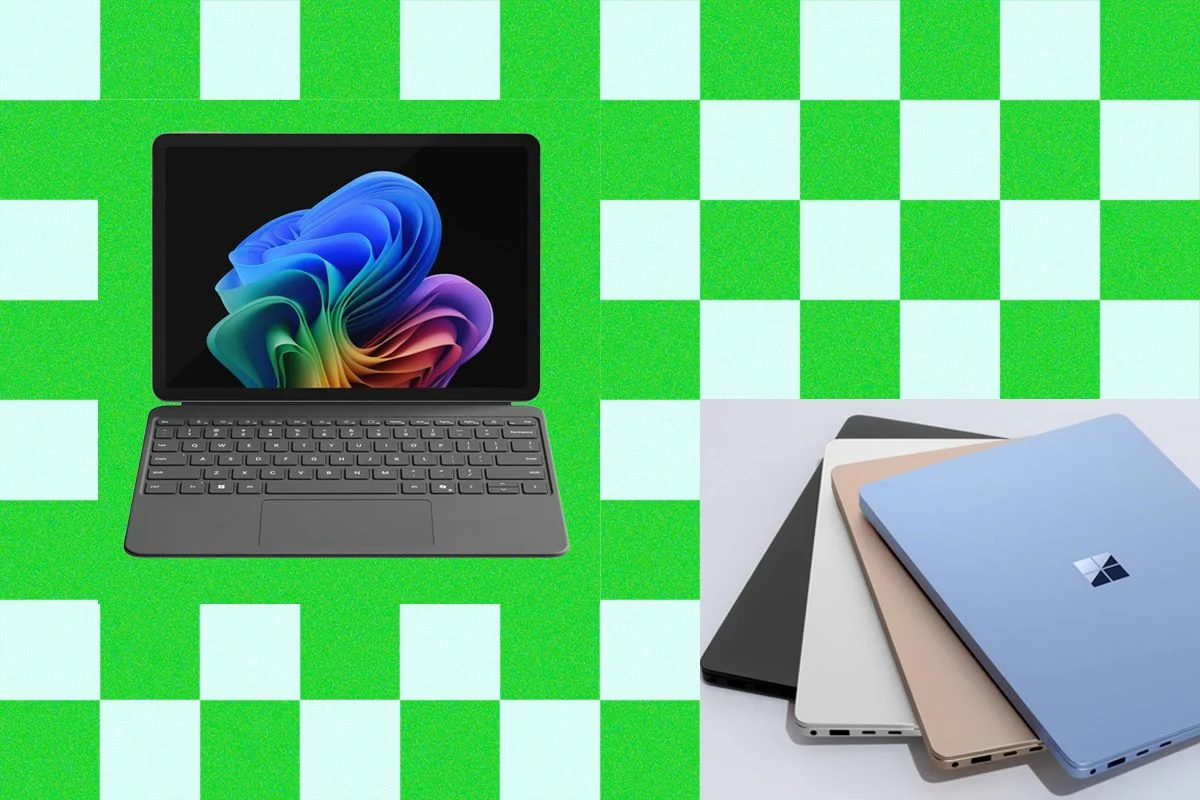
Microsoft’s Surface Line has a product to fit a variety of needs and budgets, including flexible 2-in-1 tablet-laptops. The company also recently announced new versions of its Surface Laptop and Surface Pro as follow-ups to its 2024 models, making it even trickier to pick the best model that matches your priorities.
When those 2024 Surface models launched, they were among my favorite devices of the year. Over the past couple of years, those models have held up, making them great buys—especially when on sale. But now, with the new Surface Laptop 8th Edition and Surface Pro 12th Edition (not to be confused with the Surface Pro 12), we finally have some next-gen silicon to pair with them. Just bear in mind that the new Snapdragon X2 chips come at much higher prices, bringing the devices’ value into question.
I weighed these details, among others, in outlining which Microsoft Surface device is best for every need.
Be sure to read our other buying guides for more, including the Best Laptops, Best Cheap Laptops, Best 2-in-1 Laptops, Best MacBooks, and our tips for choosing a laptop.
*Updated October 2026: I've rewritten this guide with notes from my testing of the Microsoft Surface Laptop Ultra and updated pricing for other models.*
Recommending a laptop from 2024 as my top choice feels embarrassing. Not for me—but for Microsoft. I adore this laptop, and I actually still find myself returning to it over newer, flashier options. The 3:2 aspect ratio screen is my favorite feature, and it can't be found almost anywhere else right now. The taller shape of the display is preferred if you spend most of your time on a laptop looking at documents, spreadsheets, or websites. Beyond that, it gets great battery life, performs well (in just about anything other than games), and has a gorgeous, high-resolution display.
But I hear you say, why not the 2026 model (also known as the 8th Edition)? Microsoft launched a refresh this year with new chips inside (the Snapdragon X2 lineup, if you care to know). I've tested these chips in other laptops, such as the Lenovo IdeaPad Slim 5x, and they speed things up in meaningful ways—especially on the graphics front. Unfortunately, Microsoft made the poor decision not to send these out to reviewers for independent testing, so I've never had one to try myself.
The real problem, though, is the pricing. Like many laptop manufacturers this year, Microsoft has dramatically increased the price of its products. You can thank the ongoing memory shortage for that. Right now, you can still buy the 2024 Surface Laptop with 512 GB of storage for $999 on Amazon. It's only for the Dune color right now, whereas the Black and Silver models are $50 more. These are not quite as cheap as they were in 2025, but it's a great deal. It's especially affordable compared with the 2026 version. It's over $400 more for an otherwise identical configuration, and sometimes it jumps to the retail price of $1,600. That's just too much for what you're getting. I just don't think the performance difference is worth that much. It'd be a different story if the 2024 model were unavailable, but I have a hard time suggesting someone buy the newer one at the moment.
The Surface Laptop comes in two main variants: 13.8-inch and 15-inch screen sizes. Both are great, but I think the 13.8-inch model offers plenty of screen real estate for the average person, especially with this aspect ratio.
| Specs | |---| | **Processor:** Qualcomm Snapdragon X Elite or Plus | | **Memory:** 16 GB, 32 GB, or 64 GB | | **Storage:** 512 GB or 1 TB | | **Display:** 13.8-inch at 2304 x 1536 at 120Hz (IPS) or 15-inch at 2496 x 1664 at 120 Hz (IPS) |
The Surface Laptop Ultra might bear some resemblance to the standard Surface Laptop, but it's a completely different animal under the hood. It's no thicker than the 15-inch Surface Laptop, despite offering far more performance. That's thanks to the Nvidia RTX Spark N1X chip inside, which delivers GPU performance typically found only in discrete graphics cards, like those in gaming laptops. In many ways, this is Microsoft's answer to the MacBook Pro—a laptop designed for content creators, media pros, and a burgeoning new demographic: AI enthusiasts. It can be configured with up to 128 GB of unified RAM, allowing you to feed that GPU tons of memory to access larger AI models—all running entirely on-device. I tested the 32-GB version of the Surface Laptop Ultra, which limits you from running larger AI models (such as 70-billion parameters and above). In reality, you need something with a more powerful GPU to handle foundation-tier models that really compete with the cloud-based services people are used to. I don't know if the case for running local AI models is fully made yet, but the Surface Laptop Ultra lets you dip your toe in.
It can play games, too, but don't be fooled by the “Nvidia” brand into thinking it will perform anywhere near a proper discrete graphics card in a gaming laptop. Some very popular multiplayer games still aren't compatible at all (such as *PUBG* and *League of Legends*), though Nvidia says it's working on it. The Surface Laptop Ultra is for someone who wants to dabble in content creation, gaming, and AI on their work laptop. And yes, if that sounds like the M5 Pro MacBook Pro, that's the point.
| Specs | |---| | **Processor:** Nvidia RTX Spark (18-core with 5,120 GPU cores or 20-core with 6,144 GPU cores) | | **Memory:** 24 GB up to 128 GB | | **Storage:** 512 GB, 1 TB, or 2 TB | | **Display:** 15-inch at 3270 x 2180 at 120 Hz (Mini-LED) |
I’ve always liked the idea of a smaller Surface Pro, and in theory, the Surface Pro 12 (6/10, WIRED Recommends) checks the right boxes. It keeps the premium look and feel of the Surface Pro line, retaining the Snapdragon X Plus chip (with two fewer cores) while making slight changes to lower the price and make the tablet even thinner. I can live with the incremental downgrades in the webcam and display. My problem at launch, when I first reviewed the Surface Pro 12, was the pricing. Microsoft tried to slot this cheaper, smaller Surface below the Surface Pro 13.8, then immediately stopped selling the lower-tier configurations of that larger device to make room. But these days, the Surface Pro 13.8 has gotten so expensive that I no longer think it's worth buying. If you really want a 2-in-1 Windows tablet, the Surface Pro 12 is your best option.
Microsoft has even started selling a version of the Surface Pro 12 with only 8 GB of memory. That could work if your needs are fairly light. You wouldn't want to use that configuration as your primary work device, though. The Surface Pro 12 also doesn't include a bundled power supply, so you’ll need to pay an additional $70 to add one. Like every Surface tablet, you also have to pay extra for the corresponding keyboard or Surface Pen.