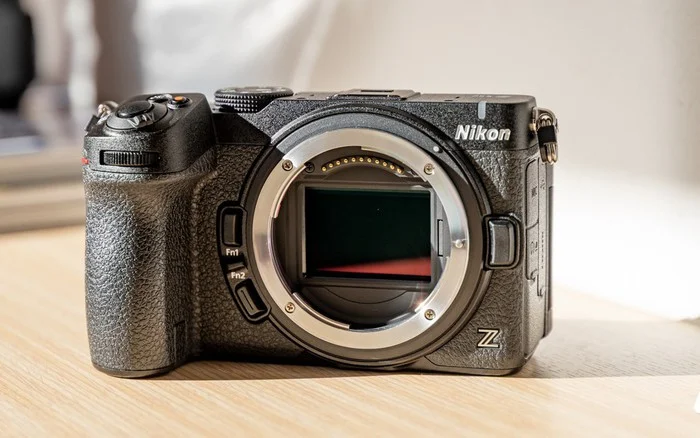
Close-up of Nikon Z5IIC: When the letter C is jokingly called "Cut", is this a full-frame camera worth buying?
Executive Briefing
Synthesized and verified with gemini-2.0-flash-thinking-exp
“**Without the EVF viewfinder, joystick or two memory card slots, the Nikon Z5IIC has clearly sacrifi”
Key Takeaways
- 1.**Without the EVF viewfinder, joystick or two memory card slots, the Nikon Z5IIC has clearly sacrificed a lot of equipment compared to the Z5II.
- 2.However, if put into the needs of people just upgrading to full-frame cameras or new content creators, are these cuts really a disadvantage?** If Nikon defines the letter "C" in the name Z5IIC as "Casual", aiming for simplicity and intimacy in the photography experience, this camera is often joked that "C" actually means "Cut" or equivalent to Cut.
- 3.That funny name is not unfounded, because compared to its brother Z5II, Nikon has omitted a lot of equipment that has been familiar to those who have used the camera for a long time.
Without the EVF viewfinder, joystick or two memory card slots, the Nikon Z5IIC has clearly sacrificed a lot of equipment compared to the Z5II. However, if put into the needs of people just upgrading to full-frame cameras or new content creators, are these cuts really a disadvantage?
If Nikon defines the letter "C" in the name Z5IIC as "Casual", aiming for simplicity and intimacy in the photography experience, this camera is often joked that "C" actually means "Cut" or equivalent to Cut. That funny name is not unfounded, because compared to its brother Z5II, Nikon has omitted a lot of equipment that has been familiar to those who have used the camera for a long time.
However, simply viewing the Z5IIC as a cut down version of the Z5II may not be really fair. Nikon did not create this camera to replace the Z5II, but is aimed at those who are entering the world of full-frame cameras for the first time, users who want to upgrade from smartphones or content creators who need a device that is powerful enough but not too complicated to use.
For that group of users, are the omitted equipment really important? And if it retains the image quality and much of the power of the Z5II in a more compact, accessible body, is the Z5IIC a worthy choice?
Cut out a lot of things, but is it really inconvenient?
The biggest and most noticeable difference between the Z5IIC and the Z5II is definitely the EVF electronic viewfinder that has now completely disappeared. Instead of the typical hump of traditional mirrorless cameras, the Z5IIC has a flat top design, reducing the height by about 20mm, while the weight is also 80g lighter, about 620g when the battery and memory card are installed.
Of course, the lack of a viewfinder means users must completely rely on the rear screen to observe and compose images. During the experience, it cannot be denied that this is a limitation, especially when shooting outdoors in strong sunlight. Strong light shining directly on the screen makes observing details, checking focus areas or assessing the brightness of the frame more difficult than looking through the EVF.
However, this problem can partly be overcome by changing the camera holding angle, adjusting the screen position or choosing a shooting angle to limit direct light. This is not a solution that can completely replace the viewfinder, but in most everyday photography situations, the inconvenience is not so much that it affects the experience too much.
On the contrary, viewing and shooting entirely through the screen offers a quite interesting approach. For those who are used to using smartphones, the operation of raising the camera, observing the frame and then touching the subject to focus will become significantly more intuitive. Users do not need to get used to putting their eyes in the viewfinder, while the rotating screen also allows flexible composition at low angles, high angles or when taking selfies.
Another cut point is the screen resolution, from 2.1 million dots on the Z5II to 1.04 million dots. The difference in parameters is quite large, but in actual use, I found that this does not affect the experience too much. The 3.2-inch screen still shows images with quite good colors, details are clear enough to compose or review photos, while the touch function works accurately and responds well to controls.
Nikon also removed the joystick used to select focus points. For professional photographers who are used to working through the viewfinder, this is definitely a shortcoming. However, when the EVF is gone and the screen becomes the main way of viewing and shooting, the presence of a joystick is no longer necessary. Users can directly touch the position they want to focus on on the screen, which is both quick and easy to get used to, or use the navigation keys when needed.
Similarly, the Z5IIC is only equipped with one UHS-II SD memory card slot instead of two slots like the Z5II. Two clear card slots provide greater flexibility, from expanding storage space, recording separate formats to backing up data simultaneously. These are important advantages for those who regularly photograph services, events or jobs that do not allow the risk of data loss. However, for personal photography, travel or regular content creation needs, a memory card slot with appropriate capacity is still enough to meet basic needs.
Overall, the equipment Nikon removed has a certain value, but most of it is aimed at convenience in advanced operations rather than directly determining image quality. The difference will therefore depend greatly on the user's habits.
Having just cut back, Nikon wants things to become simpler
If you just remove equipment without changing the way you use it, it will probably be difficult for the Z5IIC to make a difference. It is worth noting that Nikon has made a number of adjustments to make the camera more friendly to those who do not have much photography experience.
Typically, the U3 custom setting position on the mode dial is replaced by SCN, allowing quick access to 15 different scene-based shooting modes. Instead of having to understand the relationship between aperture, shutter speed and ISO, users can start by choosing the subject they want to shoot, such as portraits, landscapes, sports, pets, food or night scenes.
Based on that selection, the machine will automatically optimize appropriate settings, from exposure parameters to white balance and color processing. For example, when choosing to shoot sports, the camera prioritizes fast shutter speeds to limit motion blur, while landscape or portrait modes will adjust parameters according to the characteristics of each scene.
Basically, this is not a new technology in the camera world, but it makes sense for Nikon to bring Scene Modes back on a modern full-frame model. For beginners, the difference between having to memorize a series of parameters and simply choosing the right subject to shoot is huge. They can focus on the composition, moment and emotion of the photo before gradually diving deeper into photography techniques.
Besides Scene Modes, the Z5IIC still supports Imaging Recipes via Nikon Imaging Cloud, allowing download of color recipes built by Nikon and creators. A library of more than 140 color formulas, combined with a dedicated Picture Control button and Film Grain feature that simulates film grain, opens up more options for those who like to shoot JPEGs with their own color style.
This is a notable approach as the need to get beautiful photos right after taking them and limit post-production time is increasingly popular. Users can choose a color style that suits their preferences and then apply it directly when taking photos, instead of having to put the entire photo into editing software.
Of course, Scene Modes or Imaging Recipes cannot replace photography skills, but they help reduce the initial barriers and create more motivation for newbies to explore their camera. This is also how Nikon shows more clearly the meaning of the word "Casual" on the Z5IIC.
Cut down many things, but keep the most important thing, image quality
If changes in design can create many mixed opinions, image quality is the point that makes me feel quite secure when experiencing the Z5IIC. Regarding hardware, the device still uses a 24.5 MP full-frame BSI CMOS sensor combined with an EXPEED 7 processor, similar to the Z5II. The device supports the standard ISO range of 100–64,000 and a 5-axis sensor anti-shake system, with announced effectiveness of up to 7.5 stops in the center of the frame. These are all good enough equipment to serve many different photography needs, from portraits, street to landscape or low-light photography.
In practical experience, image quality is almost nothing to complain about, because after all, this is still the familiar image processing platform of the Z5II placed in another camera body. Photos have good detail, vibrant colors and the ability to reproduce depth is quite pleasant, especially when combined with a lens with a large aperture.
What I appreciate is the way Nikon presents colors. The image still maintains a relatively high saturation, giving a feeling of freshness and brilliance but not too harsh. In particular, human skin color is reproduced honestly, gently and without too much yellow cast. This makes portrait photos more pleasing to the eye, while also reducing the need for color correction after shooting.
For new user groups, this is really a valuable advantage. Not everyone needs to shoot RAW and then spend more time processing it in Lightroom or Photoshop. A camera that can deliver JPEG photos with beautiful, color-appropriate colors right from the start will make the photography experience much simpler and more enjoyable.
Besides, full-frame sensors still have the advantage of creating a thin depth of field and separating the subject from the background when combining the right lens. For those upgrading from smartphones or models using smaller sensors, this is one of the differences that are easy to spot in the actual photography process.
Focusing ability is also a factor that helps the Z5IIC score points. The machine inherits an intelligent AF system with the ability to recognize many types of subjects, from people, animals to vehicles. During use, I found the focus system to be fast, accurate, and reliable in most common shooting conditions.
In particular, the Z5IIC is equipped with AF-A mode, allowing to automatically switch between AF-S single focus and AF-C continuous focus depending on the subject's motion status. This feature is very useful for beginners, because they do not need to constantly change the focus mode when switching from photographing a person who is standing still to a subject that begins to move.
Combined with 3D Tracking, the machine can track and maintain relatively stable focus on the subject. This is a clear advantage when photographing small children, pets or unexpected moments where the photographer does not always have enough time to readjust the settings.
In low light environments, the focusing speed slows down a bit, but once the subject is captured, the camera still maintains good accuracy. Of course, focusing efficiency also depends largely on the lens used. With the NIKKOR Z 35mm f/1.4 in this experience, I found that the combination brought quite stable results, enough to confidently shoot in many everyday situations.
In addition to photography, Nikon also retains on the Z5IIC a series of notable video recording features such as 4K 30p using the entire sensor width, 4K 60p with DX crop area, Full HD 120p and internal N-Log or N-RAW recording capabilities. The device also has Product Review Mode, which supports automatic focusing when the user brings a product close to the lens, quite suitable for recording videos introducing technology items or creating personal content.
However, 4K 60p recording is cropped about 1.5 times is still a limit to keep in mind, especially for those who often record vlogs at close distances. In-depth video equipment does not mean that the Z5IIC can completely replace specialized models, but Nikon clearly did not cut too many core recording capabilities when building this product.
So the last C is Cut or Casual?
After the experience, I think the Nikon Z5IIC is a quite interesting product, because what the machine brings does not lie in how many new technologies it has compared to the Z5II, but in the way Nikon rearranges the available equipment to better suit a different group of users.
It's true that the company has cut out a lot of things. The lack of an EVF can cause discomfort when shooting outdoors in the sun. Not having a joystick will take time for those accustomed to professional operations to adapt, while a clear memory card slot cannot bring peace of mind like the two-slot system on the Z5II. If you have a lot of photography experience, regularly shoot for services or need a camera body with flexible control capabilities, the Z5II or professional models are still a more reasonable choice.
However, for those new to the full-frame world, those differences may not be too important. In return, they receive a more compact device, a way to view and shoot closer to a smartphone, automatic modes that are easy to get used to, and most importantly, image quality and a focus system inherited from the Z5II.
Perhaps the "C" can still be playfully interpreted as "Cut", because Nikon really cuts out a lot of things. But after using it, what's more important is that the company has cut down most of the equipment surrounding intensive operations, while still retaining the core elements that create the quality of a modern full-frame camera. And for the right audience that Nikon is aiming for, sometimes simpler is what makes users want to pick up the camera and take more photos.