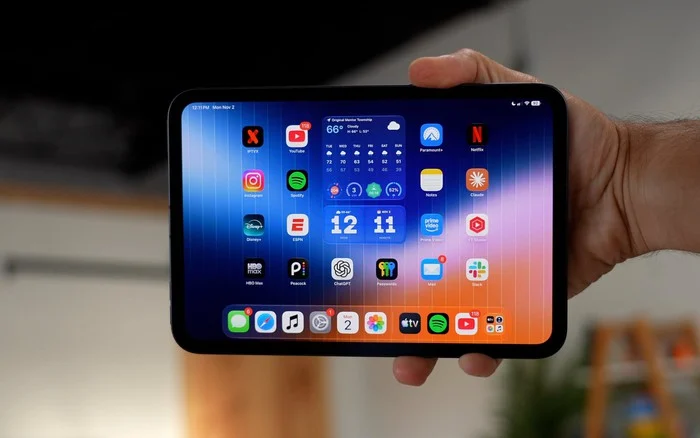
iPad mini 8 is praised as the best ever, but the price is a barrier
Executive Briefing
Synthesized and verified with gemini-2.0-flash-thinking-exp
“**OLED screen, new chip and water resistance were praised in unison, while the 60Hz refresh rate, Na”
Key Takeaways
- 1.**OLED screen, new chip and water resistance were praised in unison, while the 60Hz refresh rate, Nano-texture glass and price made reviewers different.** The first reviews of the iPad mini 8 were simultaneously posted on November 3 (US time), three days before the device was shipped.
- 2.Most concluded that this was the best iPad mini ever, but the price made many people hesitant.
- 3.Nathan Ingraham gave it 8.5/10, David Pierce gave it 8/10, and Luke Larsen gave it 7/10.
OLED screen, new chip and water resistance were praised in unison, while the 60Hz refresh rate, Nano-texture glass and price made reviewers different.
The first reviews of the iPad mini 8 were simultaneously posted on November 3 (US time), three days before the device was shipped. Most concluded that this was the best iPad mini ever, but the price made many people hesitant. Nathan Ingraham gave it 8.5/10, David Pierce gave it 8/10, and Luke Larsen gave it 7/10.
The most praised point is the screen. iPad mini 8 moves from 8.3-inch LCD to 8.5-inch OLED, for deeper blacks and higher contrast. According to Apple, brightness with regular content increases from 500 to 600 nits, and up to 1,200 nits with HDR content. Reviewer Jacob Krol commented that OLED makes a huge difference, even though the device does not have a high scanning frequency.
The A20 Pro chip, the same type on the iPhone 18 Pro, is about 50% faster than the 2024 model in common tasks and nearly three times faster in graphics. David Pierce said Assassin's Creed Mirage, which was almost unplayable on the old version, now runs well. Kyle Barr measured that the device is even better than the M4 chip iPad Air in some graphics tasks, although the multi-core CPU is still about 15% behind. Only the 512 GB version has 6 CPU cores, but Nathan Ingraham and Jacob Krol both think that the lower versions are enough for most people.
For David Pierce, the upgrade that changes usage the most is the IP67 water and dust resistance standard, which first appeared on the iPad. According to Apple, the device can withstand being immersed in water up to about 1 meter for 30 minutes. David Pierce worries less when he gives the device to his children, uses it in the kitchen, even takes it to the bathroom when watching an intense football match and the device still runs normally. I do not recommend using it as an underwater camera.
To meet this standard, Apple removed the speaker hole and switched to the Acoustic Display system, where sound is emitted through the screen. Nathan Ingraham found the bass to be noticeably stronger, while David Pierce and Roman Loyola sounded little different from their predecessors.
The biggest controversy is the scanning frequency. The iPad mini 8 is limited to 60Hz, while the regular iPhone 17 already has 120Hz. Apple's vice president of hardware design David Pakula argues that OLED pixels respond more than 10 times faster than LCDs, so motion is smoother and less blurry.
David Pierce disagrees. He wrote directly that the scanning frequency matters. According to him, the Apple Pencil moving on the screen feels more jerky, and when scrolling a web page at 60Hz, the text is blurred, while on the 120Hz screen the text is still clearly read while scrolling. Kyle Barr believes that most users do not recognize 120Hz. Jacob Krol said that if users do not upgrade from a machine with a high scanning frequency, they will not find it lacking. Roman Loyola predicts that Apple will add it in the next generation, but it will take a long time because the iPad mini usually changes every 2 to 3 years.
David Pierce also mentioned theories that he called conspiracy theories: Apple intentionally kept 60Hz so users could choose the iPhone Duo, or locked the scanning frequency with software for the next upgrade. This is just speculation.
Nano-texture glass layer, anti-glare by engraving directly on the glass surface, also divides opinion. Luke Larsen thinks it's worth the money, reading outdoors feels like paper with almost no reduction in perceived brightness. Jacob Krol and Nathan Ingraham praised the ability to reduce reflections. In contrast, David Pierce and Kyle Barr found the coating darkened and dimmed the screen, losing the deep blacks of OLED. David Pierce recommends spending this money on a 5G version, or better yet, don't spend it. This glass layer costs an additional 100 USD (about 2.6 million VND) and is only available in 256 GB and 512 GB versions.
Regarding the battery, Apple still records up to 10 hours even though the battery is smaller than the previous generation, and the measurement results are quite different. A lab test recorded 14 hours and 24 minutes of continuous web browsing over Wi-Fi at 150 nit brightness, but only once. Meanwhile, Jacob Krol actually saw nearly 10 hours, Roman Loyola played looped video at 200 nit brightness for 10 hours and 10 minutes, David Pierce estimated about 9 hours, and Nathan Ingraham only got 5 to 6 hours when playing heavy games.
Price is what reviews mention most. The 128 GB Wi-Fi version costs 699 USD (about 18 million VND), the highest starting price ever for the mini line. In the US, the 11-inch iPad Air with M4 chip costs 749 USD (about 19 million VND), only a difference of 50 USD. David Pierce thinks the higher $699 is worth at least $100, because an extra $50 buys the more versatile iPad Air. Nathan Ingraham finds it reasonable to increase the price by $100 compared to the previous model after the summer price increase, but wonders if Apple is misunderstanding what users want from the iPad mini.
Luke Larsen asks who this machine is for. He said all three versions have 12 GB of RAM, 4 GB more than the previous model, information that Apple did not mention in the spec sheet, and wondered why Apple does not sell the 8 GB RAM version for a lower price. According to him, the appearance of the iPhone Duo also makes the size of the iPad mini less unique.
Still, reviews point to suitable users. David Pierce calls this "field iPad", an iPad for pilots, construction sites, oil rigs or clinics, where durability is more important than performance. Roman Loyola recommends choosing iPad Air if you need CPU power, but for entertainment, choose mini. Luke Larsen said if he could only choose one iPad to take notes with a pen, he would choose the mini, and Kyle Barr said if he could only choose one Apple iPad, he would choose this small one.
In Vietnam, Apple Store lists iPad mini 8 from 19,499,000 VND for the 128 GB Wi-Fi version, 22,299,000 VND for the 256 GB version and 27,899,000 VND for the 512 GB version. Wi-Fi version with 5G starts at 23,699,000 VND. This starting level is nearly 40% higher than the VND 13,990,000 of the iPad mini 7 when launched at the end of 2024. Apple has not announced the official launch date in Vietnam.
Readers can refer to genuine iPad lines at the Apple Flagship Store.