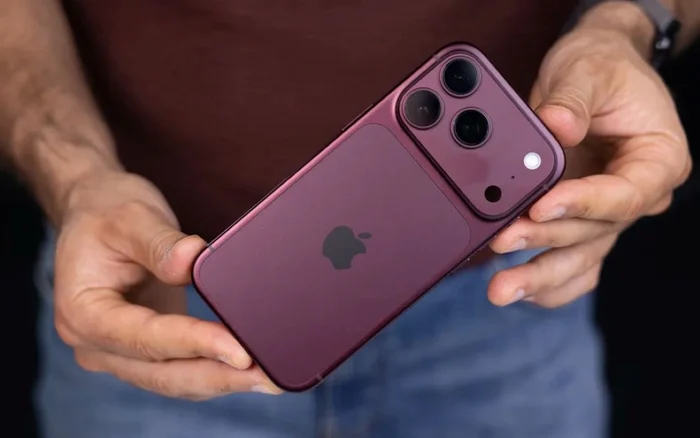
Just released, iPhone 18 Pro has been permanently jailbroken by a Vietnamese-founded security company, and rebooting is still intact.
Executive Briefing
Synthesized and verified with gemini-2.0-flash-thinking-exp
“**Even though it is running the latest version of iOS, Mr.”
Key Takeaways
- 1.**Even though it is running the latest version of iOS, Mr.
- 2.Duong Ngoc Thai's security company demonstrated the ability to jailbreak the iPhone 18 Pro right on stage at a security conference in Paris.** Just one month after the iPhone 18 Pro hit the shelves, Apple's latest high-end phone model was successfully unlocked by Calif.io, a cybersecurity company founded by Vietnamese expert Duong Ngoc Thai, right on stage at a security conference in Paris.
- 3.Notably, the jailbreak state is maintained after the device reboots.
Even though it is running the latest version of iOS, Mr. Duong Ngoc Thai's security company demonstrated the ability to jailbreak the iPhone 18 Pro right on stage at a security conference in Paris.
Just one month after the iPhone 18 Pro hit the shelves, Apple's latest high-end phone model was successfully unlocked by Calif.io, a cybersecurity company founded by Vietnamese expert Duong Ngoc Thai, right on stage at a security conference in Paris. Notably, the jailbreak state is maintained after the device reboots.
Calif.io also demonstrated a technique to attack Signal with just one click. However, this is a separate performance, which does not mean that the iPhone 18 Pro jailbreak process only requires one click. The company has not announced details of the vulnerability used or released tools for users to do it themselves.
The performance took place on October 16 at Hexacon, a conference specializing in exploiting security vulnerabilities in Paris, France. The video posted by jailbreak researcher Billy Ellis shows the Calif.io team restarting the iPhone 18 Pro, unlocking it with a regular passcode, and then establishing an SSH connection with root privileges. The on-screen command line confirms the device is running iOS 27.0.1.
This technique belongs to the untethered jailbreak category, meaning that the jailbreak state can return automatically after a reboot, without the need to connect the phone to the computer to repeat the process.
Jailbreaking breaks the software restrictions that Apple places on the iPhone, allowing users to install apps outside the App Store, access the entire file system, and further customize the device. To do this on a modern iPhone model, the research team often has to combine many vulnerabilities to bypass the protection layers of the operating system and hardware. Maintaining jailbreak status after a reboot is even more difficult due to Apple's code verification process.
The concern isn't just about device customization. The exploits that can gain root access on a fully updated iPhone are similar to the type of tools that commercial spyware vendors sell to governments.
Calif's demonstration shows that, even after rebooting, root privileges still exist in the iPhone
Currently, Apple has not publicly commented on the performance at Hexacon. The company usually does not confirm details of security issues until a suitable patch is available. Meanwhile, Calif.io has not disclosed the vulnerability chain used and said the demonstration content will be announced at the appropriate time.
Security company founded by Vietnamese experts
Behind the performance is Calif, a US-based cybersecurity company founded by Duong Ngoc Thai. The business operates in many fields, from AI security testing, assessing the defense capabilities of artificial intelligence models to testing firmware and network infrastructure serving AI computer clusters.
Calif also provides penetration testing and security assessment services for businesses and technology products. The company said it has cooperated with big names in the field of technology and AI such as OpenAI, Anthropic, Google DeepMind, Wiz and CoreWeave.
One prominent research direction of Calif is using advanced AI models to find and exploit software vulnerabilities. The company once attracted attention when it discovered PHP2Shell, a vulnerability in PHP, a programming language used on about 70% of global websites. This bug could allow hackers to execute unauthorized code on an unpatched server, depending on the system configuration and deployment.
In that research, OpenAI's AI supports the process of analyzing source code and understanding exploits. The discovery shows that this technology can help experts find weaknesses that have existed for many years, and raises concerns that hackers can also take advantage of AI to develop attack tools faster.
AI once assisted Calif in exploiting Apple's vulnerabilities
The iPhone 18 Pro jailbreak follows Calif's previous research on the Apple ecosystem. In April, Duong Ngoc Thai said Claude helped him analyze a technique to exploit vulnerabilities in iOS Safari.
In May, Calif said Anthropic's Claude Mythos Preview supported the development of a technique to exploit the macOS operating system kernel, bypassing the protection mechanisms on Apple's M5 chip in less than a week.
"We did not build the entire mining chain alone. Mythos Preview helped identify errors and provided support throughout the mining technical development process," said Mr. Thai.
In the iOS 27 security note released on September 14, Apple noted that Calif.io collaborated with Claude and the Anthropic research team in detecting two errors that could cause applications to cause denial of service or cause system crashes. However, there is no confirmation that these two errors are related to the iPhone 18 Pro jailbreak, nor is it clear what specific role AI plays in the latest jailbreak.
Because there is no public jailbreak tool, users cannot currently reproduce this performance of Calif. How long iOS 27.0.1 remains exploitable will depend significantly on when Calif releases details, thereby helping Apple identify and fix related vulnerabilities.