Samsung: Technology only convinces users if it creates real value
Executive Briefing
Synthesized and verified with gemini-2.0-flash-thinking-exp
“# Samsung: Technology only convinces users if it creates real value Users are increasingly cautious”
Key Takeaways
- 1.# Samsung: Technology only convinces users if it creates real value Users are increasingly cautious when changing smartphones but are willing to spend on higher-end devices if the technologies and features meet their needs, according to the leader of Samsung Vietnam's mobile segment.
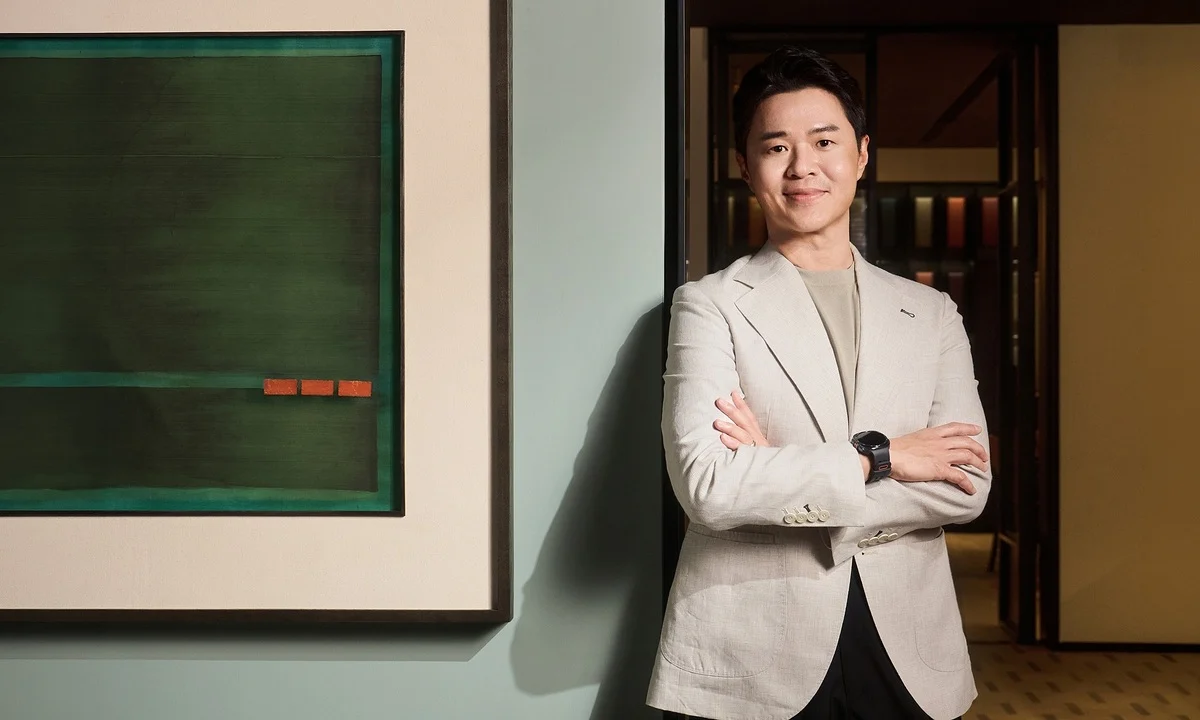
- 2.Simon Sim - Vice President and Director of Mobile eXperience Business of Samsung Electronics Vietnam met with reporters at his private apartment in early October.
- 3.Here, he talked about daily habits, concerns about technological fluctuations, changes in business strategies as well as young people's mobile phone usage habits.
Users are increasingly cautious when changing smartphones but are willing to spend on higher-end devices if the technologies and features meet their needs, according to the leader of Samsung Vietnam's mobile segment.
Mr. Simon Sim - Vice President and Director of Mobile eXperience Business of Samsung Electronics Vietnam met with reporters at his private apartment in early October. Here, he talked about daily habits, concerns about technological fluctuations, changes in business strategies as well as young people's mobile phone usage habits.
- According to your observations over many years of running the mobile segment, how are Vietnamese people's smartphone usage trends changing?
- I notice that Vietnamese users are holding on to their phones longer than before. Smartphones are increasingly becoming an essential device in life, serving many needs from work, connection, creativity to entertainment. This device contains countless data, images, and personal information. Therefore, the decision to change phones is considered very carefully.
When deciding to upgrade, they are willing to pay to move to a higher segment. In my opinion, this shows that consumers are not only interested in owning a new phone but also consider the value that the device can bring during use.
For businesses, understanding both of these trends is important. We need to deliver products whose value is clear enough for users to see the reason to upgrade, rather than relying solely on constantly introducing new technologies.
- What requirements does the market with the majority of young consumers place on technology brands?
- I am impressed with the fact that Vietnamese young people are willing to accept new things but are still deeply connected to traditional values. At the same time, they also have a broader vision of the future.
That requires brands to change their approach. For Gen Z, technology is a natural part of life. Therefore, introducing a product with good configuration or many new features is no longer everything. Users want to know how that technology can help them work better, save time or promote creativity.
I think Samsung's mission is to show users what technology can really do in their lives. When technology brings specific value, users will have reasons to choose and stick with the product.
- If you shared this with a young person who is considering buying a Samsung phone, what would you say?
- Samsung will give you the freedom to master technology in a way that fits your life, instead of forcing users to adjust their lifestyle to adapt to technology.
However, I don't expect young people to believe anything just because I say it. We must prove it with the product itself, the experience and the real values it brings to users.
- Samsung data shows that for every two customers who buy Galaxy Z Fold8 in Vietnam, one person switches from another ecosystem. How do you view this result?
- I think this is a remarkable signal for the folding phone development strategy. When first launched, this product line mainly attracted people who loved exploring new technology. But over time, the customer group has expanded, especially young users, who see smartphones as a tool for work, creativity and expressing personal style.
Attracting users from another ecosystem also posed a clearer requirement for us - how to make folding phones an essential part of everyday life.
The large screen gives users more space to handle multiple tasks at the same time and be creative. Meanwhile, Galaxy AI opens up new ways to interact with devices, giving users more convenient access to technological capabilities.
With Samsung, we help users access and unlock new potential with AI. I believe that the lasting value of a device lies not only in what it can do at the time of launch, but also in how it continues to support users in increasingly diverse needs.
- In your work, how do you use AI?
- I see AI as a thinking partner, helping me expand my knowledge and approach problems from many different angles. One approach I often use is to ask the same question to multiple AI models, then compare how they analyze and come up with solutions. I use this method when learning about areas such as financial investment, the art of communication or improving leadership capacity.
What I'm interested in is not just the final answer but also how each model approaches the problem. Comparing perspectives gives me more material to think about, ask counter questions, and test my own assumptions.
- How do you help Samsung adapt to changes?
- The market always has variables, from technological developments to changes in consumer behavior. A plan may be very suitable at the present time but may not necessarily be correct in the future.
To have a multi-dimensional perspective on the Vietnamese market, I regularly discuss with leaders in many fields such as healthcare, education, banking and retail. These conversations help me better understand the macro movements and changes taking place in the economy.
I also focus on listening to my staff and customers. Sometimes, real-life feedback can help us recognize trends earlier than statistical data. It's important to incorporate multiple sources of information, continually test assumptions, and be ready to adjust as realities change.
- When a plan is no longer suitable for the market, what will you do?
- I want the team to start by asking: "What can we do from here?". Then, the team needs to consider whether any assumptions are no longer true, whether the plan needs to be adjusted or a completely new direction must be opened to meet market needs.
It is important that each member has the space to review the current approach, determine what needs to change and propose appropriate solutions. When we realize that a plan is no longer effective, we need to quickly agree on a new direction and implement it together.
I believe that flexibility doesn't mean constantly changing things. It's the ability to recognize what needs to change, what should be kept, and make decisions based on facts.
- So in an ever-changing market, what are the principles you want to maintain in your work and Samsung's journey in Vietnam?
- I always believe that purpose should remain the same, even when everything else changes.
That purpose is to use technology to improve lives and contribute to Vietnam. Products, technology and business strategies may change over time, but this direction is still what we want to pursue.
I think it's also a way for an organization to maintain consistency while remaining flexible in the face of market fluctuations. To me, Samsung's journey in Vietnam still leaves much to be desired. That would be a chapter worth being a part of.
- With the schedule of a business leader, how do you balance work and personal life?
- I think a perfect day doesn't necessarily have to have anything special. For me, that could mean a good night's sleep, a freshly brewed espresso, a productive day at work, and a few conversations that make me think or make me laugh.
I try to make time to exercise when I can and keep some time to relax at the end of the day. If my children kiss me goodnight before going to bed, maybe that's when I feel like my day is complete.
I call my principle "schedule your priorities". I always try to make sure my schedule has time for family dinners, reading, playing chess with my children, exercising, and quiet moments to relax.
I realized that if I kept thinking these things could be left behind, I would end up never having time for them. So instead of waiting until work is less busy, I proactively make room for important things in my schedule.
I also like reading, I'm currently reading Same as Ever by Morgan Housel. What fascinates me is the idea that the world can change very quickly, but some aspects of human behavior remain the same over time. It's ambition, fear, patience and how we respond to risk.
I think we spend so much energy trying to understand what's changing that we sometimes forget the lasting values. Technology may develop rapidly, markets may fluctuate, but understanding people is still important.
There is a sentence in the book that I especially like: "Risk is what's left after you think you've predicted everything."
To me, this quote reminds us that no matter how well prepared we are, we still have to accept the unpredictable. Therefore, in addition to planning, the ability to adapt and adjust when new situations arise is equally important.
Hoai Phuong