Sony MDR-3R: Walkman headphones return with USB-C
Executive Briefing
Synthesized and verified with gemini-2.0-flash-thinking-exp
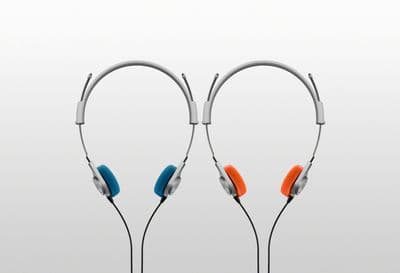
“*The standard MDR-3R comes with two changeable blue and orange buffers.”
Key Takeaways
- 1.*The standard MDR-3R comes with two changeable blue and orange buffers.
- 2.Photo: Sony.* ## **MDR-3R is the return of MDR-3, not MDR-1R** Sony Electronics announcement published on November 5, 2026 confirms the product name is MDR-3R.
- 3.Its inspiration comes from the MDR-3 and the first Walkman in 1979.
The standard MDR-3R comes with two changeable blue and orange buffers. Photo: Sony.
MDR-3R is the return of MDR-3, not MDR-1R
Sony Electronics announcement published on November 5, 2026 confirms the product name is MDR-3R. Its inspiration comes from the MDR-3 and the first Walkman in 1979. Sony also clearly notes: "MDR-3" is shared with the MDR-3, MDR-3L1 and MDR-3L2; The one that came with the Walkman TPS-L2 that year was exactly the MDR-3L2. Small details but need to be correct when mentioning history. Therefore, the MDR-3R should not be understood as the next generation of the MDR-1R just because the name is similar, or the successor to the WH-1000XM. The documents released this time do not establish that connection. The MDR-3R is also not the MDR-M1ST. The story Sony is telling is about reviving the MDR-3 design, not bringing a model of audio monitoring or noise-canceling headphones to a new generation.
MDR-3R with phone on left; Walkman TPS-L2 and early headphones on the right. This is a historical comparison photo, not a bundled product set. Photo: Sony.
Slim, light and has a very unique color
Looking at the MDR-3R, you will see the slim frame, small ears and prominent colored cushions. Sony says it recreates the headband shape, logo, the words "Dynamic Stereo Headphones" and the acoustic holes of the old model. Aluminum and stainless steel are used in the design. To me, the appeal lies in that elegant proportion, not in adding lights or making everything look more technological. The 38g specification needs to be read with the condition "string not included". Sony calls these on-ear headphones: the cushions are placed on the rim of the ear, not covering the entire ear. The structure is open-air, meaning open acoustic design; Should not be confused with ear-hook headphones that leave the ear canal open. The low weight is a notable point, but the smoothness, clamping force and feeling of wearing for many hours still need to be experienced in practice.
The standard silver version has both blue and orange cushions in the box, you don't have to buy two to get two colors. Even the box and instruction manual are made in the spirit of the original product. This is a way to do nostalgia that has a beginning and an end: from the item you wear to the experience of opening the box, instead of just adding a "retro" label.
Standard box, headphones and replacement pads. Photo: Sony.
USB-C is the most important change
MDR-3R uses a Y-shaped cable about 1.2m long, USB Type-C head. The transmitter needs to be USB Audio Class 1.0 compatible; Sony mentions smartphones, tablets and PCs accordingly. Not every USB-C port means every function will work the same. Depending on the device, operating system and application, users may have to adjust settings or operate directly on the transmitter. Advertisement
The cord has a microphone and remote to play/pause, change tracks, adjust volume and make hands-free calls. Sony also makes small grooves on the surface of the wire to reduce tangles. With the need to watch videos, listen to music or meet online, these are practical additions. However, having a microphone is not enough to conclude that voice recording is good in the middle of a crowded street; Real-life call quality still has to be tested.
There's no need to watch the headset's battery or wait for a Bluetooth connection: Sony confirms there's no need to charge or pair. In return, you must accept the USB-C cable and port being used. One surprising detail is that Sony itself does not recommend using the MDR-3R with a Walkman. Its Walkman-reminiscent shape doesn't mean it's designed to plug into every music player with that name.
- Compact design, wired connection suitable for listening to music at the table. Illustration photo by Sony, not photo of the writer's experience.*
23mm driver, you have to wait to hear the real sound quality
According to Sony Japan's spec sheet, the MDR-3R has a 23mm driver and neodymium magnet. The company says it has relied on the original design to reproduce sound close to the MDR-3, while slightly tweaking it for modern listening habits. Sony describes the sound direction as natural, balanced, and the vocals rich with emotion. This is the manufacturer's description, not my listening conclusion. I don't have the product to listen to yet, so I can't confirm how deep the bass is, how good the treble is, or how wide the soundstage is. Official sources tested also do not provide full frequency range, impedance, sensitivity or maximum digital audio level. You should not label yourself Hi-Res, high-resolution lossless or DAC specifications just because the plug is USB-C. Bluetooth codecs such as LDAC, AAC or SBC are not the connection content of this wired headset model.
MDR-3R is not an active noise canceling product; The key point is open structure and lightness. That design also does not aim to isolate the listener from their surroundings. The specific level of noise and noise leakage needs to be measured or tested in practice, but I would not choose it with the expectation of replacing a noise-cancelling headset on the plane. In noisy places, you should not compensate by turning up the volume too high.
Advertisement
There is also a Stranger Things version
Besides the standard version, Sony has the MDR-3R Stranger Things Edition, inspired by the 1980s, Max's headphone style and the Upside Down world. This version features the Stranger Things logo on the headband, red and black cushions, and unique packaging. The differences announced by Sony focus on design; There is no basis to say that the special edition has more advanced sound quality. Stranger Things Edition with red padding and unique headband markings. Photo: Sony.
Individual Stranger Things Edition packaging; two sets of red and black cushions are included. Photo: Sony.
Price and things to note
- In the US, the recommended price for the standard version is 59.99 USD; The announcement dated November 5 said sales had begun.
- Stranger Things Edition has a suggested price of 79.99 USD in the US and is open for pre-order according to the announcement.
- In Japan, Sony's website lists the expected sale date as November 20, 2026. Sales schedules vary by market.
- As of November 6, 2026, Vietnam time (UTC+7), checked sources have not confirmed the genuine price and distribution schedule in Vietnam.
Sony also says it uses recycled plastic in part of its products and plastic-free packaging, with exceptions for coatings, adhesives and regional differences. This is noteworthy information, but not enough to infer that the product is easy to repair, convenient to change wires, or has replacement accessories available in Vietnam. These very real things still need to be asked more when the product goes on sale.
I think the MDR-3R is interesting for people who like early Sony design, want a lightweight headset and don't have to worry about charging. It also has the appeal of an item designed for everyday use, not just for display. On the contrary, if you prioritize noise cancellation, wireless, soundproofing or need a specialized audio work headset, you should determine your needs first. The MDR-3R's worth mentioning is a simple way to listen to music brought back, not a promise to beat all modern headphones.
Source:
Sony Electronics
Attribution & Original Source
Synthesized and verified from Tinhte.vn. All copyrights and intellectual property belong to the original publication.