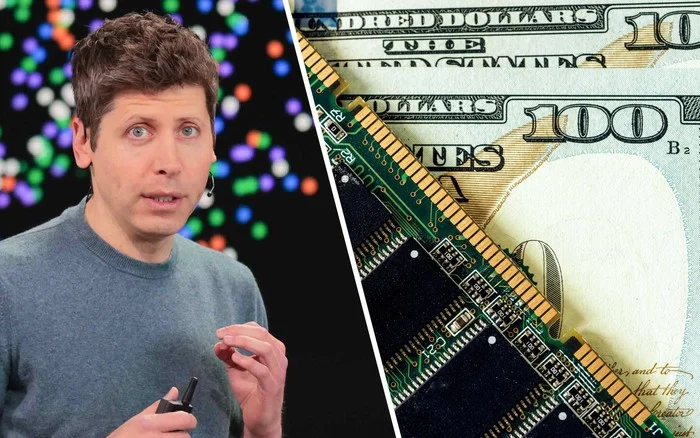
While OpenAI is "sucking" all the global RAM, Sam Altman thinks that the RAM in your computer and mine is being wasted
Executive Briefing
Synthesized and verified with gemini-2.0-flash-thinking-exp
“**Does RAM have to be in the hands of large corporations to have value?** The price of a new laptop”
Key Takeaways
- 1.**Does RAM have to be in the hands of large corporations to have value?** The price of a new laptop or phone is reaching an unprecedented peak, making those in need just shake their heads in frustration.
- 2.A large part of the reason lies in the small RAM bars inside, as OpenAI continuously buys, causing the global RAM supply to be tightened.
- 3.In the midst of that, the head of OpenAI went on a podcast and said something that made many people pause: having RAM in a personal computer is "very bad".
Does RAM have to be in the hands of large corporations to have value?
The price of a new laptop or phone is reaching an unprecedented peak, making those in need just shake their heads in frustration. A large part of the reason lies in the small RAM bars inside, as OpenAI continuously buys, causing the global RAM supply to be tightened. In the midst of that, the head of OpenAI went on a podcast and said something that made many people pause: having RAM in a personal computer is "very bad".
On the Cheeky Pint program, OpenAI CEO Sam Altman made a notable statement. When asked about the supply chain shortage, specifically the current thirst for RAM, he said that many people want to run AI models right on their machines, and believes that thanks to open source models, the need for data centers will decrease. He believes that intuition goes against reality.
"From a global distribution perspective, actually letting everyone keep a large amount of the world's finite DRAM supply in their own computer, then only using it 5% of the time, is bad," Altman shared.
"If you're looking to get by in this severely supply-constrained environment, you want to get the most out of the cloud. Yet somehow many people's intuition goes against that."
In other words, Sam Altman thinks the RAM in your machine and mine is being wasted.
Logically speaking, a chip that sits idle most of the time is clearly not being used, but the speaker himself made this statement "deplorable". Samsung and SK Hynix, two major memory chip companies, have signed long-term agreements with cloud operators and projects such as OpenAI's Stargate. These contracts "bankrupt" much of the world's RAM production over the next few years, leaving consumers like you and me at the back of the queue. Looking at current prices of electronic devices, we clearly see the consequences of this chain of decisions.
Yet the person who is directly making RAM scarce comes to the conclusion that the remaining RAM should reside in the data center. What Sam Altman said sounded like the words of a person who scooped up all the goods on the shelves, then advised others not to "stock" goods at home.
As for me, I think that even though my computer is not turned on 24/7, I still want my computer to run stably every time it is turned on, so it is worth the money I spend.