Autonomous site reliability engineering startup Traversal bags $120M in funding at a $1B valuation
Executive Briefing
Synthesized and verified with gemini-2.0-flash-thinking-exp
“### Autonomous site reliability engineering startup Traversal bags $120M in funding at a $1B valuati”
Key Takeaways
- 1.### Autonomous site reliability engineering startup Traversal bags $120M in funding at a $1B valuation Traversal Inc., a startup that’s trying to automate site reliability engineering tasks with artificial intelligence agents, seems to be closing in on that goal after raising $120 million in fresh funding, bringing its valuation to $1 billion.
- 2.The newly minted unicorn’s round was led by Kleiner Perkins, Redpoint Ventures and Khosla Ventures, three of Silicon Valley’s highest-profile venture capital firms, whose names should give it the credibility it needs to accelerate its growth plans.
- 3.Sequoia Capital – another big VC name – also participated in the round, alongside Battery Ventures and Amex Ventures.
Autonomous site reliability engineering startup Traversal bags $120M in funding at a $1B valuation
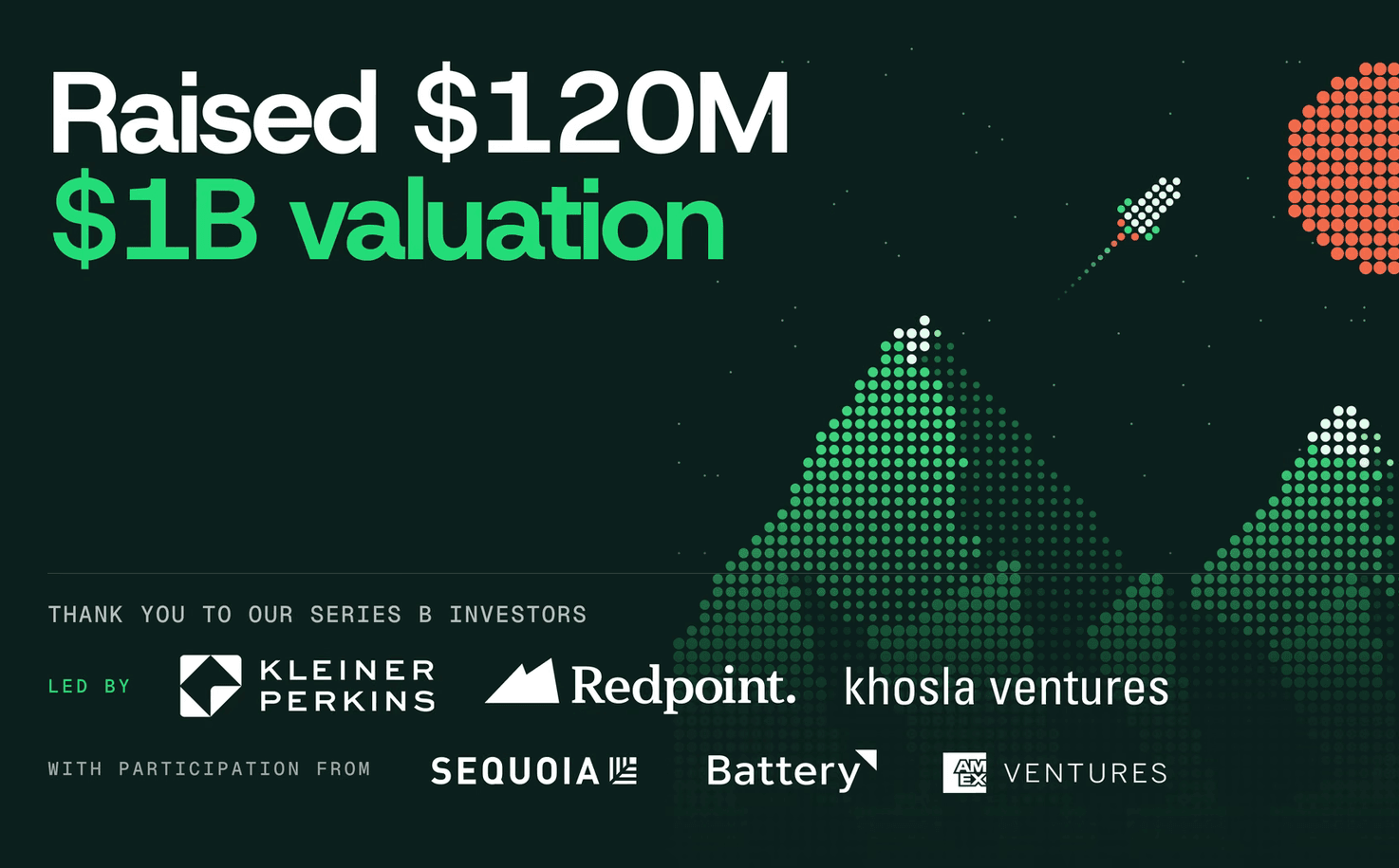
Traversal Inc., a startup that’s trying to automate site reliability engineering tasks with artificial intelligence agents, seems to be closing in on that goal after raising $120 million in fresh funding, bringing its valuation to $1 billion.
The newly minted unicorn’s round was led by Kleiner Perkins, Redpoint Ventures and Khosla Ventures, three of Silicon Valley’s highest-profile venture capital firms, whose names should give it the credibility it needs to accelerate its growth plans. Sequoia Capital – another big VC name – also participated in the round, alongside Battery Ventures and Amex Ventures.
AI might have made the job of software developers much easier than it used to be, but for the site reliability engineers tasked with maintaining the infrastructure to run that code, it has only made life much more difficult. The influx of AI-generated code has put infrastructure engineers under intense pressure, and they’re struggling to keep up.
According to a report earlier this year by Splunk Inc. and Oxford Economics, enterprise downtime costs have risen more than 50% in the last two years, draining up to $600 billion annually from businesses worldwide. That’s because software developers have increased their code output by around 180% over the same timeframe, which means those poor infrastructure engineers are forced to work harder than ever to match their growing output.
Enter Traversal, which is coming to the rescue with a highly promising autonomous site reliability engineer that’s designed to assist human specialists by diagnosing, remediating and preventing information technology infrastructure problems. Instead of just keeping watch and firing off alerts to human engineers when an outage occurs, Traversal actively investigates any issues that pop up and does its best to fix them so as to ease their ungodly workload.
Co-founder and Chief Executive Anish Agarwal said there’s an urgent need for a specialized AI site reliability engineer, because not even the best general-purpose large language models have been able to show they’re up to the task. He points to the ORCA-bench benchmark that his company co-developed alongside researchers from Cornell Tech and Columbia University, which reveals that even the most advanced frontier models barely achieve 25% accuracy on medium-difficulty SRE tasks, with their hallucination rates often exceeding 40%.
“Site reliability engineering is one of the hardest problems in applied AI because every company’s software environment is different, and with downtime costing companies as much as $600 billion a year, the stakes are clearly enormous,” Agarwal said.
Traversal’s AI far surpasses what the best frontier models can do. It’s designed to be deployed in enterprise’s IT environments, where it sits and analyzes massive volumes of operational telemetry, including logs, metrics and traces, so as to establish a baseline for normal behavior. When problems occur, it uses causal machine learning to identify the root cause of the issue, and then works out a solution so all the human engineer has to do is accept its recommendation to restore normal service.
Agarwal’s background in causal machine learning is the key to Traversal’s AI SRE’s much higher accuracy. It’s an AI discipline that combines causal inference with machine learning to identify cause-and-effect relationships, rather than relying on statistical correlations. In essence, it enables Traversal’s models to simulate the effects of various actions, interventions and policy changes have on IT infrastructure, so it can quickly work out what the likely cause of a problem is.
Agarwal said the company is striving to build a “superintelligent AI SRE” that can finally help enterprises to keep pace with the rapid velocity of their AI-enabled developer teams. And he believes it’s well on the way to achieving that goal. “After two years refining our technology, we’re seeing customers expand how they use Traversal across increasingly complex production environments,” he said.
In the last year, Traversal has grown its revenue by more than nine-times, with its number of monthly active users multiplying by 20. Some of its best known customers include Pepsi Co., DigitalOcean Holdings Inc., Nubank and Harvey AI Corp. Traversal’s momentum is impressive, but Agarwal said the company is only just getting started. With $120 million in the bank, it’s going to accelerate hiring within its engineering, go-to-market and research and development teams so it can get closer to its goal of building a superintelligent AI SRE.
Kleiner Perkins’ Aditya Naganath said Traversal is the first company he has seen that brings “real intelligence” into complex production environments, and he’s confident there’s going to be enormous demand for it. “As AI dramatically accelerates the pace at which software is written and shipped, the complexity of managing production will only grow,” he predicted. “Traversal gives engineering teams the intelligence they need to understand their systems, resolve incidents faster and operate with confidence at scales that simply weren’t possible before.”
Images: Traversal
A message from John Furrier, co-founder of SiliconANGLE:
Support our mission to keep content open and free by engaging with theCUBE community. Join theCUBE’s Alumni Trust Network, where technology leaders connect, share intelligence and create opportunities.
- 15M+ viewers of theCUBE videos, powering conversations across AI, cloud, cybersecurity and more
- 11.4k+ theCUBE alumni — Connect with more than 11,400 tech and business leaders shaping the future through a unique trusted-based network
Are you an AWS customer? Support SiliconANGLE financially by buying your AWS services from our Marketplace portal page and links: https://siliconangle.com/aws-marketplace/
About SiliconANGLE Media
Founded by tech visionaries John Furrier and Dave Vellante, SiliconANGLE Media has built a dynamic ecosystem of industry-leading digital media brands that reach 15+ million elite tech professionals. Our new proprietary theCUBE AI Video Cloud is breaking ground in audience interaction, leveraging theCUBEai.com neural network to help technology companies make data-driven decisions and stay at the forefront of industry conversations.
Attribution & Original Source
Synthesized and verified from SiliconANGLE. All copyrights and intellectual property belong to the original publication.